
Spray foam insulation addresses a range of building envelope problems that are especially persistent in cold climates like Anchorage, where temperatures routinely drop well below freezing and heating costs dominate household budgets. By creating a continuous air seal and delivering high R-value per inch, spray foam insulation helps prevent moisture intrusion, mold growth, ice dam formation, condensation damage, structural deterioration, and excessive energy loss over the life of a home or building. The specific issues it prevents depend on whether open cell or closed cell foam is applied, where it is installed, and how well the building envelope is managed as a whole.
Anchorage sits in climate zone 7, with winter temperatures that can sustain below-freezing conditions for months at a time. According to the University of Alaska Fairbanks Cooperative Extension Service, Alaska’s thermal envelope requirements call for ceiling insulation of R-38 in the Southcentral region and R-52 in Arctic areas, with wall insulation ranging from R-18 to R-35 depending on the region and heating fuel type (University of Alaska Fairbanks – Special Considerations for Building in Alaska). These requirements reflect the reality that heat loss through poorly insulated and air-sealed assemblies leads to far more than high energy bills. It also creates the conditions for moisture damage, structural decay, and indoor air quality problems that compound over time.
Traditional insulation materials like fiberglass batts leave gaps around framing, penetrations, and irregular surfaces. Spray foam expands into those gaps and crevices, creating a continuous thermal and air barrier that addresses the root causes of many common building problems.
Ice dams form when heat escaping from the living space warms the roof deck enough to melt snow, which then flows down to the colder eaves and refreezes. This cycle creates a ridge of ice that traps meltwater behind it, forcing water under shingles and into the attic. The Building America Solution Center, a U.S. Department of Energy resource managed by Pacific Northwest National Laboratory, explains that escaping heat from the home is the primary source of the warmth that causes snow to melt on the roof deck. Ice dams are most prevalent in U.S. climate zones 5 and above, where ground snow loads commonly exceed 30 pounds per square foot.
Spray foam insulation helps prevent ice dams in two ways. First, when applied to the attic floor or ceiling plane, it seals the air leakage paths that allow warm indoor air to enter the attic through recessed lights, plumbing vents, electrical penetrations, and framing gaps. The University of Minnesota Extension notes that air leakage is often the major mode of heat transfer that leads to ice dam formation (University of Minnesota Extension – Dealing with and Preventing Ice Dams). Second, for unvented attic assemblies, closed cell spray foam applied directly to the underside of the roof deck creates an air and vapor impermeable layer that keeps the roof deck cold by preventing indoor heat from reaching it.
Condensation occurs when warm, moist indoor air contacts cold surfaces inside the building envelope. In Anchorage’s cold winters, the temperature differential between heated interior spaces and exterior wall cavities creates ideal conditions for condensation within walls, attics, and crawlspaces. The EPA’s A Brief Guide to Mold, Moisture, and Your Home states that moisture control is the key to mold control and that mold cannot grow without water or moisture. Hidden mold behind drywall, above ceiling tiles, and inside wall cavities around pipes is a common consequence of unsealed air leakage paths that allow humid indoor air into cold cavities.
Closed cell spray foam acts as both an insulator and a vapor retarder, preventing indoor moisture from entering wall and ceiling cavities. By sealing gaps around penetrations and framing, it eliminates the air leakage paths that carry water vapor into cold zones where condensation forms. The EPA also recommends covering cold surfaces such as pipes with insulation to prevent condensation, a task where spray foam excels.
Crawlspaces in Anchorage are particularly vulnerable to moisture problems. Ground temperatures in Alaska hover near 33 degrees Fahrenheit year-round, and the temperature difference between the ground and the heated floor above drives moisture movement. The University of Alaska Fairbanks building manual recommends installing a polyethylene vapor barrier under concrete floors and in enclosed crawlspaces to minimize moisture migration from the soil (University of Alaska Fairbanks – Special Considerations for Building in Alaska).
Spray foam applied to crawlspace walls and rim joist areas seals the floor assembly from below, preventing ground moisture and cold air from infiltrating the living space. Closed cell foam in crawlspaces also provides a continuous air seal at the rim joist, one of the most leaky areas in any home, reducing both energy loss and moisture entry.
Repeated freeze-thaw cycles can damage building materials, particularly when moisture is present in wall cavities, roof assemblies, and around foundations. Water that enters through air leakage paths or inadequate weather barriers can freeze and expand, causing cracking in framing, sheathing, and exterior finishes. Over time, this cycling degrades structural connections and can lead to costly repairs.
Spray foam’s ability to seal the building envelope against air and moisture intrusion reduces the amount of water that enters these assemblies. By keeping wall cavities and roof spaces dry, it limits the freeze-thaw damage that occurs when water alternates between liquid and solid states during Anchorage’s seasonal transitions.
The EPA notes that weatherizing homes by sealing and insulating can reduce energy costs, but warns that weatherizing without maintaining proper ventilation can negatively affect indoor air quality (EPA – Energy, Weatherization and Indoor Air Quality). When uncontrolled air leakage brings pollutants, allergens, and moisture into the living space from crawlspaces, attics, and wall cavities, indoor air quality suffers.
Spray foam insulation reduces uncontrolled air leakage through the building envelope, which means fewer pollutants enter from outside cavities. However, because spray foam significantly tightens the home, it must be paired with proper mechanical ventilation to ensure fresh air circulation. When installed correctly with adequate ventilation, spray foam can improve indoor air quality by eliminating the random air leakage paths that introduce moisture, dust, and other contaminants.
Heat moves through the building envelope by three mechanisms: conduction through solid materials, convection through air movement, and radiation from warm surfaces. The University of Minnesota Extension explains that all three modes of heat transfer contribute to ice dam formation and general energy waste (University of Minnesota Extension – Dealing with and Preventing Ice Dams). Spray foam addresses conduction through its high R-value per inch, convection by sealing air leakage paths that allow warm air to escape, and radiation by reducing the temperature differential across the building envelope.
| Issue Spray Foam Prevents | Primary Mechanism | Where It Is Applied | Long-Term Benefit |
|---|---|---|---|
| Ice dams | Air sealing + thermal resistance | Attic floor or roof deck | Prevents roof leaks and structural water damage |
| Condensation and mold | Vapor retardation + air sealing | Walls, ceilings, rim joists | Eliminates hidden moisture damage and health risks |
| Crawlspace moisture | Air barrier + insulation | Rim joist, crawlspace walls | Protects floors and framing from ground moisture |
| Structural freeze-thaw damage | Moisture exclusion | Envelope assemblies, foundations | Extends the life of framing and sheathing materials |
| Indoor air quality degradation | Elimination of random air leaks | Full building envelope | Reduces pollutant and moisture entry from cavities |
| Excessive heating costs | All three heat transfer modes | Attics, walls, crawlspaces, floors | Sustained reduction in energy demand |
Understanding the differences between open cell and closed cell spray foam helps homeowners and builders choose the right material for each application. Both types provide excellent air sealing, but they differ in density, R-value, vapor permeability, and structural properties.
| Property | Closed Cell Spray Foam | Open Cell Spray Foam |
|---|---|---|
| R-value per inch | Approximately 6.0-7.0 | Approximately 3.5-3.7 |
| Vapor permeability | Acts as vapor retarder | Vapor permeable |
| Density | Higher (2.0-3.0 lb/ft³) | Lower (0.5-1.0 lb/ft³) |
| Air sealing | Excellent | Excellent |
| Best applications | Crawlspaces, rim joists, exterior walls, unvented attics | Interior walls, attics, sound-dampening projects |
| Moisture prevention | Blocks both air and vapor infiltration | Blocks air leakage, allows vapor diffusion |
Closed cell foam is the better choice for areas where moisture drive is high, such as crawlspaces, rim joists, and below-grade assemblies. Open cell foam works well in attics and above-grade wall cavities where allowing some vapor movement is desirable to prevent trapped moisture. The Building America Solution Center specifically recommends closed cell spray foam for unvented attic assemblies because of its air and vapor impermeable qualities (Building America Solution Center).
The right approach depends on the building type, existing conditions, and long-term goals. Here is guidance for common Anchorage scenarios:
Existing homes with ice dam problems: Prioritize air sealing the attic floor with spray foam, supplemented by adding insulation to meet or exceed Alaska’s R-38 ceiling requirement for the Southcentral region. A blower door test and infrared inspection can identify the specific leakage points contributing to heat loss.
New construction: Consider closed cell spray foam at the rim joist and in crawlspaces, combined with open cell or blown insulation in the attic. For unvented attic designs, closed cell foam applied to the underside of the roof deck eliminates the need for venting while meeting Alaska’s high R-value requirements.
Crawlspace encapsulation: Apply closed cell spray foam to the crawlspace walls and rim joist, seal all penetrations, and ensure a continuous vapor barrier on the ground. This addresses moisture migration, cold floors, and air quality concerns simultaneously.
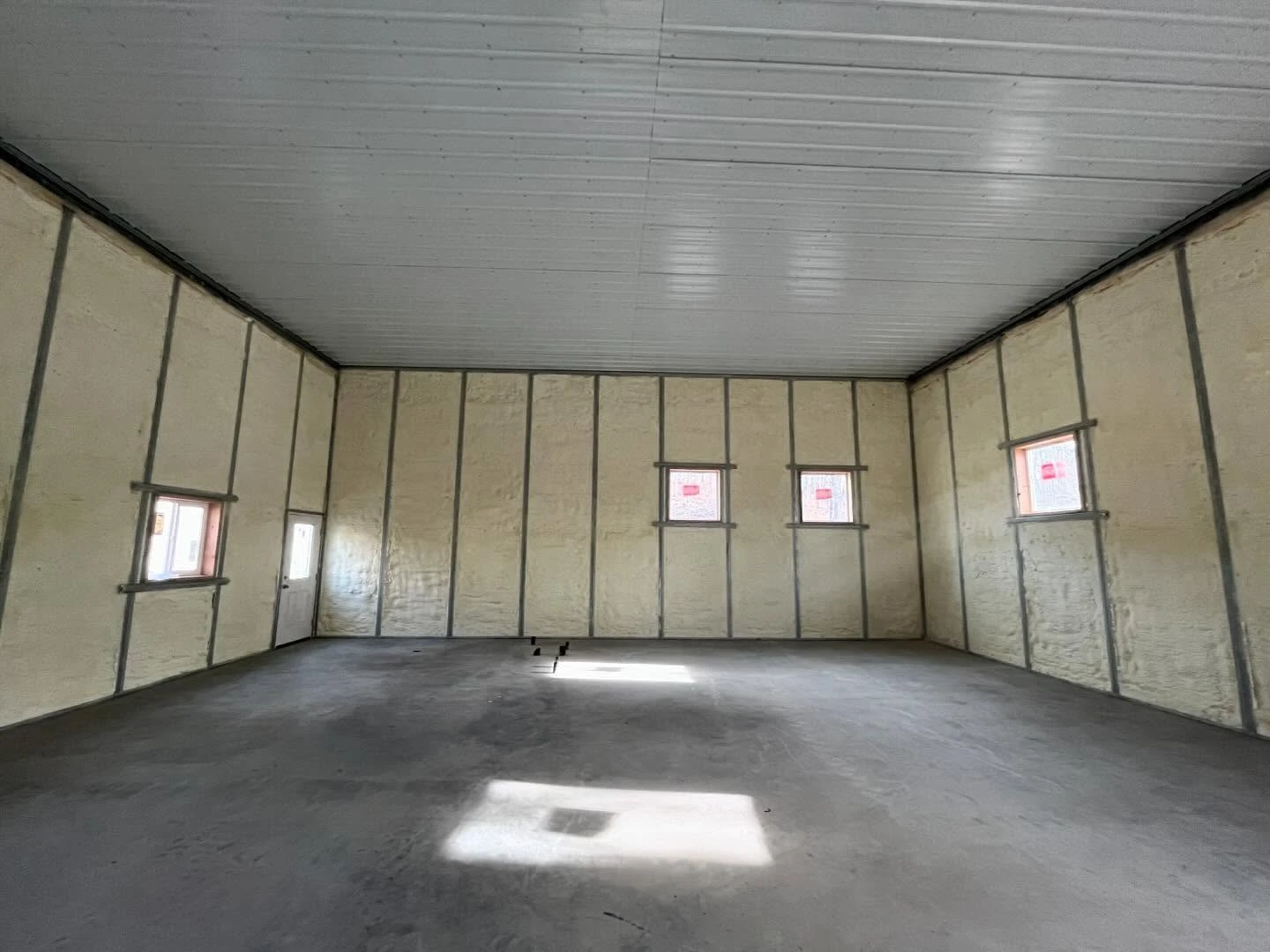
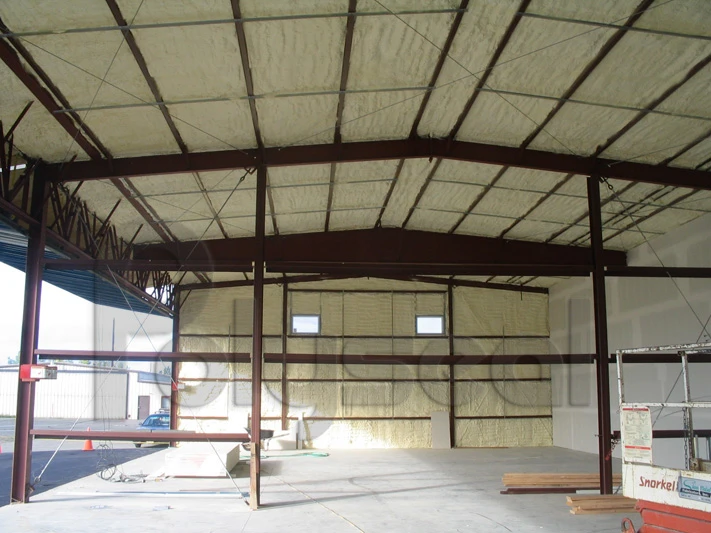
Commercial buildings: Spray foam insulation in commercial settings helps manage large-envelope heat loss and prevents condensation in metal building assemblies, which are common in Alaska’s industrial and warehouse construction.
Choosing an experienced contractor makes a significant difference in how well spray foam performs over time. Look for these indicators:
Polyseal Insulation provides spray foam insulation services in Anchorage and Matanuska-Susitna Valley for residential and commercial properties. Our team evaluates your building envelope, identifies the specific issues your property faces, and recommends the most effective insulation strategy for long-term protection against moisture, heat loss, and structural damage.
Request a Quote | Schedule an On-Site Assessment
Reach us at (907) 745-7325 or [email protected] to discuss your project. We serve homeowners and builders across the Anchorage/Matsu Valley region and are ready to help you protect your investment for decades to come.
Fiberglass batts allow air and moisture to pass through gaps and around penetrations, while spray foam expands to fill cavities completely and creates an air-impermeable seal. This makes spray foam far more effective at preventing the condensation and hidden mold that result from uncontrolled air leakage in cold climates.
Spray foam is a major component of ice dam prevention because it seals the air leakage paths that warm the roof deck, but it works best as part of a complete strategy that also addresses attic ventilation, roof membrane integrity, and insulation levels. The National Weather Service recommends evaluating both insulation and ventilation when addressing ice dam risk.
Yes. Spray foam applied to rim joist areas and crawlspace walls blocks cold air infiltration and reduces conductive heat loss through the floor assembly. The University of Alaska Fairbanks notes that cold floor surfaces are a particular comfort concern in Arctic climates because they cause cold air stratification near the living space (University of Alaska Fairbanks – Special Considerations for Building in Alaska).
Because spray foam significantly reduces air leakage through the building envelope, the home will need adequate mechanical ventilation to maintain healthy indoor air quality. The EPA advises that ventilation is an important part of a building’s heating and cooling system and helps reduce indoor pollutants when the home is tightly sealed (EPA – Energy, Weatherization and Indoor Air Quality).
Properly installed spray foam insulation is designed to last the lifetime of the building without settling, sagging, or degrading. Its closed cell structure resists moisture absorption and does not support mold growth, making it well-suited for Anchorage’s demanding freeze-thaw cycles and extended cold seasons.