

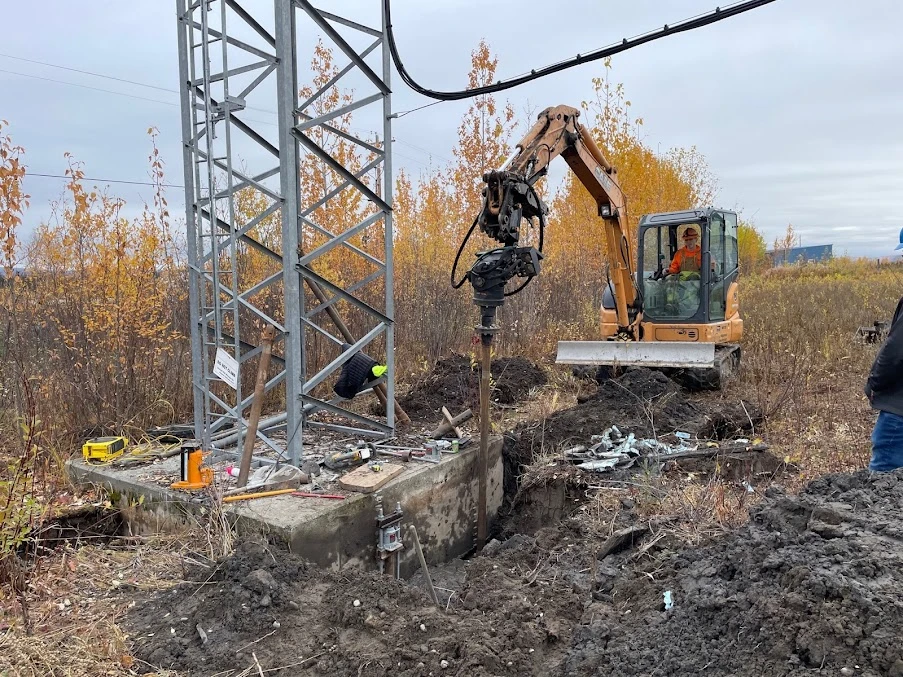
Concrete lifting restores sunken driveways, walkways, garage floors, and shop slabs by injecting material beneath the slab and raising it back to grade, and it holds up in Palmer because it addresses what actually moves our concrete: frost heave, saturated valley soils, and the freeze-thaw cycles that define the Matanuska Valley’s subarctic climate. Instead of demolishing a slab and pouring a new one into the same problematic soil, lifting fills voids, consolidates weak base material, and returns the existing slab to a level, usable surface. The right approach depends on the slab’s condition, the load it carries, and site drainage. The concrete lifting explained: methods, benefits, costs, and key considerations for property owners article compares your options and explains what makes a repair last through Alaska winters.
Sunken slabs in Palmer are rarely a concrete problem. They are a soil and water problem, and our local climate supplies both in abundance. Frost heaving occurs when freezing temperatures penetrate the soil and ice lenses grow toward the surface, drawing water upward through capillary action. The expanding ice is strong enough to lift soil as much as one foot or more, and differential heaving cracks pavement and damages building foundations. Research on frost heaving identifies silty and loamy soils as the most frost-susceptible types because their pore structure feeds water to the growing ice lenses.
Palmer’s setting makes this mechanism active for months at a time. The city sits on the floor of the Matanuska Valley between the Talkeetna and Chugach ranges, flanked by the Matanuska and Knik glaciers, and it carries a subarctic climate classification with long, hard freezes and a wet late summer, with August the wettest month. According to Palmer, Alaska climate data, the coldest temperature of the year typically lands around -20°F. Moisture in the soil followed by deep freezing is exactly the combination that grows ice lenses under slabs. Ground movement is also part of our regional history: the 1964 Great Alaska Earthquake caused significant subsidence in the Palmer Hay Flats area, a reminder that the ground under the valley has shifted before and will shift again.
Concrete lifting service, also called slabjacking or concrete leveling, corrects an uneven surface by altering the foundation beneath it rather than replacing the slab. The concrete leveling process follows a consistent sequence:
The process is minimally invasive, keeps demolition debris out of landfills, and leaves surrounding landscaping intact, which matters on established Palmer properties where gardens, sheds, and septic lines sit close to the work area.
| Method | How It Works | Hole Size | Moisture Behavior | Best For | Limitations |
|---|---|---|---|---|---|
| Mudjacking | Soil, sand, and cement slurry pumped under pressure | 1 to 2 inches | Slurry can erode or wash out over time | Heavy, thick slabs; budget-driven repairs | Larger holes, more cleanup, shorter warranties, weaker void filling |
| Limestone grout leveling | Pulverized lime slurry (about 240 psi cured strength) injected at low pressure | About 1 inch | Can erode without sufficient cement content | Precision lifts on decorative or thin slabs | Slab must be within roughly 100 feet of truck-mounted equipment |
| Polyurethane foam leveling | Two-part polymer expands into a closed-cell structural foam | Under 1 inch | Hydrophobic, does not retain moisture or erode | Frost-affected soils, wet sites, driveways, shops, and municipal slabs | Requires trained technicians and specialized equipment |
For Palmer’s climate, closed-cell foam has a distinct advantage: it reaches a hydrophobic state when cured and is not subject to erosion once in place. Closed-cell polymer foams used in slab work offer baseline lifting capabilities around 6,000 pounds per square foot, and procedures have lifted loads as high as 125 tons across less than 900 square feet of surface. Rigid closed-cell polyurethane is a crosslinked, thermosetting material that does not melt back down when temperatures swing, a useful property where slab temperatures cycle from -20°F winters to warm summer afternoons.
Durability comes from treating the cause instead of the symptom. A patch grinds down a raised lip, but the slab keeps moving with every freeze-thaw cycle. Lifting re-supports the entire slab and fills the voids that frost action created, so the concrete rides on continuous material instead of bridging empty space. A professional concrete lifting company performs this repair beneath the slab, allowing the finished surface to stay original with no matching problems, no cold joints, and no years-long strength-gain period. New concrete typically needs about four weeks to reach over 90 percent of its final strength, while cold weather can slow that process significantly. Cold-weather concreting guidelines define cold conditions as average daily air temperatures below 40°F for more than three successive days, which describes a large share of the year in Palmer and makes replacement windows short and weather-dependent. Lifting, by contrast, is performed through small holes with materials that set on their own schedule.
Replacement is still the right call in specific cases. If a slab is shattered, has failed reinforcement, or has deteriorated past the point of being structurally sound, lifting cannot rescue it. Settlement caused by an active water source, such as a downspout dumping beside the slab or a failing drainage grade, should be corrected alongside the lift so the repair is not undermined.
| Property Type | Recommended Approach | Key Notes |
|---|---|---|
| Residential driveways and walkways | Polyurethane foam leveling | Small holes preserve appearance; fast return to use |
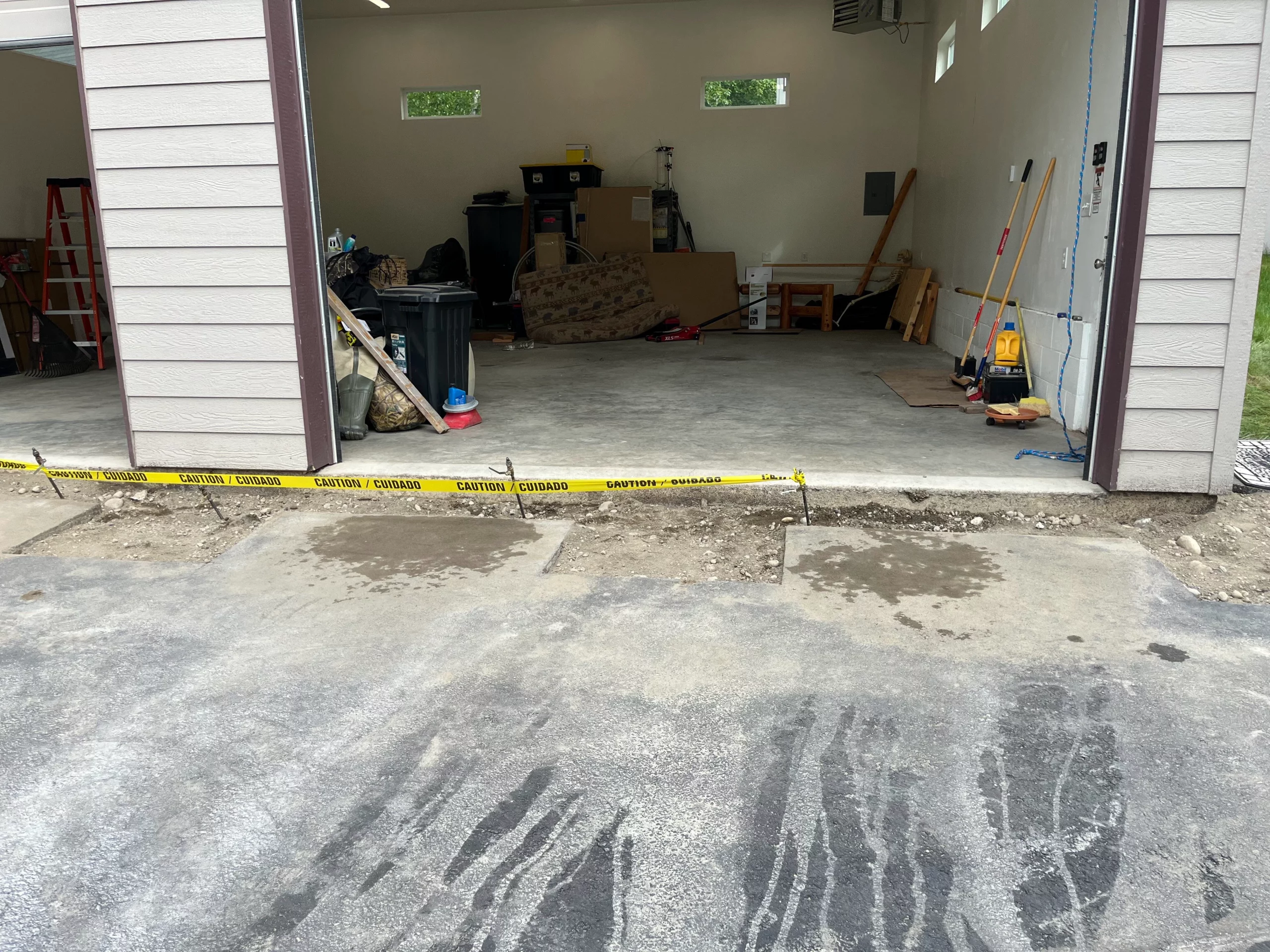
| Garages, shops, and shop floors | Foam leveling with void filling | Consolidates base soils under point loads from vehicles and equipment |
| Agricultural and outbuilding slabs | Foam or mudjacking, based on slab thickness | Mobile equipment reaches remote parts of a property without heavy access |
| Municipal and commercial surfaces | Closed-cell structural foam | Meets compressive strength requirements for highway slab support |
| Badly cracked or heaved slabs | Evaluate for replacement | Lifting requires a slab in fairly sound condition to hold the lift |
If a driveway, shop floor, or walkway on your Palmer property has dropped, tilted, or created trip hazards, our team at Polyseal Insulation can assess the cause and recommend the lifting method that will hold up through the next freeze-thaw season. We serve Palmer and the wider Matanuska-Susitna Valley with concrete lifting and foam-based slab stabilization, and we are glad to walk the site with you before any work begins. Call us at (907) 745-7325 or email [email protected] to get started.
Request a Quote | Schedule a Site Assessment
Do not let another winter work the same voids deeper under your slab. Reach out today and we will help you level it once, correctly.
When the underlying water and drainage issues are addressed and the slab is structurally sound, a lift can last for many years because the injected material fills the voids frost action created. Closed-cell polyurethane foam resists moisture and erosion, which protects the repair through repeated freeze-thaw cycles.
Full slab replacement is limited by cold-weather concreting rules, but lifting is performed through small drilled holes with fast-setting materials. Polyurethane foam can reach full cure in as little as 30 minutes, which shortens the weather window needed for a successful repair.
Foam leveling uses injection holes smaller than one inch, which are patched after the lift and blend in far better than the one to two inch holes required for mudjacking. The finished surface is your original concrete, so there are no color-matching issues with a new pour.
Yes. Closed-cell structural foams used in slab work provide baseline lifting capabilities of about 6,000 pounds per square foot and have stabilized loads as high as 125 tons in commercial applications. We match the material and injection pattern to the load your slab carries.
Resettlement is possible over poorly compacted soils with any repair method, including new concrete, which is why we evaluate soil conditions and drainage during the assessment. Correcting water sources and consolidating weak soils during the lift greatly reduces the chance of repeat settlement.