
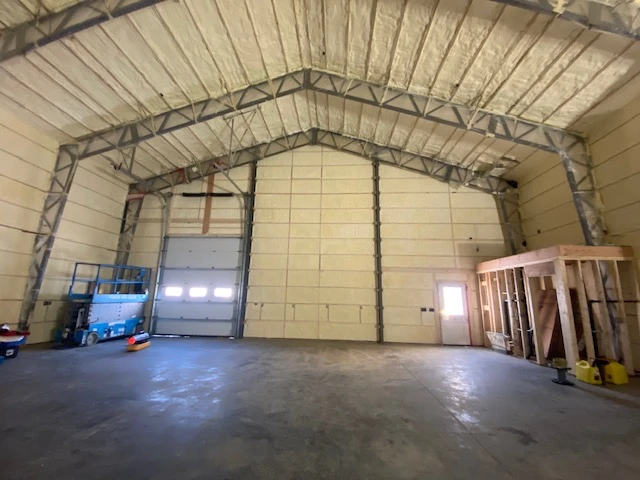
When you plan a commercial spray foam insulation project in Anchorage, building occupancy is the primary factor that dictates your safety logistics and project timeline. Because the chemical reaction during the application of spray polyurethane foam (SPF) releases volatile organic compounds (VOCs) and isocyanates, you cannot have employees or tenants in the immediate work area while the product is being sprayed and during the initial curing phase. To maintain business continuity, you must coordinate with a professional contractor to manage air quality, site isolation, and re-occupancy schedules.
Commercial spray foam solutions are created through an exothermic reaction that occurs when two liquid components, isocyanates and polyols, mix at the spray gun. During this application process and for a set duration afterward, the foam releases vapors that can cause respiratory irritation or other health effects if inhaled.
Because these chemicals are airborne during the installation process, they do not stay confined to the exact spot where the foam is applied. According to the U.S. Environmental Protection Agency, the potential for vapor exposure is the main reason why occupants must be excluded from the work zone. Until the foam is fully cured and the area has been properly ventilated, the building’s air quality may not meet safety standards for general occupancy.
Generally, employees should not work in the building while spray foam insulation in Anchorage, AK is being installed unless the project involves total physical isolation of the work zone. A common mistake is assuming that if you seal off a room with plastic sheeting, you are safe; however, Professional Building Consultants emphasize that vapor migration is a major risk.
If your building has a shared HVAC system, the air handling unit can easily pull chemical vapors from the work area and distribute them to other parts of the building. Even if employees are in a different office or on a different floor, they can still be exposed to odors and airborne particles if the ventilation system is not properly managed. For these reasons, most commercial projects require a full or partial building vacancy during the spraying and initial off-gassing periods.
To keep your business running, professionals use engineering controls to manage vapor migration. These strategies focus on containing the workspace so that the rest of the building remains safe for occupancy.
| Strategy | Feasibility for Occupancy | Key Requirement |
|---|---|---|
| Full Vacancy | Highest | Safest option; easiest for scheduling. |
| Phased Isolation | Moderate | Requires negative air pressure and HVAC sealing. |
| No Isolation | Not Feasible | Violates safety standards; high risk of exposure. |
Insulating in Anchorage requires an understanding of how our climate affects chemical reactions. Spray foam performance and cure times are sensitive to substrate and ambient temperatures. If the building is not properly conditioned during the winter months, the curing process can take longer than it would in warmer climates.
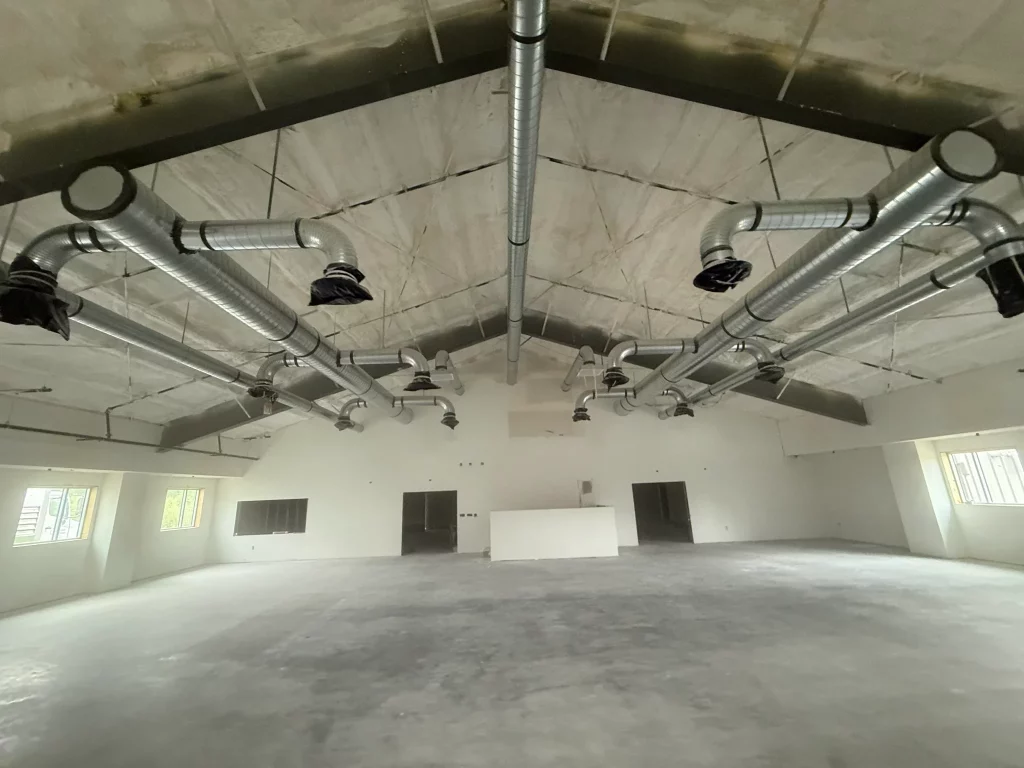
Furthermore, Anchorage building codes follow strict standards regarding fire safety. Once the spray foam is installed, you are typically required to cover it with an approved thermal barrier such as half-inch gypsum board or a specialized intumescent coating to meet International Building Code (IBC) requirements for commercial structures. Planning for occupancy means accounting for both the insulation application time and the subsequent time needed to install these fire-rated barriers.
You can minimize disruption by treating insulation as a logistical operation rather than just a construction task. Use this roadmap to keep your operations on track.
Polyseal Insulation understands the balance between improving your commercial building’s energy efficiency and maintaining your daily business operations in Anchorage. We specialize in site-specific safety protocols that ensure proper containment and air quality management throughout the installation process.
We help you navigate the requirements for proper ventilation and thermal barrier compliance, ensuring your project meets local code standards without unnecessary downtime. If you are planning an insulation retrofit, contact us at (907) 341-4848 or send an email to [email protected] to schedule a site safety and feasibility assessment.
Typically, the immediate work area must remain vacant during application and for a set re-entry period, often 24 hours, depending on the product and ventilation.
Odor does not always correlate to chemical concentration, but any lingering smell suggests that the ventilation process is not yet complete. Always rely on air testing.
It prevents chemical vapors from drifting through hallways or ventilation ducts, ensuring that the rest of your building remains safe for your staff and customers.
No. Simply opening windows is insufficient to manage vapor migration. Professional containment requires controlled, mechanical ventilation that exhausts air directly outside.
Re-occupancy times can vary significantly between open-cell and closed-cell products. Always defer to the specific re-entry guidelines provided by the foam manufacturer.