
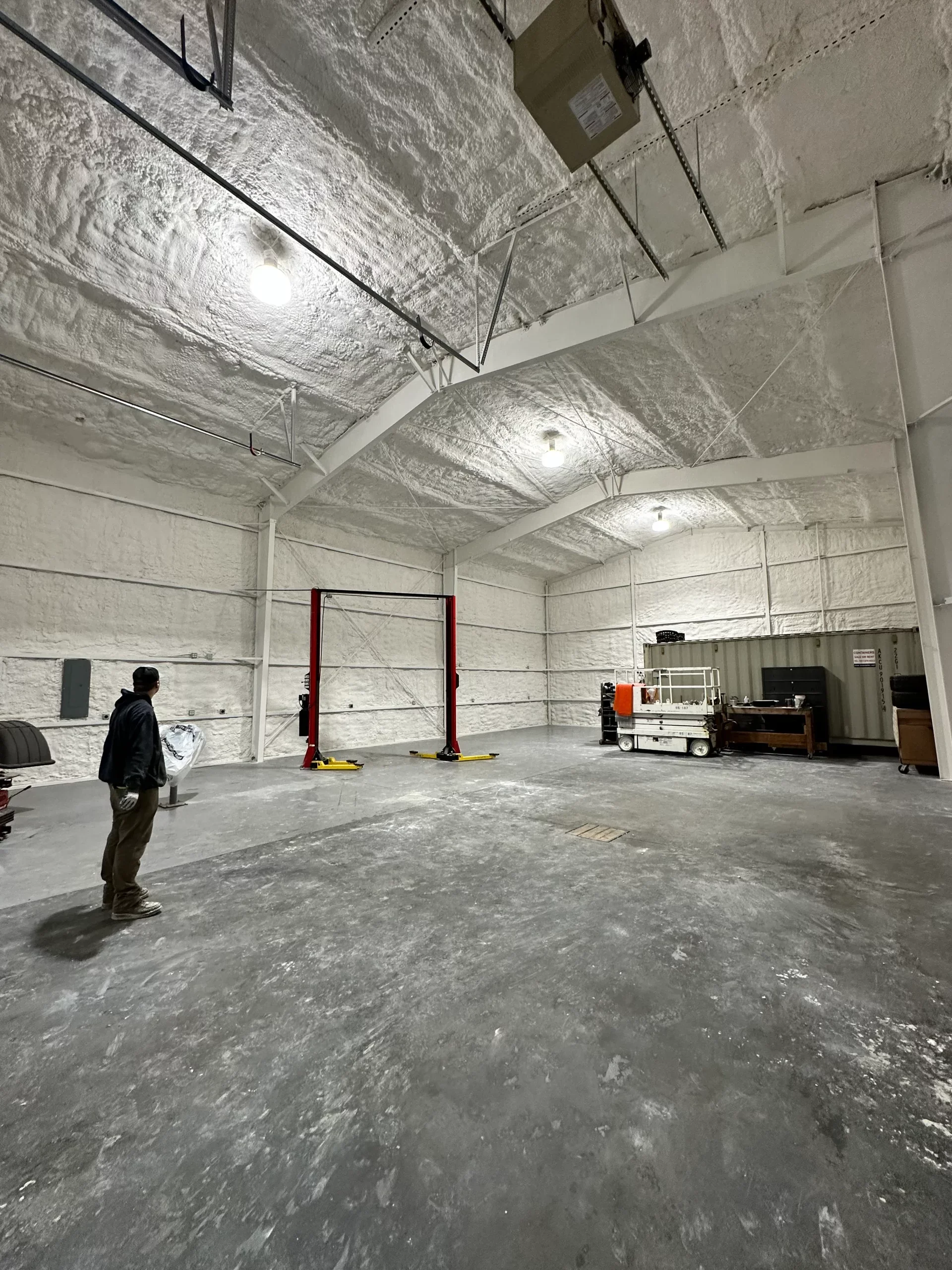
In Joint Base Elmendorf-Richardson (JBER), Alaska, choosing the right insulation is less about R-value and more about moisture management. Due to our extreme temperature swings and high potential for condensation, selecting the wrong type of spray foam can trap moisture within your building’s wall cavities. Over time, this leads to structural rot, mold growth, and expensive repairs. For most commercial spray foam applications in this climate, closed-cell spray foam is the preferred choice because it acts as an air and vapor barrier, preventing the very moisture infiltration that causes these failures.
Commercial spray foam in JBER face a unique environmental challenge. When you have a significant temperature difference between the warm, humid air inside a building and the sub-zero temperatures outside, you create a dew point inside the wall assembly.
If your insulation is not properly sealed or if the material allows vapor to pass through too easily, that moisture will condense inside the wall. Once trapped behind siding or within a wall cavity, this water has nowhere to go. This phenomenon is why generic insulation approaches often fail in Alaska. Guidance from the Alaska Department of Transportation & Public Facilities emphasizes that cold-climate construction requires strict adherence to moisture mitigation strategies to prevent the long-term degradation of building envelopes. Without a strategy to stop air leakage and vapor diffusion, even the highest R-value insulation will eventually succumb to moisture-related structural damage.
Selecting between open-cell and closed-cell spray foam is the most important decision you will make regarding your building envelope. The difference in their physical structure dictates how they handle moisture.
Closed-Cell Spray Foam (ccSPF): This is a high-density foam with a closed cellular structure. Because these cells are tightly packed and filled with a low-conductivity gas, the foam resists both air leakage and water vapor transmission. In our climate, this means the insulation itself acts as a vapor retarder. It provides superior structural rigidity and is the standard for commercial buildings where moisture control is a priority.
Open-Cell Spray Foam (ocSPF): Open-cell foam is lightweight and permeable. While it excels at filling irregular gaps and providing sound dampening, it does not stop moisture. Water vapor can move through the open cells, and if not paired with a separate, high-quality vapor barrier, it can lead to condensation issues in cold climates.
| Feature | Closed-Cell (ccSPF) | Open-Cell (ocSPF) |
|---|---|---|
| Vapor Barrier | Yes (Built-in) | No |
| Air Sealing | Excellent | Good |
| Structural Strength | High | Low |
| Cost | Higher | Lower |
When the wrong material is installed, or the application process is rushed, the facility pays the price. The primary risk is moisture entrapment. If liquid water or vapor enters a wall cavity and cannot escape, it initiates a cycle of rot in wood framing and corrosion in steel studs.
According to the Spray Polyurethane Foam Alliance, proper air sealing is fundamental to maintaining the integrity of the building envelope, especially in climates prone to condensation. Beyond structural damage, trapped moisture creates a breeding ground for mold, which can impact indoor air quality and lead to health code concerns for commercial tenants. When insulation absorbs moisture, it also loses its effective R-value, meaning your HVAC system has to work harder to maintain the interior temperature. As explained by the Building Science Corporation, understanding the relationship between moisture transport and thermal performance is essential to ensuring that commercial buildings remain durable in harsh northern environments.
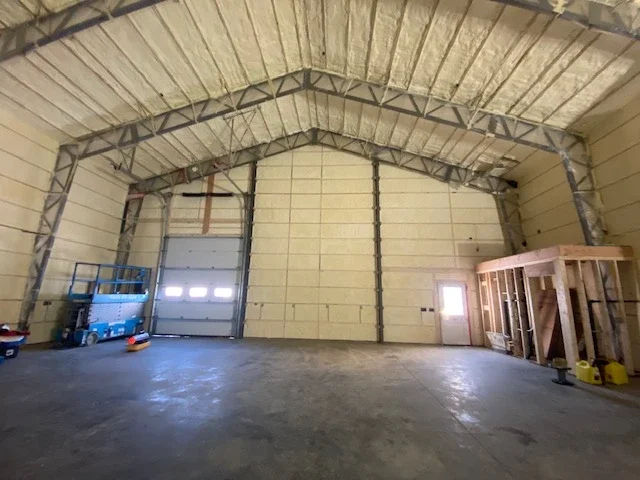
Even the best closed-cell foam will fail if it is applied incorrectly. In JBER, the application process is as important as the material itself.
Polyseal Insulation has spent years working in the Alaska climate. We understand that spray foam insulation in JBER requires a different approach than a residential project in a milder climate. Our team focuses on troubleshooting moisture issues before they become structural problems. We don’t just spray foam; we provide a full site assessment to ensure your building is sealed correctly against the elements.
If you are concerned about moisture in your building or want to discuss the best insulation strategy for your upcoming project, call us at (907) 341-4848 or email [email protected] to schedule a free consultation.
Can spray foam get wet during installation?
No. Surfaces must be dry. Spraying over frost or liquid water creates a weak bond and traps moisture, which leads to long-term structural issues.
Does a closed-cell vapor barrier eliminate the need for a separate membrane?
Often, yes. Closed-cell foam at a sufficient thickness can function as a vapor retarder, but you must confirm local building codes for your specific facility.
How do I know if my existing insulation is trapping moisture?
Signs include peeling paint, mold growth on interior walls, or fluctuating energy bills. A professional inspection can pinpoint if hidden condensation is the cause.
Is closed-cell foam more expensive than open-cell?
Yes, it is more expensive per board foot. However, its role as a vapor barrier and its structural benefits often offset the cost by preventing repairs.
Does the thickness of the foam matter for moisture control?
Yes. Vapor permeance is tied to thickness. Applying the correct, manufacturer-specified depth is critical to achieving the intended moisture-blocking performance in cold climates.