
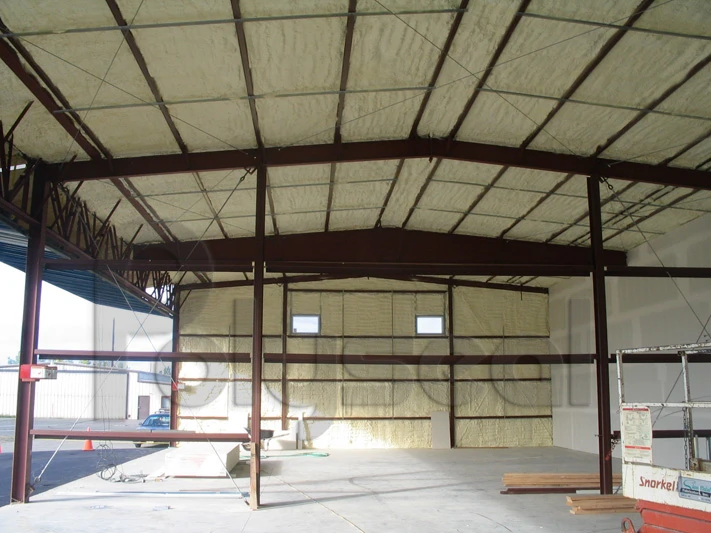
Commercial spray foam insulation is a high-performance solution that provides both air sealing and thermal insulation in a single application, making it one of the most effective ways to manage energy costs and building durability in Palmer’s extreme climate. For commercial property owners, this material is often the best defense against the moisture and air infiltration issues common in Southcentral Alaska.
Palmer’s climate places unique demands on commercial structures. Between high wind exposure and sub-zero winter temperatures, a building envelope that isn’t airtight will inevitably struggle with heat loss and moisture accumulation.
When heat escapes through gaps in the building envelope, it carries moisture that can condense inside wall cavities and roof assemblies. In older commercial buildings, traditional batt insulation is often insufficient because it does not stop air movement; air passes right through it, carrying moisture that can lead to mold and rot over time. Furthermore, metal buildings common in the Palmer area often suffer from significant thermal bridging, where steel framing members conduct cold directly into the interior.
Thermal bridging occurs when heat travels through conductive materials like steel or concrete, bypassing your insulation entirely. This makes the exterior walls feel cold to the touch even when your furnace is running full time. Spray foam addresses these problems by creating a seamless air barrier that stops convection currents before they start. By sealing the perimeter of your commercial space, you prevent the stack effect, where warm air rises and escapes through the top of the building, creating a vacuum that pulls cold, dry air in at the foundation level.
Spray foam stands apart from other insulation types because it acts as both a thermal insulator and a high-performance air barrier. While materials like fiberglass or mineral wool can be effective, they require separate labor-intensive steps to achieve an airtight seal.
Deciding whether to use spray foam depends on your specific goals for the building. While the upfront cost is higher than traditional fiberglass, the long-term return on investment is often higher due to reduced heating costs and less need for future repairs.
Consider your building’s current state. If you are experiencing high utility bills, ice damming on the roof, or interior drafts, the air sealing provided by spray foam is likely the most direct solution. Ice damming, in particular, is a sign that heat is leaking into your roof assembly from the conditioned space below. By sealing the ceiling plane, spray foam keeps the roof surface cold, which prevents the snow from melting and refreezing at the eaves.
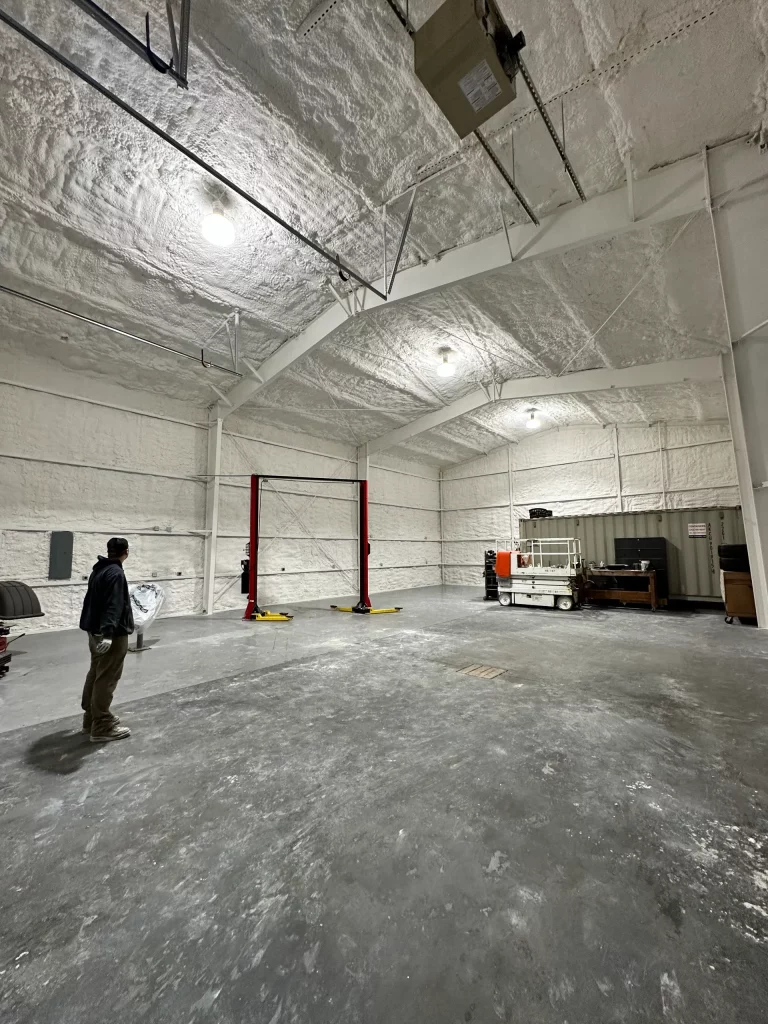
However, this is not a one-size-fits-all product. If you have an existing commercial space, you will need a professional site assessment to determine if your current wall cavities can support a foam application or if a retrofitting strategy is necessary. The Department of Energy notes that professional installation is critical to ensure the foam expands correctly and achieves the intended R-value without gaps. Attempting to use low-quality DIY kits for a large commercial space often leads to uneven thickness and poor adhesion, which can fail to provide the R-value you are paying for.
Building in Alaska requires strict adherence to energy codes to ensure the structure can withstand the region’s climate. The Alaska Housing Finance Corporation provides resources on building energy standards, which emphasize the importance of achieving specific R-values for Climate Zones 7 and 8.
When planning a commercial project, the choice between open-cell and closed-cell foam is a technical decision, not just a preference. Closed-cell foam provides a higher R-value per inch and acts as a vapor retarder, which is often required by code in Alaskan wall assemblies to prevent interstitial condensation. Because Alaska’s winters are so long and intense, the temperature difference between the inside and outside is extreme; this pressure drives moisture-laden indoor air toward the cold exterior surfaces. If that air passes through your insulation, it will freeze inside your walls.
Open-cell foam is lighter and more affordable but is vapor-permeable, meaning it may require a separate vapor barrier or careful design considerations to meet local code requirements. In many Palmer commercial spray foam applications involving metal buildings, closed-cell foam is preferred because it handles the condensation risks inherent in steel-to-interior transitions. Always ensure your contractor understands the specific prescriptive requirements for your project’s thermal envelope, as meeting these codes is a legal requirement for new construction and significant additions.
The effectiveness of spray foam is heavily dependent on the application process. Unlike installing rolls of insulation, which is a physical mechanical process, spray foam is a chemical process. The two liquid components must be heated to precise temperatures and combined at an exact ratio to achieve the proper molecular structure and expansion.
If the environment is too cold, the foam may not rise correctly. If the substrate is wet or dusty, the foam will peel away, leaving a gap where air can bypass your insulation. In Palmer, we often see older metal buildings that have been insulated with various materials over the years. Preparing these surfaces often requires specialized cleaning or mechanical adhesion testing. A successful installation is invisible to the occupant; it is a continuous, seamless envelope that remains flexible as the building materials expand and contract with our seasonal temperature swings.
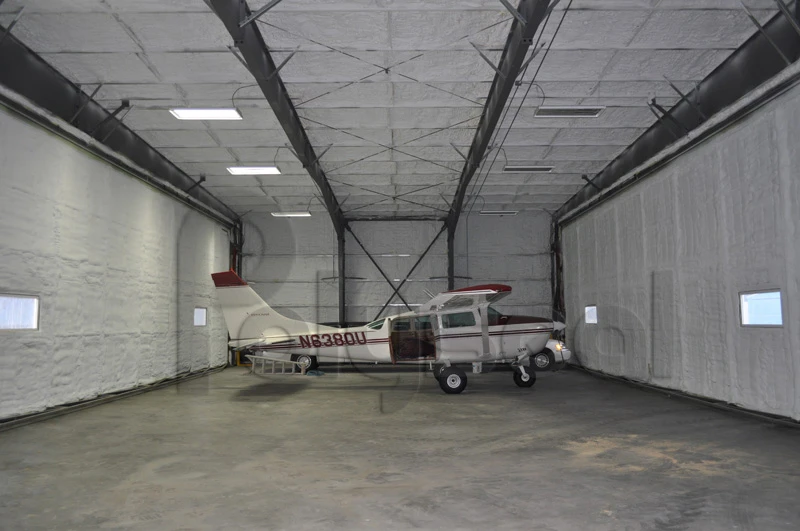
Applying spray foam in a commercial environment requires more than just the right equipment; it requires an understanding of how foam reacts to Alaska’s ambient temperatures and material conditions. Polyseal Insulation has spent years helping Palmer business owners protect their investments through precise, code-compliant installations.
We prioritize professional-grade application to avoid common field mistakes, such as improper curing or off-gassing, which can happen if the chemistry isn’t managed correctly during installation. Our team knows how to adapt to the specific site conditions of Palmer and the Mat-Su Borough, ensuring that your insulation provides the efficiency and durability you expect. We don’t just spray the walls; we evaluate the entire thermal envelope to ensure that ventilation and moisture management are balanced.
Our approach begins with a consultation where we review your current utility performance and identify the specific weak points in your building’s envelope. Whether you are dealing with a drafty warehouse or a new construction project that needs to pass rigorous energy inspections, we have the experience to deliver a system that works in the Alaska climate.
If you have questions about your building’s current insulation or want a professional assessment for your next commercial project, contact us at (907) 341-4848 or email [email protected] to speak with a project manager.
A properly mixed and applied foam will not have a lingering odor; any temporary smell during installation should dissipate quickly as the foam cures and is ventilated.
Yes, but the building must be heated to the manufacturer’s required surface temperature range before and during the application for the foam to cure correctly.
Spray foam is designed to be permanent; it does not settle, sag, or lose its insulating properties over time, effectively lasting for the life of the building.
Commercial spray foam is required to be covered by an approved thermal barrier, such as half-inch gypsum board, to meet building codes and ensure fire safety.
While it helps reduce airborne sound transfer because it seals gaps, it is not a complete soundproofing solution and should be paired with other mass-based methods for acoustics.