
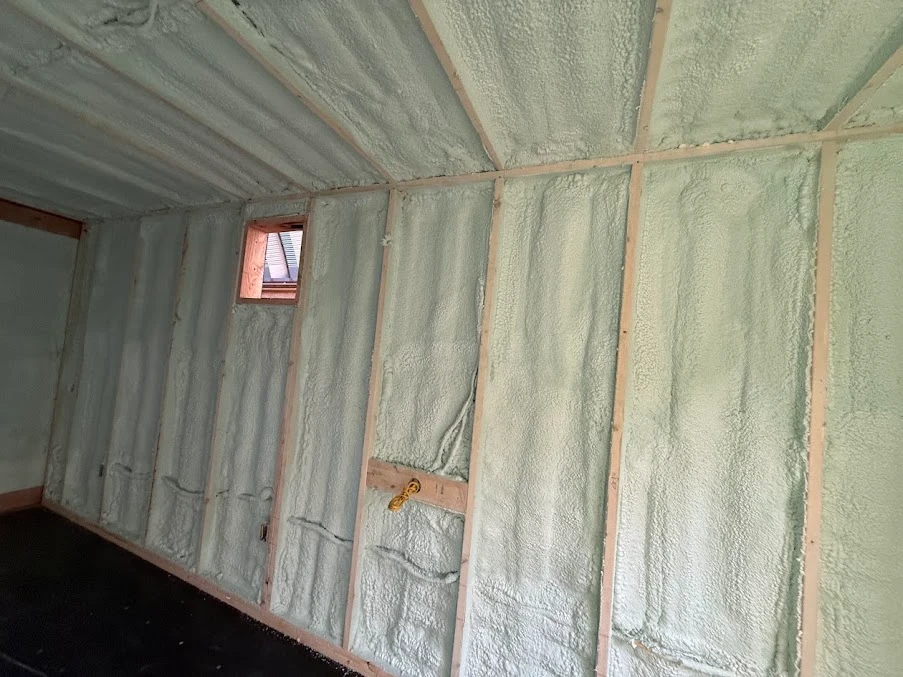
In Anchorage, the thickness of your residential spray foam insulation is the primary factor in determining whether your home meets the Alaska Building Energy Efficiency Standard (BEES) requirements. Proper thickness does more than just hit a target R-value; it creates the air-tight thermal envelope necessary to survive extreme temperature fluctuations, prevent moisture accumulation, and avoid the common structural issues associated with poorly insulated homes in our climate.
Anchorage sits in a climate zone that demands higher performance from building materials than most other parts of the country. According to the International Energy Conservation Code (IECC), which serves as the foundation for Alaska’s local building codes, our area is classified as Climate Zone 7 or 8. This means our homes must withstand significantly harsher winters than typical residential construction elsewhere.
The Alaska Housing Finance Corporation (AHFC) enforces energy efficiency standards to ensure that buildings are durable and cost-effective to heat. When you choose a spray foam thickness that is too thin, you are not just losing heat; you are risking the integrity of your wall and roof assemblies. In our cold climate, if the insulation is too thin, the interior surface temperature of the wall can drop below the dew point, leading to condensation. This trapped moisture often leads to mold or rot over time. Meeting the minimum R-value requirements set for your specific building type is the baseline for keeping your structure dry and your heating bills manageable.
Residential spray foam insulation solutions are unique because it provides both thermal resistance and an air barrier in a single application. While the R-value per inch is a common metric, the thickness of the foam determines the total thermal resistance of the assembly.
Insulation that does not stop airflow is incomplete. In Anchorage, the wind-driven cold can find the smallest gaps in framing. Because spray foam expands upon application, it fills gaps that traditional fiberglass batts cannot reach. However, if the foam is applied too thinly, it may fail to create a complete seal, allowing cold air to bypass the insulation. The thickness ensures that the foam achieves the necessary density to act as a permanent air barrier.
Framing members, such as wood studs or rafters, conduct cold more readily than insulation. This is known as thermal bridging. By applying the correct thickness of spray foam in Anchorage, AK, you effectively cover these studs, breaking the thermal bridge and creating a consistent, insulated shell around your living space.
| Foam Type | Typical R-Value Per Inch | Primary Benefit in Anchorage |
|---|---|---|
| Open-Cell | 3.5 – 3.8 | Lower cost, fills irregular cavities |
| Closed-Cell | 6.0 – 7.0 | Superior R-value, moisture barrier |
Choosing the right type of foam is just as important as deciding on the thickness. Each product behaves differently under Alaskan conditions.
Closed-cell foam is dense and rigid. Because it has a higher R-value per inch, you can achieve the required thermal performance with a thinner layer compared to open-cell. It also acts as a vapor retarder, which is a major advantage in Anchorage homes where managing interior humidity is critical to preventing ice dams and condensation in roof assemblies.
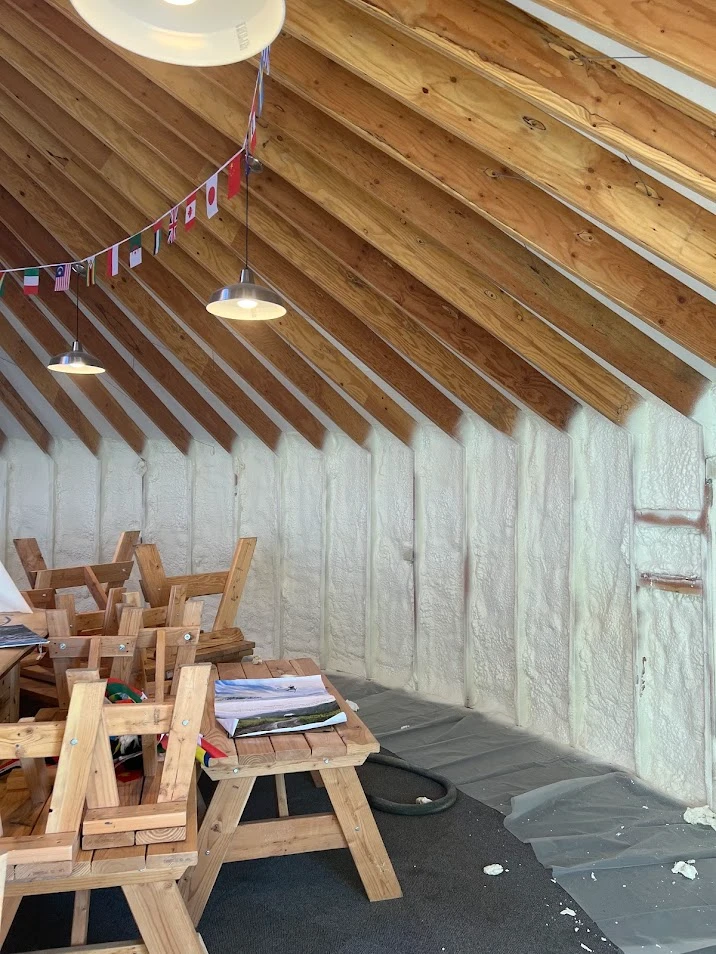
Open-cell foam is lighter and more flexible. It is an excellent air sealer, but because it has a lower R-value per inch, you need a greater thickness to reach the same thermal performance as closed-cell foam. It is permeable to moisture, which means it may require an additional vapor barrier depending on the specific assembly and local building code requirements for your home.
A common misconception is that adding more foam is always better. While you must meet code minimums, there is a point of diminishing returns where the cost of additional thickness no longer yields significant energy savings.
However, the bigger risk in our local market is under-insulation. Some contractors may apply the bare minimum to save on material costs, which can leave your home vulnerable to cold spots. Furthermore, inconsistent thickness across a wall or ceiling often caused by poor technique or rushing the application can create weak points where heat loss and moisture build-up occur. Professional application ensures that the foam is consistent, properly cured, and meets the exact depth required to fulfill its role as an air and thermal barrier.
If you are planning a renovation or new construction in Anchorage, ensuring your insulation thickness is calculated correctly for our climate is the first step toward long-term efficiency. Polyseal Insulation specializes in the specific thermal needs of Alaskan homes. We can help you navigate AHFC requirements and choose the right foam thickness for your project.
Contact us today to discuss your insulation needs:
Yes. Homes with verified energy ratings that meet or exceed BEES standards are often more attractive to buyers and may qualify for better financing through the AHFC.
Professional equipment ensures consistent thickness and proper chemical mixing. DIY kits often result in uneven application, which creates cold spots and compromises the air seal.
The cost is directly tied to the volume of material used. Increasing thickness increases material costs, but it also improves long-term energy savings and structural durability.
You can, but it is rarely a problem unless you exceed the depth of your framing cavities, which would interfere with the installation of drywall.
Heat rises, meaning your ceiling and roof assembly are the primary exit points for warm air. In Anchorage, higher R-values are required to prevent heat loss and ice dams.