
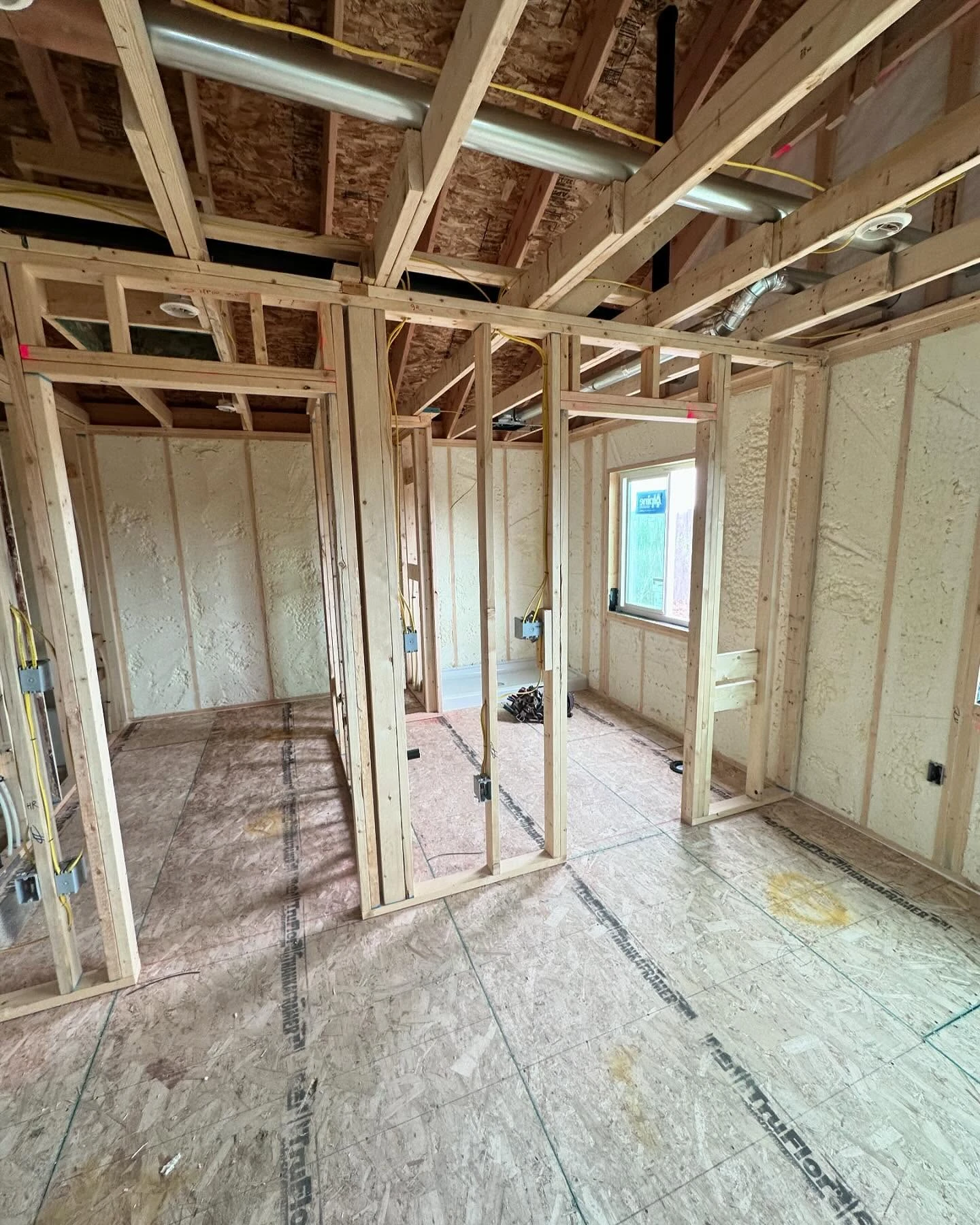
Residential spray foam insulation can help create a more continuous insulation and air-sealing layer in areas such as attics, walls, floors, crawl spaces, and other parts of a home’s envelope. The two main categories are open-cell and closed-cell spray polyurethane foam, and each has different properties that affect where it makes sense to use.
The right choice depends on the part of the home being insulated, the performance you need, the existing building assembly, and how the material will be installed. We also need to treat installation as part of the solution, because preparation, ventilation, application, curing, and re-entry all matter.
Residential spray foam insulation is a spray-applied insulation and air-sealing material used on parts of a home’s building envelope. The U.S. Department of Energy describes spray polyurethane foam as a material that can be used in applications including walls, ceilings, attics, basements, crawl spaces, and roofs. U.S. Department of Energy: Spray Foam Guide
Unlike insulation that arrives as a blanket or loose material, spray foam starts as a liquid system and expands after application. That expansion allows the material to fill gaps and irregular areas, which is one reason spray foam is also used for air sealing.
For us, that distinction matters. Insulation and air sealing are related, but they are not the same job. A home can have insulation while still having unwanted air movement through gaps, penetrations, and other openings. Building Science Education explains that the insulation and air barrier should work together as a continuous part of the building enclosure. Building Science Education: Air Barriers in Ventilated Attics
That is why we look at the actual area being insulated instead of choosing a foam type based only on the product name.
The two main residential spray polyurethane foam categories are open-cell and closed-cell spray foam. They are chemically related, but their physical characteristics differ enough that the application needs to be considered before choosing one.
Open-cell foam has cells that are not fully closed. The resulting material is lighter and softer than closed-cell foam. It is commonly considered where the goal includes filling and sealing irregular spaces while providing an insulation layer.
Spray foam guidance identifies open-cell and closed-cell foam as distinct product classifications with different physical properties and applications.
Open-cell foam can also contribute to air sealing when installed to the appropriate thickness and as part of a properly designed assembly. The specific requirements depend on how the foam is being used and what other materials form the air barrier.
Closed-cell foam has a denser structure, with the individual cells closed. That gives it different physical properties from open-cell foam and can make it useful where a more rigid, higher-density insulation material is appropriate.
Building Science Education notes that closed-cell spray foam can serve as an air barrier at a lower finished thickness than open-cell foam in certain assemblies.
Closed-cell foam can also have vapor-control characteristics that open-cell foam does not provide in the same way. That does not mean we should automatically choose closed-cell foam everywhere. The building assembly, moisture conditions, required performance, and installation details still need to be considered.
| Feature | Open-Cell Foam | Closed-Cell Foam |
| Cell structure | Open-cell structure | Closed-cell structure |
| Density | Lower | Higher |
| Texture | Softer | More rigid |
| Air sealing | Can provide air sealing when properly installed | Can provide air sealing when properly installed |
| Vapor-control characteristics | Different from closed-cell | Can provide greater vapor resistance |
| Best choice | Depends on the building assembly | Depends on the building assembly |
The important point is that there is no universal “best” foam for every residential project. We need to match the product to the location and the building system.
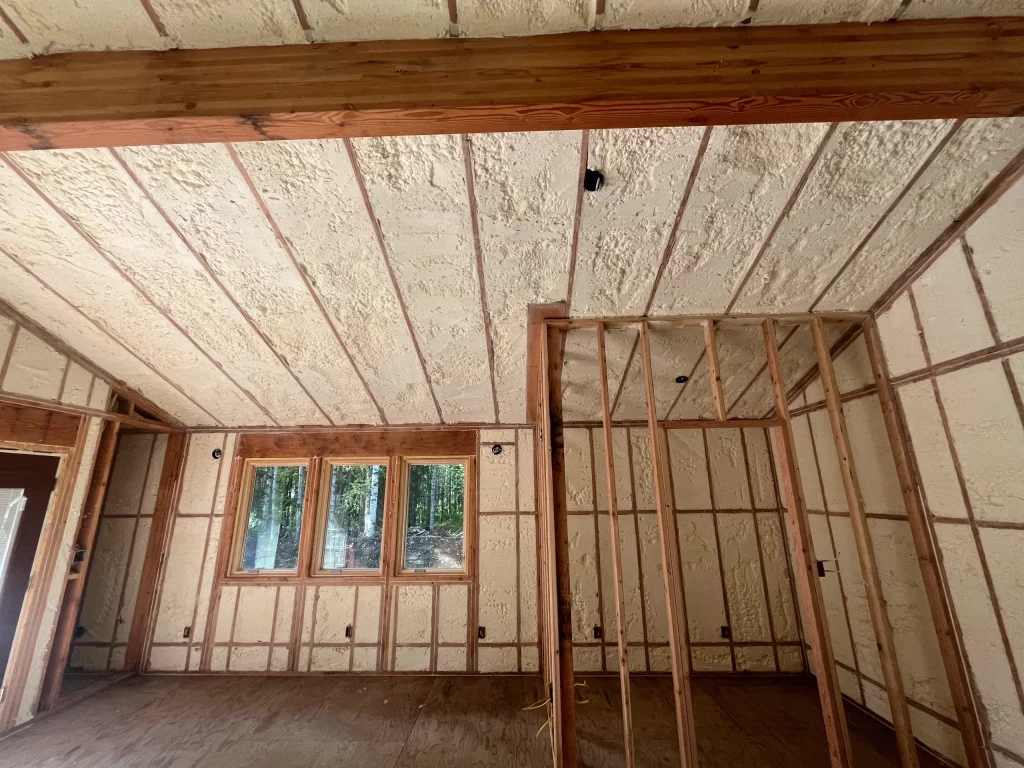
The main reason we consider spray foam is that it can combine insulation and air sealing in areas where a continuous application is useful. The material expands after application, allowing it to cover irregular surfaces and gaps that can be difficult to address with rigid or blanket materials.
Here are the main benefits to consider.
Air sealing: Both major categories of spray polyurethane foam can be used to reduce unwanted air movement when they are correctly installed. The DOE explains that spray foam can fill gaps, cracks, and voids that contribute to uncontrolled air leakage.
Coverage of irregular spaces: Spray application can follow the shape of the surface, which can be useful around complicated areas where maintaining a continuous insulation layer is difficult.
Different performance options: Open-cell and closed-cell products give us different physical properties to work with. That lets the insulation approach be matched to the building assembly rather than treating every project the same.
Support for a continuous building envelope: Properly installed insulation and air sealing can work together to create a more continuous boundary between conditioned and unconditioned areas of a home.
But these benefits depend on correct design and installation. Spray foam is not a product where simply putting material on a surface guarantees the desired result.
A residential spray foam project starts before the foam is sprayed. We first need to understand the area being treated, the existing materials, and the conditions that could affect the installation.
The application area needs to be prepared and isolated appropriately. Existing openings, surfaces, HVAC considerations, and other conditions should be reviewed before spraying begins.
The U.S. Environmental Protection Agency recommends controlling the spray area and using ventilation strategies that move vapors, mists, and dust away from workers and occupants.
Spray polyurethane foam installation involves reactive chemicals during application and curing. We should not treat the work area like an ordinary room where occupants can remain throughout the job.
EPA guidance recommends isolating the work area, directing exhaust outside, and keeping unprotected occupants away from the application area.
The foam is applied to the prepared surface according to the product’s installation requirements. Application conditions matter, including material and substrate conditions and the thickness applied in each pass.
The exact application method varies by product, so we follow the manufacturer’s technical instructions rather than applying a single procedure to every foam system.
Curing is part of the installation, not an afterthought. The time needed before re-entry depends on the product, application conditions, ventilation, and manufacturer guidance.
EPA guidance specifically recommends following the manufacturer’s instructions for ventilation and re-occupancy rather than assuming one universal re-entry period.
After application and curing, the work should be checked for coverage, gaps, irregularities, and other installation concerns. The goal is not simply to see foam on the surface. The finished assembly needs to perform as intended.
Choosing spray foam starts with the building assembly, not the product label. We need to know where the insulation is going, what role it needs to play, and what other components are already present.
Here are the questions we would consider before installation:
We also avoid making a blanket recommendation before seeing the actual situation. A foam type that works well in one part of a home may not be the right choice for another assembly.
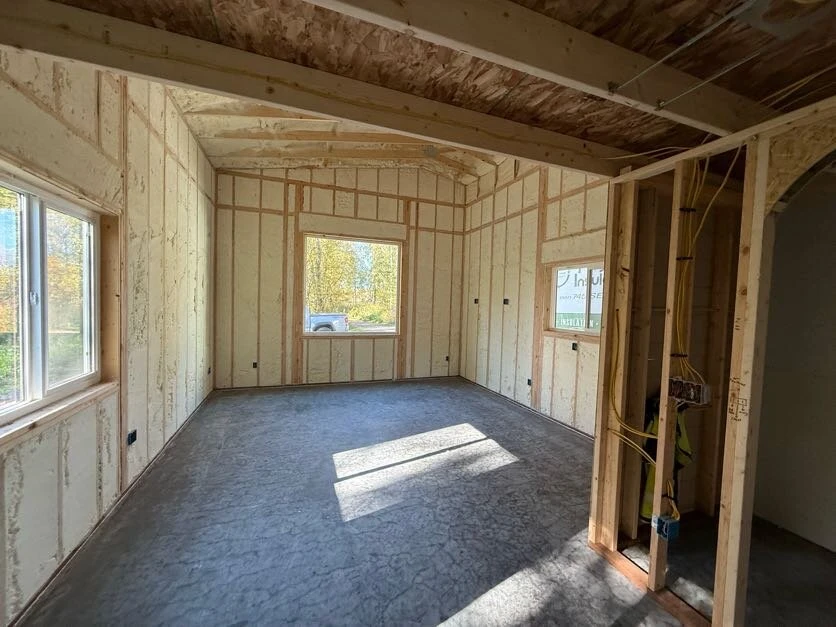
Polyseal Insulation offers residential spray foam work, including the options identified in our business information, including residential spray foam, open-cell spray foam, and closed-cell spray foam. We also list commercial spray foam, new construction insulation, retrofit insulation, metal building insulation, foundation repair, concrete lifting, soil stabilization, and crawl space upgrades among our services.
Our supplied business information identifies Anchorage, Alaska, as the service location and lists nearby areas including Eagle River, Chugiak, Girdwood, Birchwood, Joint Base Elmendorf-Richardson, Peters Creek, Indian, and Hope.
That local service information matters when you’re moving from research to an actual project. The right next step is to discuss the area you want insulated, the existing construction, and the result you want from the insulation.
If you’re comparing open-cell and closed-cell foam or trying to determine what makes sense for an existing home or new construction project, we can discuss the insulation needs with you.
Polyseal Insulation
Phone: (907) 341-4848
Email: [email protected]
It is a spray-applied polyurethane insulation system used in residential building assemblies such as walls, attics, ceilings, crawl spaces, and roofs. It can provide insulation and air sealing when properly designed and installed. U.S. Department of Energy: Spray Foam Guide
Open-cell foam has a more open, softer cell structure, while closed-cell foam is denser and more rigid. Their different physical and moisture-related properties mean the right choice depends on the building assembly and intended use.
Yes, spray polyurethane foam can contribute to air sealing. The DOE notes that spray foam can fill gaps, cracks, and voids that allow uncontrolled air leakage. U.S. Department of Energy: Spray Foam Guide
There is no single cure or re-entry time that applies to every spray foam product. The timing depends on the product and installation conditions, so we follow the manufacturer’s instructions and appropriate ventilation guidance.
Residents and other unprotected occupants should not remain in the restricted application area during spray foam installation. EPA guidance calls for isolation, ventilation, and appropriate re-entry procedures during application and curing. U.S. Environmental Protection Agency: Client Checklist for Spray Polyurethane Foam
Neither is automatically the right choice for every home. We need to consider the location, building assembly, moisture conditions, air-sealing requirements, and the product’s installation requirements before choosing between them.