

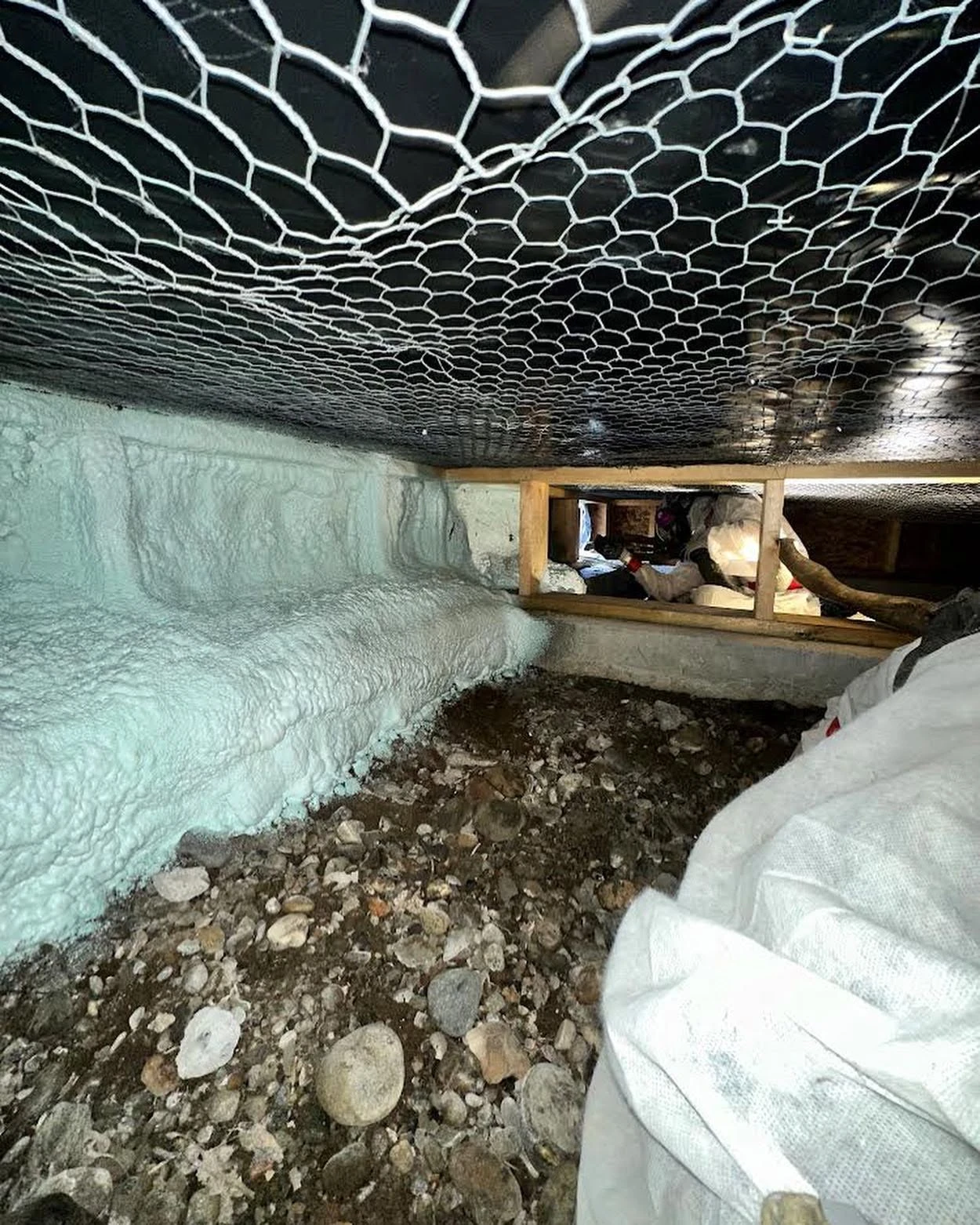
Open-cell spray foam improves coverage across large attic and wall cavity areas by expanding up to 30 to 60 times its liquid volume on contact, filling framing irregularities, wiring chases, top plates, and penetrations that batts and loose fill routinely leave exposed. For homeowners, builders, and commercial property owners in the Anchorage and Matanuska-Susitna Valley, that expansion turns thousands of square feet of awkward framing into one continuous, self-adhered air barrier instead of a patchwork of cut pieces. The right insulation choice always depends on cavity depth, moisture exposure, and climate zone, but for large, dry, interior areas, open-cell foam offers three coverage advantages: full-cavity fill on irregular geometry, insulation and air sealing in a single pass, and faster installation across big square footages than piece-by-piece materials. The essential guide to open-cell spray foam explains how these advantages support consistent coverage across large areas.
Large areas multiply small defects. A batt that is cut half an inch short in one bay, compressed around a wire in the next, and stapled with gaps at the face becomes hundreds of individual leak paths once you multiply it across a full roofline. Loose fill conforms better, but it cannot stop air movement on its own, and convective loops in cold attics quietly drain heat all winter.
The ENERGY STAR Attic Insulation Project notes that the attic is usually where you can find the largest opportunities to save energy, and that EPA recommends air sealing before adding insulation. Drafty rooms, uneven temperatures between floors, high bills, and ice dams are the classic symptoms of coverage that insulates but does not seal. Research cited by the Spray foam entry on Wikipedia attributes roughly 40% of a home’s energy loss to air infiltration through the envelope, which is exactly the failure mode that seams and voids create.
Open-cell foam is a light-density, half-pound material with a sponge-like texture that expands during application, fills cracks and voids, and adheres to irregular framing and substrates. The Department of Energy’s Guide to Home Insulation classifies sprayed or foamed-in-place products as the type that lets you fill even the smallest cavities. On a big attic roof deck, that means the foam conforms to every rafter bay, nail plate, and plumbing chase without custom cutting, so coverage is continuous rather than assembled.
Because foam both insulates and air seals, one application replaces two separate scopes of work. Most open-cell products deliver about R-3.8 per inch, and DOE documentation lists open-cell polyurethane spray foam at 3.5 inches reaching R-12.6. At 5.5 inches or more, open-cell foam acts as an air barrier, which aligns neatly with a full 2×6 wall cavity. Foam’s most important attribute, per the Wikipedia technical overview, is its ability to air seal and block convective heat transfer, and it also absorbs airborne sound, a bonus for interior walls and home theaters.
In our climate zone, the savings case is stronger than the national average. The ENERGY STAR savings methodology models a 25% reduction in air infiltration plus code-level insulation, and shows climate zone 7 homes saving 15% of total house energy and 19% of heating and cooling costs. Cold-zone guidance in the DOE guide calls for R-49 to R-60 attic performance, which full-depth open-cell foam on a roof deck can reach in a single monolithic pass.
| Attribute | Open-Cell Spray Foam | Closed-Cell Spray Foam | Fiberglass Batts |
|---|---|---|---|
| Density and texture | Half-pound, sponge-like | Two-pound, rigid | Low-density blanket |
| R-value per inch | About 3.8 | 5.1 to 6 | 3 to 4 |
| Air sealing | Continuous barrier at 5.5 inches or more | Air and vapor barrier at required minimum thickness | None, seams and cuts leak |
| Fit to irregular framing | Expands to fill voids and gaps | Fills, but with less expansion | Relies on precise cutting, compression creates gaps |
| Sound control | Absorbs airborne noise | Moderate | Low |
| Best fit | Large, dry attics and interior wall cavities | Moisture-exposed or thin cavities | Accessible, simple geometry |
Closed-cell remains the right call where moisture, flood exposure, or thin cavities dominate. Open-cell wins where the goal is covering the most square footage with the fewest voids.
In new construction, open-cell foam goes in before drywall and fills the entire stud bay, giving a 2×6 wall roughly R-20 plus air sealing at the depth where foam becomes an air barrier. It is frequently specified for interior partitions because it dampens sound transfer between rooms. For retrofits, wall injection through small drilled holes can fill closed cavities in existing homes. Professional open-cell spray foam insulation services can provide consistent coverage for suitable indoor, above-grade applications. One boundary matters: open-cell foam is generally recommended for indoor, above-grade applications only, so crawlspaces and below-grade walls call for a different material.
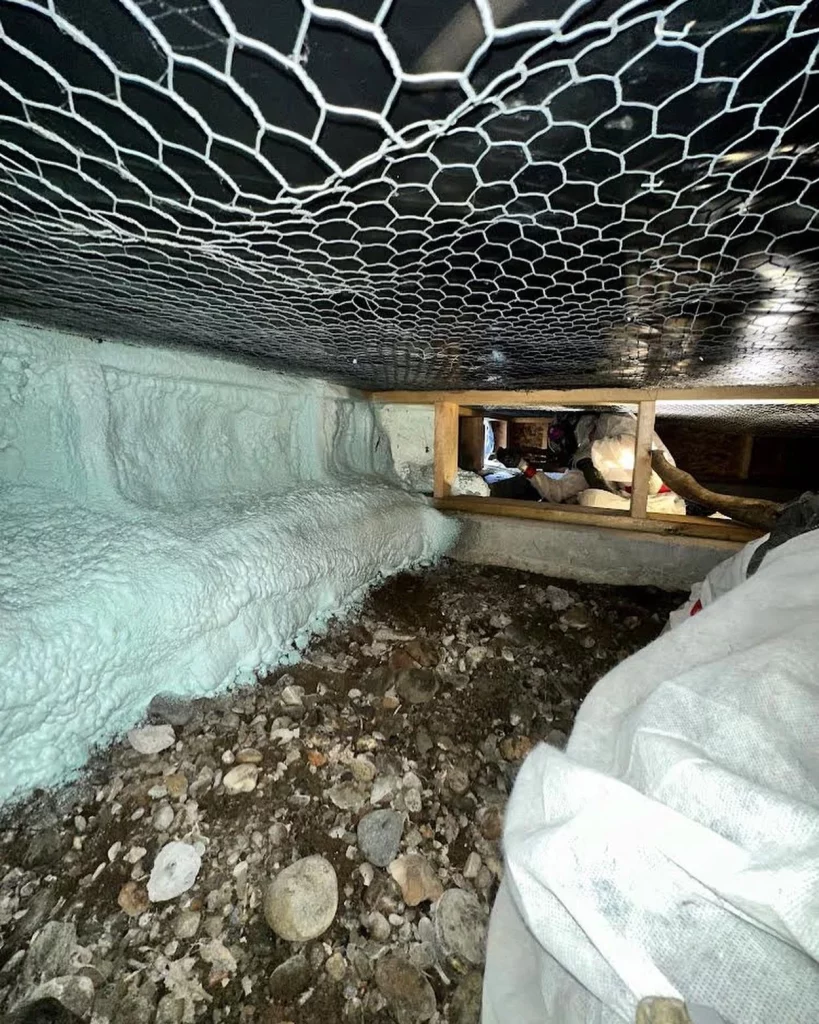
Based on our current project data, open-cell spray foam work typically ranges from $1,500 on the low end to $100,000 for very large commercial scopes, with an average near $10,000. Attic insulation projects average around $5,000 and range from $1,500 to $15,000. The factors that move price the most:
| Cost Factor | Effect on Project |
|---|---|
| Larger square footage | Increases material and labor hours |
| Greater thickness or higher R-value target | Increases pass counts and yield |
| Difficult access | Adds setup time and safety staging |
| Removal of old insulation | Adds disposal scope before spraying |
| Ventilation modifications | Required for code compliance in sealed assemblies |
| Simple, open layouts | Lowers cost per project |
| Audience | Recommended Approach | Why It Works |
|---|---|---|
| New-construction builders | Full-cavity walls and roof-deck foam before drywall | One-pass coverage with predictable R-values |
| Retrofit owners, 1,500 to 2,500 sq ft homes | Foam the ceiling plane, add loose fill above | Air sealing first captures the biggest savings |
| Owners of 2,500 to 4,000 sq ft homes | Roof-deck open-cell for a conditioned attic | Brings HVAC and storage inside the envelope |
| Commercial and light-industrial | Large roof decks and purlin bays | Fast, uniform coverage over big square footage |
Polyseal Insulation installs open-cell spray foam across large attics and wall cavities throughout the Anchorage and Matanuska-Susitna Valley, with documented thickness, code-compliant assemblies, and clear occupant timelines on every job. Whether you are closing in a new build or retrofitting a drafty 1980s home, our team will measure, specify, and spray a coverage plan built for your structure. Call us at (907) 745-7325 or email [email protected] to Request a Quote or Schedule an Attic Assessment today, and stop paying to heat the weather outside your walls.
Match the depth to your framing. A 3.5 inch 2×4 bay yields about R-12.6, while a 5.5 inch 2×6 bay reaches roughly R-20 and provides air-barrier performance.
Yes, provided the sheathing is dry, sound, and vent details are addressed first. Roof-deck application is what creates a sealed, conditioned attic assembly.
It depends on location in the structure. Use open cell for large, dry attics and interior cavities, and closed cell where moisture exposure, thin framing, or below-grade conditions exist.
Most residential attic projects take one to two days of active work, plus curing time before occupants return per manufacturer and EPA guidance.
It does. Its open, porous structure absorbs airborne sound, which is why it is often specified for interior walls, media rooms, and bedrooms over garages.