

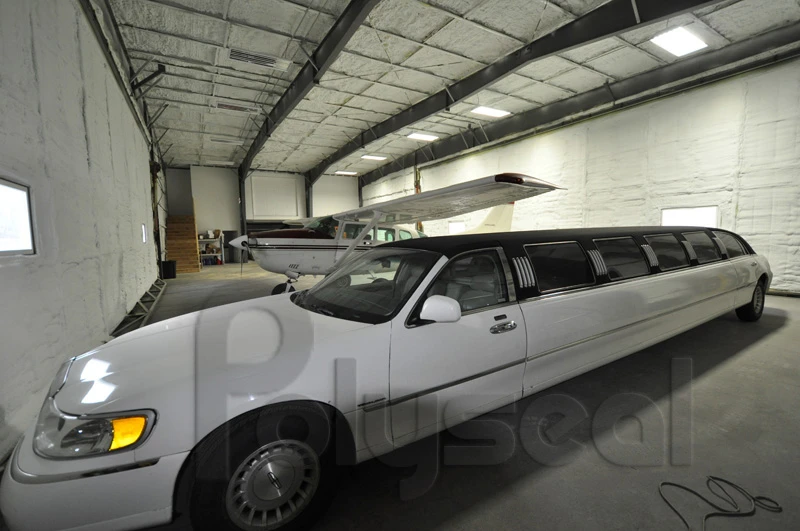
Insulating garage ceilings and shared walls in Chugiak, AK keeps the cold parked in your garage instead of drifting into the rooms you live in every day. Because Chugiak homes often attach garages directly to living space, an uninsulated shared wall and an open ceiling under a heated room act like open windows to the outdoors. The right fix depends on how you use the garage, whether a bedroom or office sits above it, and how much moisture the space sees. This step-by-step guide to insulation helps explain how different materials can address these areas: closed cell spray foam delivers the highest R-value per inch and doubles as an air and vapor barrier, open cell foam fits interior shared walls where sound control matters, and batts or blown-in material cover simpler cavities on a budget. This guide walks through what actually works here, where to insulate first, and what each approach costs.
Chugiak sits about 20 miles northeast of downtown Anchorage, wedged between Eagle River and Eklutna, with roughly 10,000 residents spread along the Glenn Highway and the edge of Chugach State Park. Wikipedia’s overview of Chugiak notes how close the community sits to Knik Arm, which funnels winter wind into Southcentral Alaska.
That matters for your garage. Southcentral Alaska has a subarctic climate, and Alaska’s climate data shows Anchorage averaging 23°F highs and 11°F lows in January, plus about 75 inches of snow each year. A garage that shares a wall with your living room and a ceiling with your bedroom sits on the cold side of an 80-degree temperature difference for months.
Heat moves from warm to cold, and heat loss is caused directly by that indoor-outdoor temperature gap through walls, ceilings, and floors. An experienced insulation company can address these weak points by improving insulation coverage and air sealing. In stud walls and floor joists, wood framing itself creates thermal bridges that bypass insulation entirely, which is why cold spots show up along baseboards and ceiling seams above the garage.
Insulation does four jobs on a garage ceiling and shared wall:
| Option | R-Value Per Inch | Best For | Notes |
|---|---|---|---|
| Closed cell spray foam | R-5.5 to R-6.5 | Garage ceilings, any surface facing moisture | Rigid, seals air, resists water absorption |
| Open cell spray foam | ~R-3.6 | Interior shared walls, sound control | Expands into voids, softer texture |
| Fiberglass batts | R-3.1 to R-4.3 | Open joist bays on a budget | Needs separate air sealing to perform |
| Blown cellulose or fiberglass | R-3 to R-3.8 | Garage ceilings with open cavities | Fast coverage, settles over time |
Closed cell foam is the workhorse for Chugiak garages because the garage environment is colder and damper than conditioned space. Open cell foam earns its place on shared walls where noise transfer is the complaint. General insulation research confirms that material choice should match the direction and intensity of heat movement, which in our climate is nearly always outward.
| Service | Typical Low | Typical Average | Typical High |
|---|---|---|---|
| Closed cell spray foam | $1,500 | $5,000 | $100,000 |
| Open cell spray foam | $1,500 | $10,000 | $100,000 |
| Attic insulation | $1,500 | $5,000 | $15,000 |
A standard attached-garage project usually lands near the average column. Five factors push pricing up: greater thickness or higher R-value, difficult access, removal of old insulation, ventilation modifications, and travel distance. For retrofit insulation, existing conditions and the need to work around finished surfaces can also affect the overall project cost. Simple layouts and larger square footage bring the price down. Our minimum job size is $1,500.
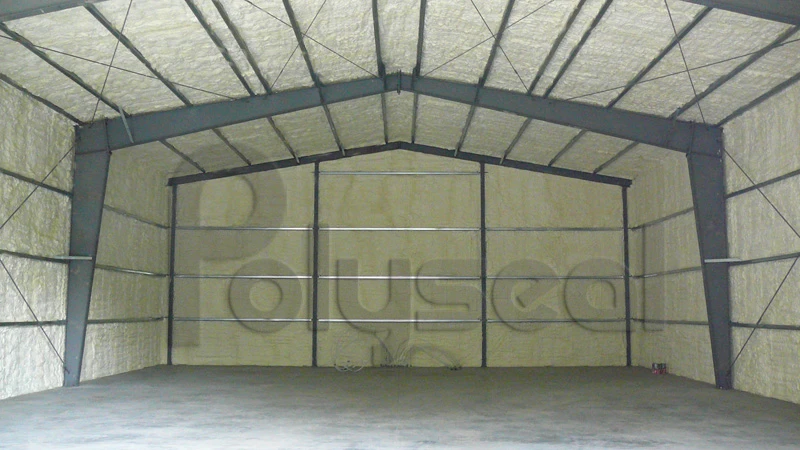
The ENERGY STAR insulation recommendations for the coldest U.S. zones call for R60 in a newly insulated attic, R49 where some insulation exists, and R38 for floors. A garage ceiling under a heated room is functionally a floor, so we use that R38 floor benchmark as a starting point and move toward R49 when the room above gets heavy use.
For insulation in Chugiak, AK, the same guidance calls for R5 to R10 of insulative sheathing in the coldest zones, applied when cladding comes off. In retrofit situations where siding stays on, dense-packed cavities or foam bring the shared wall as high as its depth allows. R-values are additive, so combining several inches of foam with cavity fill gets a Chugiak wall assembly to a number that holds up in February.
| Scenario | Best Fit | Why It Works |
|---|---|---|
| Workshop or hobby garage | Closed cell on ceiling, shared wall | Holds stable temperatures for tools and finishes |
| Bedroom above the garage | Closed cell ceiling toward R49 + open cell wall | Warm floor, less noise, fewer cold spots |
| Garage converted to living space | Closed cell throughout | Air and vapor barrier in one step |
| Unheated garage, rooms beside it | Open cell on the shared wall | Sound control and a buffer wall on a budget |
| Detached garage used seasonally | Batts or blown-in ceiling | Lower cost per square foot for part-time use |
Polyseal Insulation insulates garage ceilings and shared walls across Chugiak, Eagle River, and the Anchorage and Mat-Su Valley, and our team will match the material to how you actually use the space. Whether you want the closed cell foam package for a garage with a bedroom above it or open cell on one cold wall, we will give you clear R-value targets and itemized pricing before any work starts. Call us at (907) 745-7325 or email [email protected] to talk through your project. Ready to take the next step? Use the buttons below and our team will get you scheduled.
Request a Quote | Schedule a Free Insulation Assessment
Yes, when the garage shares a wall or ceiling with conditioned rooms. Insulating those shared surfaces stops the garage from pulling heat out of your living space even if the garage itself never gets heated.
Open cell works well for interior shared walls, especially where noise is the main complaint. Closed cell is the better pick when the wall faces damp conditions or you want the air and vapor barrier in one product.
Most single-garage projects are completed in a day or two once scheduled. Access, square footage, and whether old insulation needs removal affect the timeline.
Yes, insulation absorbs and blocks airborne sound transfer through walls, and open cell foam is frequently chosen for interior walls for exactly this reason. Pairing insulation with a sealed wall assembly improves the result further.
The garage ceiling is the floor system of that upper room, so it is the wall between warm and cold. Insulating that plane to R38 or higher, combined with air sealing, is what keeps the upper room’s floor warm.