

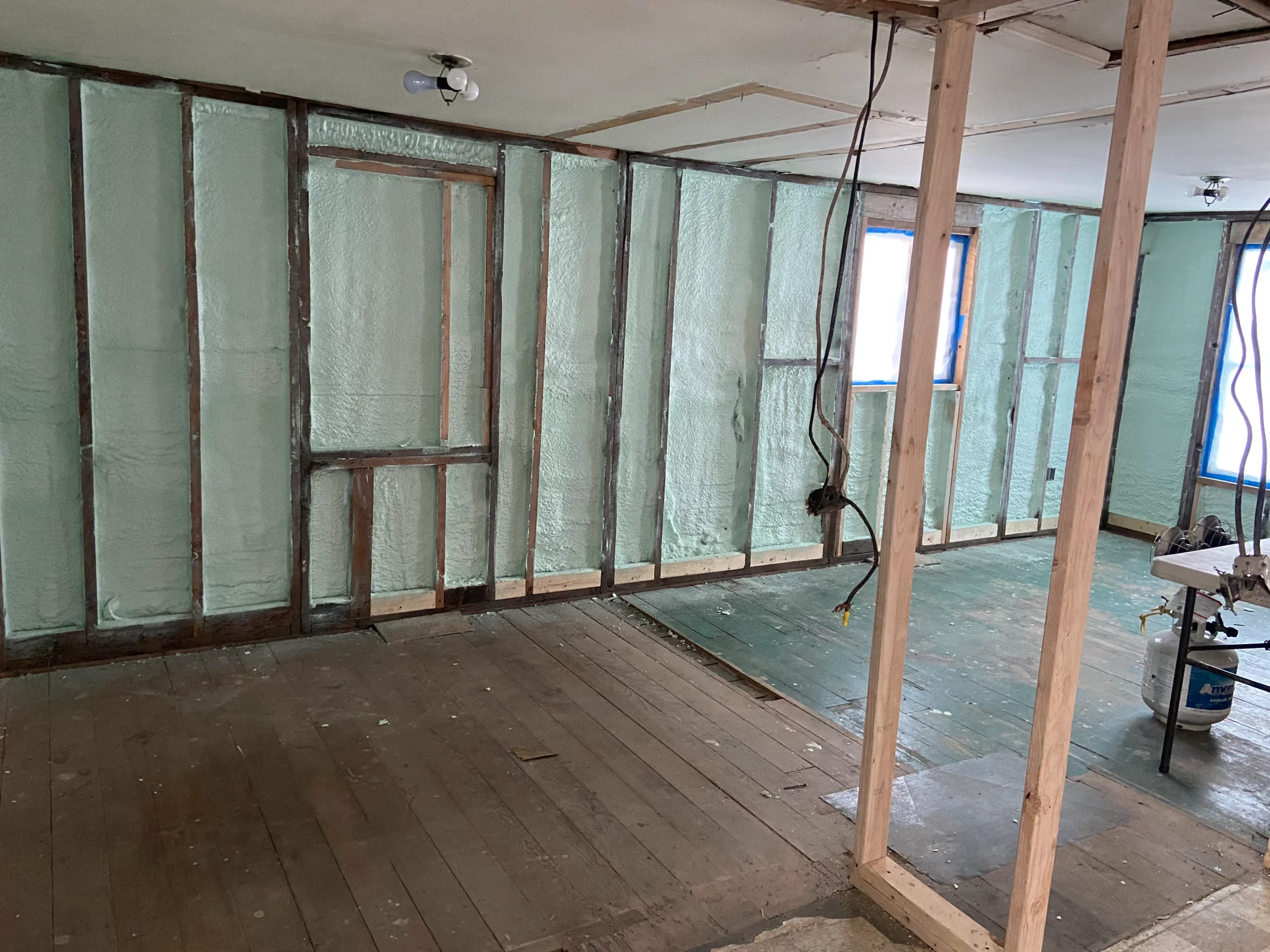
Insulation improves basement wall coverage by sealing the full height of the foundation wall against heat loss, cold concrete, and moisture-laden air, which pulls the basement inside the home’s conditioned envelope and converts damp, chilly square footage into usable living space. For homeowners in Eagle River, AK, Southcentral Alaska codes require high insulation levels. A step-by-step guide to right insulation can help cover below-grade walls to at least R-15 continuous (or R-19 cavity), keeping walls warmer and creating more usable space. The right strategy depends on your wall condition, moisture history, and how you plan to use the space, with closed cell spray foam, rigid foam board, and hybrid foam-and-framing assemblies each serving different goals.
Eagle River sits in the Southcentral Alaska climate zone, where the heating season stretches across most of the year and frost drives design decisions from footings to rooflines. Choosing the right insulation service in Eagle River, AK, helps address these demanding conditions. University of Alaska Fairbanks Extension notes that ground temperatures here run near 33°F, which means an uncovered concrete wall and slab act as a permanent heat sink against your living space (UAF Cooperative Extension Service).
State energy code tables for the Southcentral zone set minimums that any coverage plan should meet or exceed:
| Assembly | Southcentral Alaska Minimum | Why It Matters |
|---|---|---|
| Below-grade basement wall | R-15 continuous or R-19 cavity, full height | Stops constant heat drain into 33°F soil |
| Slab edge | R-15, extending 4 ft down | Cold floors are the top comfort complaint |
| Crawl space wall | R-15 continuous or R-19 cavity | Keeps under-floor mechanicals from freezing |
| Exterior frame wall | R-20 | Matches the above-grade envelope |
| Ceiling | R-49 or R-38 | Prevents heat loss into the attic |
The Alaska Housing Finance Corporation supports this work with home energy ratings, renovation loans, and efficiency programs statewide, which gives Eagle River homeowners a formal way to verify results after upgrading (Alaska Housing Finance Corporation).
The Department of Energy’s Building America research is blunt about the payoff: insulating the walls rather than the first-floor ceiling brings the basement into the thermal envelope, keeps it warmer in winter, drier in summer, and a “warmer, dryer basement can have much more value as a functional, usable space” (Building America Solution Center). In extremely cold climates, a wall insulation contractor can help ensure wall insulation keeps basement temperatures above freezing where boilers, water heaters, and piping live.
In practice, coverage creates usable space three ways:
Most homes we insulate in the Anchorage and Mat-Su Valley run between 1,500 and 4,000 square feet, and a finished, conditioned basement can add several hundred functional square feet to that footprint, often at a fraction of the disruption of an addition.
| Strategy | Best For | Key Tactics | Expected Outcomes | Limitations |
|---|---|---|---|---|
| Closed cell spray foam | Irregular walls, rim joists, retrofits | Sprayed directly on concrete, seals edges and penetrations | Air, vapor, and thermal barrier in one pass; highest R per inch | Needs a thermal barrier (drywall) in living space |
| Rigid foam board | Smooth poured walls, budget builds | Adhesive or fasteners, taped and sealed seams | Solid R-value, affordable, DIY-friendly | Seams must be perfect or air leaks |
| Hybrid foam + framed wall | Full basement finishing projects | Foam against concrete, framed wall with cavity insulation, drywall | High R-values, ready for electrical and finishes | More labor and depth loss (2 to 3 inches) |
| Batt-only against concrete | Not recommended | None | Traps moisture against concrete, risks mold | Fails moisture management basics |
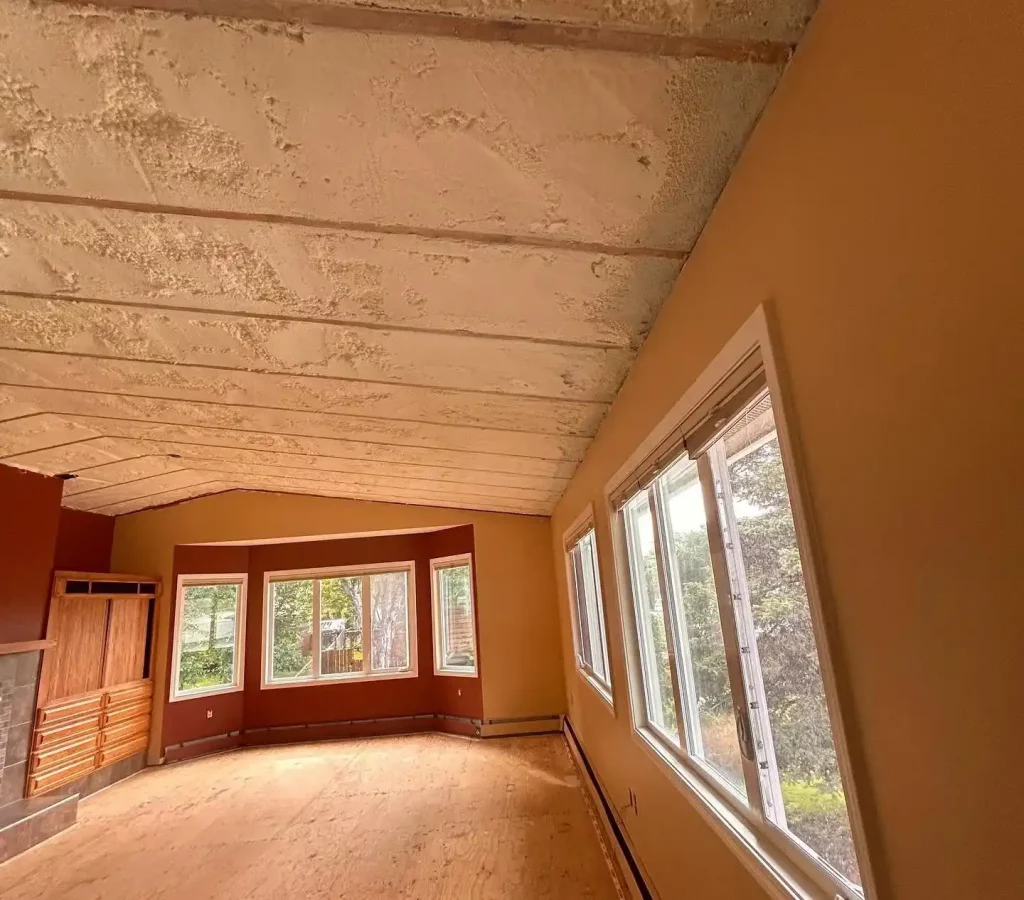
The Building America guidance specifically recommends closed cell foam for foundation walls because open cell spray foam can absorb and retain water, up to 40% of its volume, against below-grade concrete.
Based on our current project data, closed cell spray foam work typically starts at a $1,500 minimum and averages around $5,000 for residential projects, with large whole-home or commercial builds ranging far higher. Labor is the biggest factor in your final number, so an insulation contractor can help assess the project requirements. Prices rise with greater foam thickness and higher R-value targets, difficult access, removal of old insulation, ventilation modifications, longer travel distance, and larger square footage. Simple, open-wall projects cost less.
Two planning notes for Eagle River homeowners: budget for full-height coverage rather than stopping at grade, since research shows the top of the wall is the most important section to insulate, and consider an AHFC energy rating after the work to document the improvement.
| Home Scenario | Recommended Approach | Key Notes |
|---|---|---|
| Older home, bare poured walls | Closed cell spray foam, full height to slab | One-step air seal and insulation on irregular concrete |
| Planning to finish the space | Hybrid foam + framed wall + drywall | Meets the thermal barrier code and adds R-value |
| Seasonal water seepage history | Fix drainage and grading first | Never cover an active water problem with foam |
| Furnace and water heater in basement | Condition the space | Protects equipment and improves heating efficiency |
| New construction | Continuous insulation per Southcentral tables | Includes R-15 slab edge to 4 ft depth |
Polyseal Insulation is the local spray foam specialist Eagle River homeowners trust to turn cold foundations into warm, finished, usable space. Our team builds every basement plan around Southcentral Alaska code minimums, proven moisture management, and closed cell spray foam performance that lasts the life of your home. Call us at (907) 745-7325 or email [email protected] to get started, and our staff will walk your foundation, answer your questions, and hand you a clear, itemized plan.
Request a Quote | Schedule a Basement Assessment
Your basement is already built. Let’s make it worth using.
Southcentral Alaska energy code tables require R-15 continuous or R-19 cavity insulation on below-grade walls, installed the full height of the foundation. Slab edges need R-15 extending 4 feet down.
Insulate the walls if you want the basement usable, because wall coverage brings the space into the conditioned envelope and keeps it warmer and drier. Ceiling-only insulation leaves the basement outside the envelope.
Living spaces require a code-approved thermal barrier, typically half-inch drywall, over foam insulation. We plan this into the project so the finished wall passes inspection.
No, moisture management comes first, including grading, drainage, and any active leaks. Covering a wet wall only hides the problem and can trap water in the assembly.
Spray foam helps with air sealing but is not a substitute for a radon mitigation system. Test your home, and if levels reach 4 pCi/L or higher, install a dedicated mitigation system before finishing.