
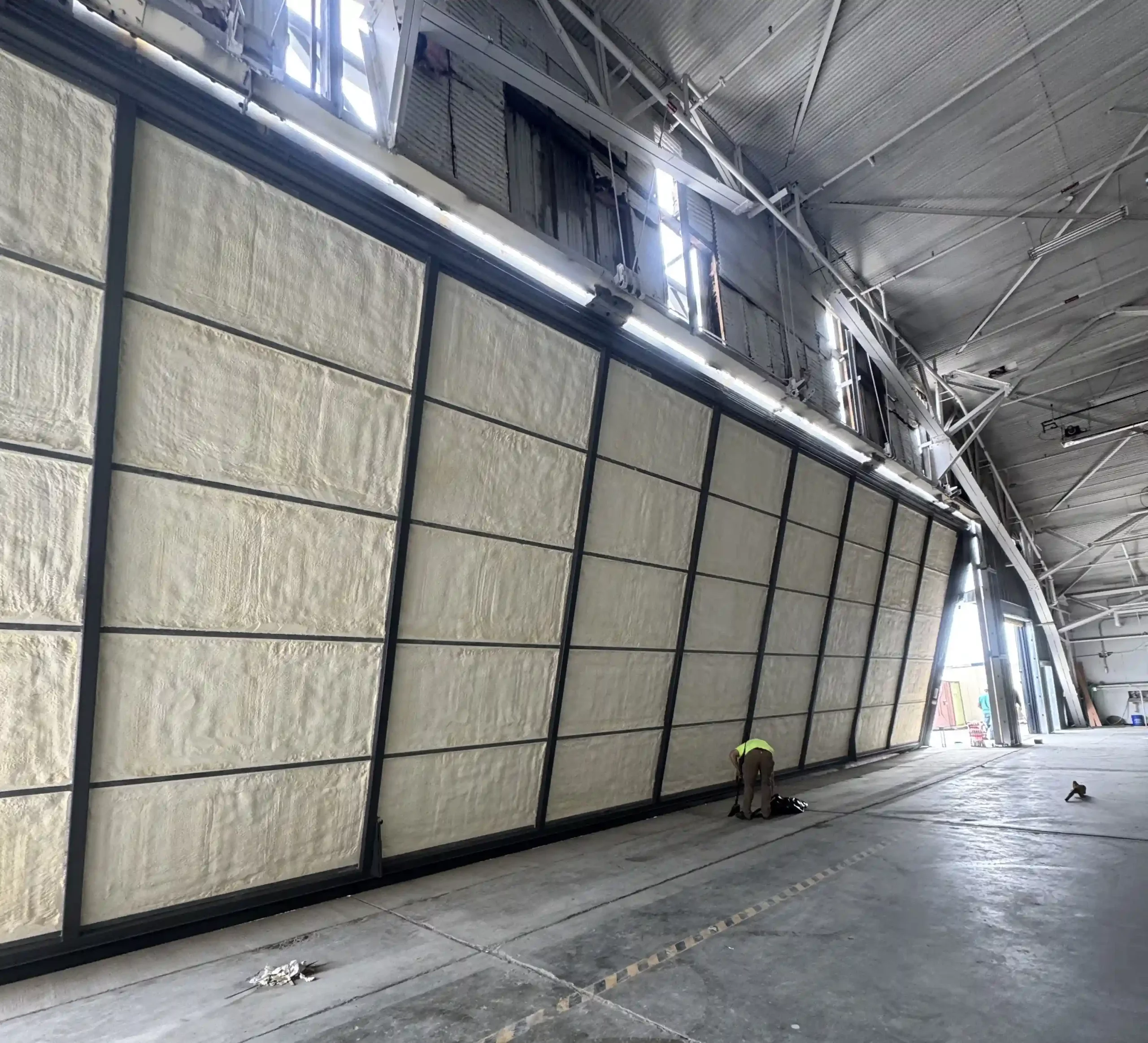
Spray foam insulation becomes the better insulation choice in Mat Su Valley, AK when your home or building faces conditions that exceed what traditional insulation materials like fiberglass or cellulose can handle. In a subarctic climate where winter temperatures routinely drop well below zero, the combination of extreme cold, persistent air infiltration, and moisture control challenges makes spray foam a practical solution in several specific situations rather than a universal recommendation. The right choice between spray foam insulation and conventional insulation depends on your building type, problem areas, budget, and long-term energy goals. Below we break down exactly when spray foam earns its place in a Mat Su Valley insulation strategy.
Mat Su Valley sits in southcentral Alaska, where the heating season stretches for seven to eight months and temperatures routinely plunge into negative double digits. Buildings in this region fall under ASHRAE Climate Zone 7, which demands higher prescriptive insulation R-values compared to nearly every other part of the continental United States (Building Insulation – Wikipedia). For wood-framed residential walls, the prescriptive R-value requirement in Zone 7 reaches R-13 plus an additional R-7.5 of continuous insulation, or the full cavity must be filled with a material rated at R-15.2 or higher. These are aggressive targets that standard fiberglass batts alone often cannot meet within a typical 2×6 wall cavity.
The U.S. Department of Energy’s Building Energy Codes program tracks and evaluates these requirements by climate zone, confirming that colder regions face more stringent standards to offset the greater temperature differential between indoor and outdoor air (DOE Building Energy Codes). In practical terms, the Mat Su Valley heating season is long enough that even small insulation gaps or air leaks compound into meaningful heat loss and higher energy costs over the course of a winter.
Research published through the International Code Council and DOE also shows that improving envelope efficiency in buildings to meet or exceed current energy code requirements is one of the most cost-effective strategies to extend habitability during extreme cold events, in some cases by as much as 120 percent (ICC 2021 IECC Adoption Toolkit). For Mat Su Valley homeowners, this means the insulation you choose is not just about monthly bills, it is about maintaining safe indoor temperatures when conditions turn severe.
Understanding when spray foam becomes the better choice starts with a clear comparison of how different insulation materials perform, particularly in cold climate applications.
| Insulation Type | R-Value Per Inch | Air Sealing | Moisture Control | Best Mat Su Valley Applications |
|---|---|---|---|---|
| Closed-cell spray foam | R-5.5 to R-6.5 | Acts as air barrier | Resists moisture absorption | Rim joists, crawlspaces, metal buildings |
| Open-cell spray foam | R-3.6 | Seals gaps effectively | Vapor permeable | Above-grade walls, attics, sound control |
| Fiberglass batts | R-3.1 to R-4.3 | No air sealing capability | Can hold moisture | Large open cavities with separate air barrier |
| Cellulose blown-in | R-3.0 to R-3.8 | Minimal air sealing | Can settle and absorb moisture | Existing wall cavities, attics with depth |
| Rigid foam board | R-4.0 to R-5.0 | Seams need taping | Varies by type | Continuous exterior insulation layer |
These R-value figures come from standardized reference data compiled on Wikipedia’s R-value (insulation) page. The key takeaway is that closed-cell spray foam delivers a measurably higher R-value per inch than fiberglass or cellulose, while simultaneously providing air sealing and moisture resistance that those materials cannot match on their own.
Thermal insulation fundamentally works by trapping small air cells within a material structure, which retards conduction and convection (Thermal Insulation – Wikipedia). Spray foam takes this principle further by expanding to fill the entire cavity, eliminating the voids, gaps, and compression issues that reduce the effective R-value of batt insulation installed between framing members. As noted in building science literature, studs and framing members create parallel heat conduction paths that reduce overall wall performance, so the insulation between them needs to perform at its rated capacity without sagging, settling, or leaving air gaps.
Rim joist areas where floor framing meets the exterior wall are among the most leak-prone locations in any home. Fiberglass batts cut to fit this area almost always leave gaps around nails, plumbing, and wiring penetrations. Spray foam expands into every irregularity, creating a continuous seal. In Mat Su Valley homes, cold air pouring through rim joist gaps drives up heating costs and can cause condensation on interior surfaces. Closed-cell spray foam in this area addresses insulation, air sealing, and moisture resistance in a single step.
Homes in the Mat Su Valley often have vented crawlspaces or unconditioned basement spaces that sit over frozen ground. Insulating the floor above a vented crawlspace with fiberglass does nothing to stop cold air from flowing through the insulation itself. Spray foam applied to the crawlspace walls and rim joist isolates the living space from the cold below. This approach also reduces the risk of frozen pipes, which is a recurring problem across the Valley.

Not every new home in Mat Su Valley is built with 2×8 or 2×10 framing. Many spec homes and shop buildings use standard 2×6 walls, which provide roughly 5.5 inches of cavity depth. Meeting the Zone 7 prescriptive R-value within that space is difficult with fiberglass alone. Closed-cell spray foam at 5.5 inches delivers approximately R-30 to R-36 in the same cavity that fiberglass would struggle to reach R-23. For builders working within standard framing dimensions, spray foam makes code compliance more achievable without redesigning the wall assembly.
Many older homes in the Valley were built before modern energy codes existed. These homes often have chronic air infiltration around window rough openings, electrical penetrations, plumbing chases, and chimney framing. Blown-in cellulose or fiberglass added to attics and walls improves R-value but does not stop the air movement that drives heat loss. Spray foam applied to critical transition points like top plates, band joists, and cantilevered floors can dramatically reduce air infiltration without requiring a full gut renovation.
Metal buildings are common across Mat Su Valley for workshops, equipment storage, and even some residential construction. Metal framing conducts heat rapidly, creating thermal bridges that make conventional batt insulation largely ineffective. Spray foam adheres directly to metal surfaces, sealing the joints and providing a continuous layer of insulation and air barrier that compensates for the high thermal conductivity of the framing itself.
Not all spray foam is the same, and choosing between open-cell and closed-cell formulations matters in the Valley.
Closed-cell spray foam is denser, offers higher R-value per inch, and acts as a vapor retarder. It is the right choice below grade, in crawlspaces, on metal buildings, and anywhere moisture intrusion is a concern. Our closed cell spray foam projects typically range from $1,500 on the low end to $100,000 on the high end, with most residential jobs falling between those numbers depending on the scope of the project.
Open-cell spray foam is lighter, less expensive per square foot, and vapor permeable, which means it allows moisture to pass through rather than trapping it. This makes it appropriate for above-grade wall cavities and attic floor applications where you want air sealing but also need the wall assembly to dry in one direction. Open-cell foam also provides meaningful sound dampening, which adds value in homes near the Parks Highway or in multi-room shop buildings.
| Project Type | Recommended Foam | Why It Works Best |
|---|---|---|
| New home, 2×6 walls | Closed-cell | Meets Zone 7 R-values in standard cavity depth |
| New home, 2×8 or deeper walls | Open-cell or hybrid | Deeper cavities allow lower-cost open-cell to hit targets |
| Existing home retrofit | Closed-cell at transitions | Targets the worst air leakage points without full demolition |
| Crawlspace encapsulation | Closed-cell | Moisture resistance and adhesion to concrete or wood |
| Metal building | Closed-cell | Seals joints, bonds to metal, resists thermal bridging |
| Attic insulation (vented roof) | Open-cell at floor plane | Air seals the attic floor while remaining vapor open |
Working with the right team matters as much as choosing the right material. Look for a contractor who performs a thorough inspection before quoting, identifies specific problem areas rather than quoting a blanket price per square foot, explains the difference between open-cell and closed-cell in terms your project needs, provides a written scope of work that specifies foam type, thickness, and target R-value, and has direct experience with spray foam insulation in Mat Su Valley conditions including freeze-thaw cycling, permafrost-adjacent soils, and local building code requirements. Clear communication and a willingness to explain the reasoning behind their recommendations are good indicators that you are working with someone who will stand behind their work.
Polyseal Insulation serves the Anchorage and Mat Su Valley area with closed-cell and open-cell spray foam insulation, crawlspace encapsulation, attic insulation, and commercial insulation projects. Whether you are building new, retrofitting an older home, or insulating a metal shop, our team will assess your specific building conditions and recommend the insulation approach that fits your structure, your climate zone, and your budget. We handle projects ranging from targeted rim joist sealing to full commercial builds across the 99508 zip code and surrounding communities.
Request a Quote | Schedule an On-Site Assessment
Call us at (907) 745-7325 or email [email protected] to get started.
Spray foam offers a higher R-value per inch and seals air leaks that fiberglass cannot, making it more effective in specific problem areas like rim joists and crawlspaces. Both materials can work well when installed correctly in the right application.
When properly installed, spray foam insulation is a long-term building material that does not settle, sag, or degrade over time like loose-fill insulation can. It bonds to the substrate and maintains its insulating properties for the life of the building.
Spray foam applied to the attic floor plane seals the air leaks that warm the roof deck, which is the primary cause of ice dams. This addresses the root cause rather than just treating the symptoms.
Closed-cell foam is worth the additional investment when you need higher R-value in a limited cavity, moisture resistance, or structural adhesion. Open-cell is more cost-effective for large open cavities where those properties are less critical.
Spray foam can be installed during winter months, but temperature conditions at the time of application must meet manufacturer specifications for proper curing. Our team monitors conditions closely to ensure proper installation year-round.