
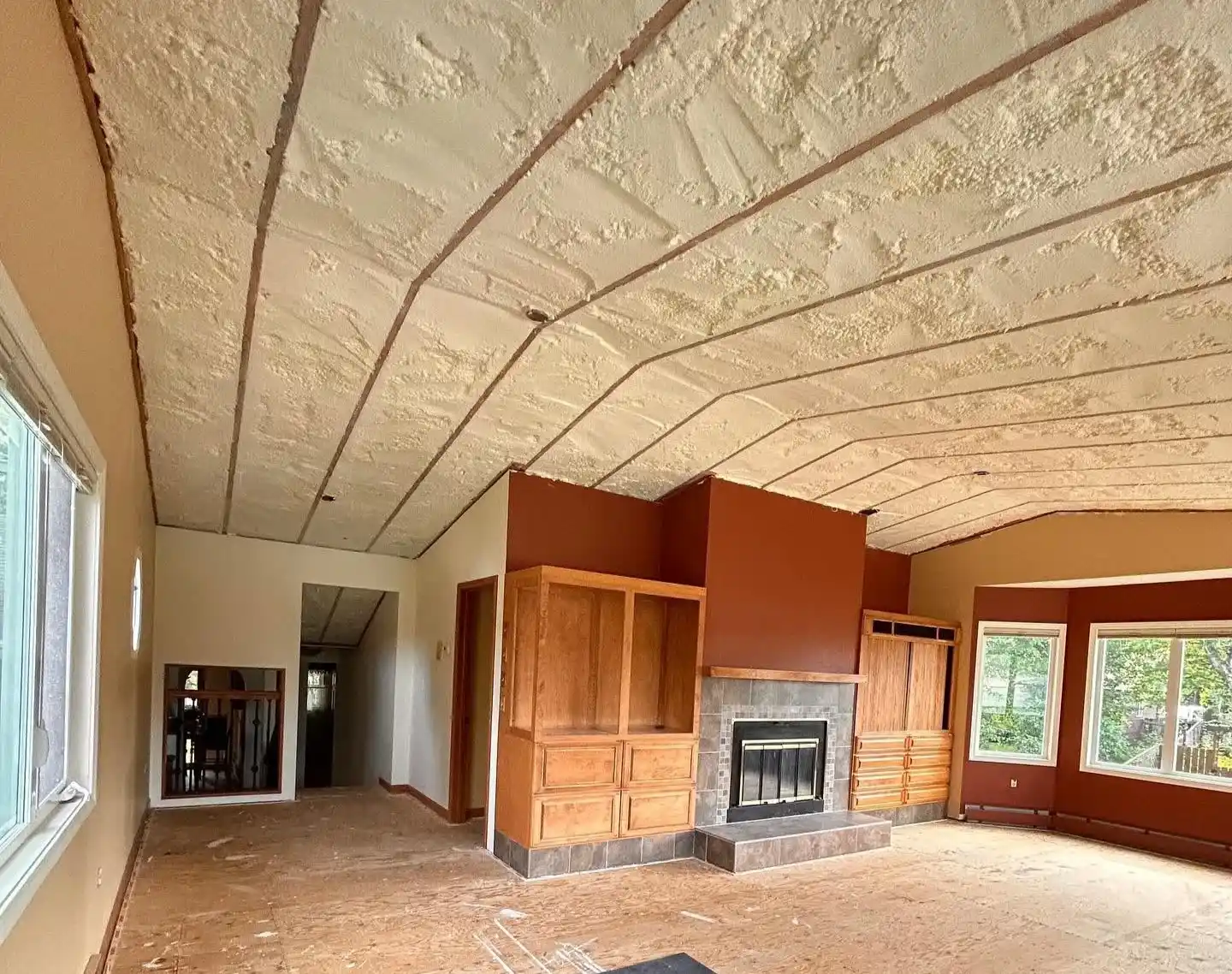
Spray foam insulation shrinkage usually traces back to installation mistakes, like foam sprayed too thick, an off-ratio mix, or cold, damp framing. Heat builds up, the mix cures wrong, or the bond never forms. Those errors leave foam that cracks and pulls away from the wood, which opens air gaps.
Spray foam goes on as a liquid, swells, and hardens within seconds. Some movement is normal, but too much tears the foam loose from the framing it was meant to seal.
Closed-cell foam gives off heat while it cures, then contracts as it cools. Construction Specifier reports that unrestrained closed-cell foam shrinks about 10 percent in manufacturer testing, which pulls on its bond with the wood. A good bond usually holds against that pull. Trouble starts when something weakens the bond or adds extra stress.
The damage can also show up late. That article warns that cracks may appear well after installation, even after the foam is covered, and respraying at that point is often impractical.
These are the spray foam cracking causes trade sources name most often. Most of them come back to how the foam was applied, not the product itself.
Heat is the biggest culprit. The Journal of Light Construction explains that piling closed-cell foam on too thickly traps heat, which can cause heavy shrinkage after curing, plus cracks and hidden voids. Thin passes let that heat escape between layers. Skip that step, and you get a gap inside the wall that air can move through.
Spray foam needs a near-even mix of its two chemicals. The same Journal of Light Construction article says clogged or misadjusted equipment can produce brittle or soft, sticky foam that may shrink or fail to bond. Martin Holladay, an editor at Green Building Advisor, wrote in a 2010 reply that an improper A and B mix, or spraying in cold conditions, are the usual causes of foam pulling away.
Wood moisture matters more than most homeowners expect. Construction Specifier suggests confirming framing sits below 18 percent moisture with a meter, since lumber leaves the kiln near 19 percent and can absorb moisture again. It also names smooth surfaces and coatings, such as rust inhibitors, as bond blockers.
Cold surfaces cause a different problem. The Journal of Light Construction says foam sprayed onto a surface that’s too cool won’t shrink, but it may not bond correctly.
Even well-sprayed foam can lose its grip over time. Heat, moisture, and the framing itself keep moving after the crew leaves.
Spray foam separation from studs often looks like a thin dark line down the edge of the wood. Construction Specifier says thermal movement in service can cause separation where materials expand and contract at different rates.
Those gaps matter. They let air leak through, which cuts energy efficiency, and the same article warns that moist air can condense in colder spots and rot wood framing.
Understanding spray foam insulation performance helps homeowners recognize how proper installation and material selection affect long-term insulation effectiveness.
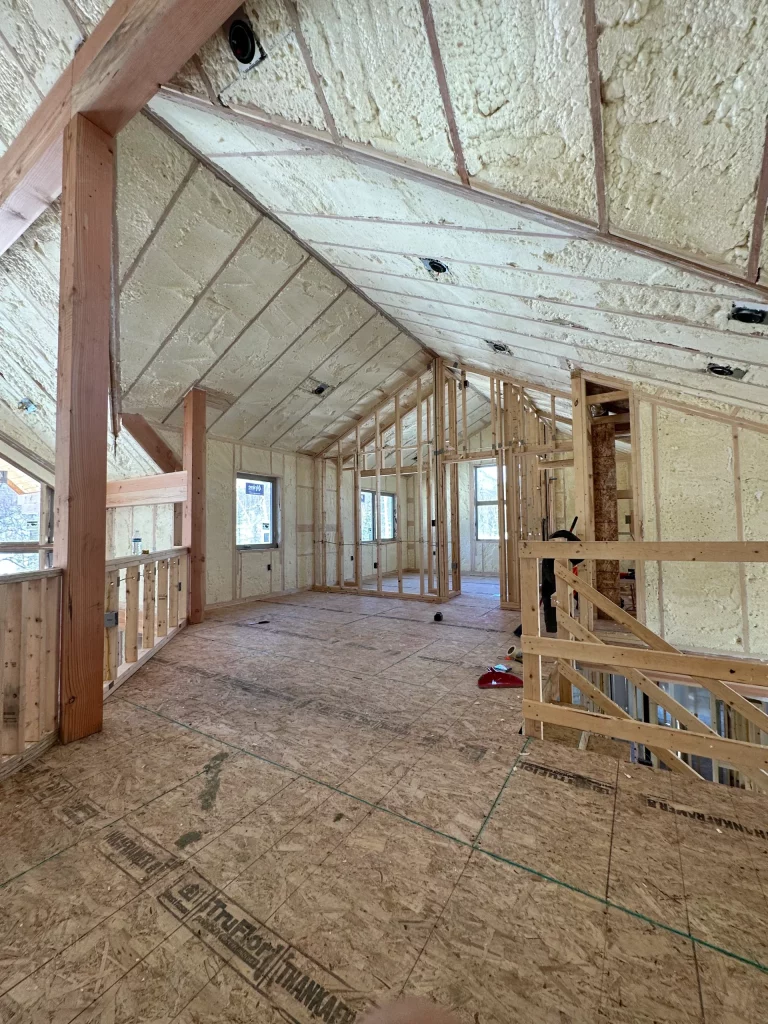
A flashlight and a few test cuts beat guessing. Checking while the walls are still open is far easier than hunting for gaps later.
Often, yes, but access decides the effort. Foam that’s still exposed is far easier to repair than foam behind drywall.
The Journal of Light Construction recommends slitting affected areas and filling them with fresh foam once the cracks stop opening. It also says to remove badly off-ratio foam instead of covering it. Once walls are closed, repairs may mean opening them up.
Not every gap has the same fix, and most spray foam installation problems point to a specific cause. This general guide matches common symptoms to likely causes.
| Symptom | Likely Cause | Typical Fix |
|---|---|---|
| Gap along stud edge | Wet or cold wood | Slit and refill |
| Cracks across the bay | Foam sprayed too thick | Slit, wait, refill |
| Brittle or sticky foam | Off-ratio mix | Remove and respray |
| Foam peels off whole | Poor adhesion | Clean surface, respray |
Seeing gaps along your studs or cracks in cured foam? Contact Polyseal Insulation for a free quote, and we’ll talk through what you’re seeing and what a fix could involve.
Phone: (907) 341-4848
Email: [email protected]
Sometimes, yes. Overheated foam can crack from thermal shock months later, so recheck exposed foam before walls get closed up.
Reliable evidence for one accepted gap size wasn’t found. What matters is whether the gap runs along the wood and lets air through, and a continuous gap deserves a look.
It can. Homeowners report screw pops and cracked seams, though those reports come from field experience, not controlled testing.
It’s safer to wait until test cuts show the foam is stable. Cracks that appear after drywall is up are much harder to reach.
Small, reachable gaps are sometimes filled that way. If wet wood or an off-ratio mix caused the gap, a patch only hides the cause, so get it looked at first.