
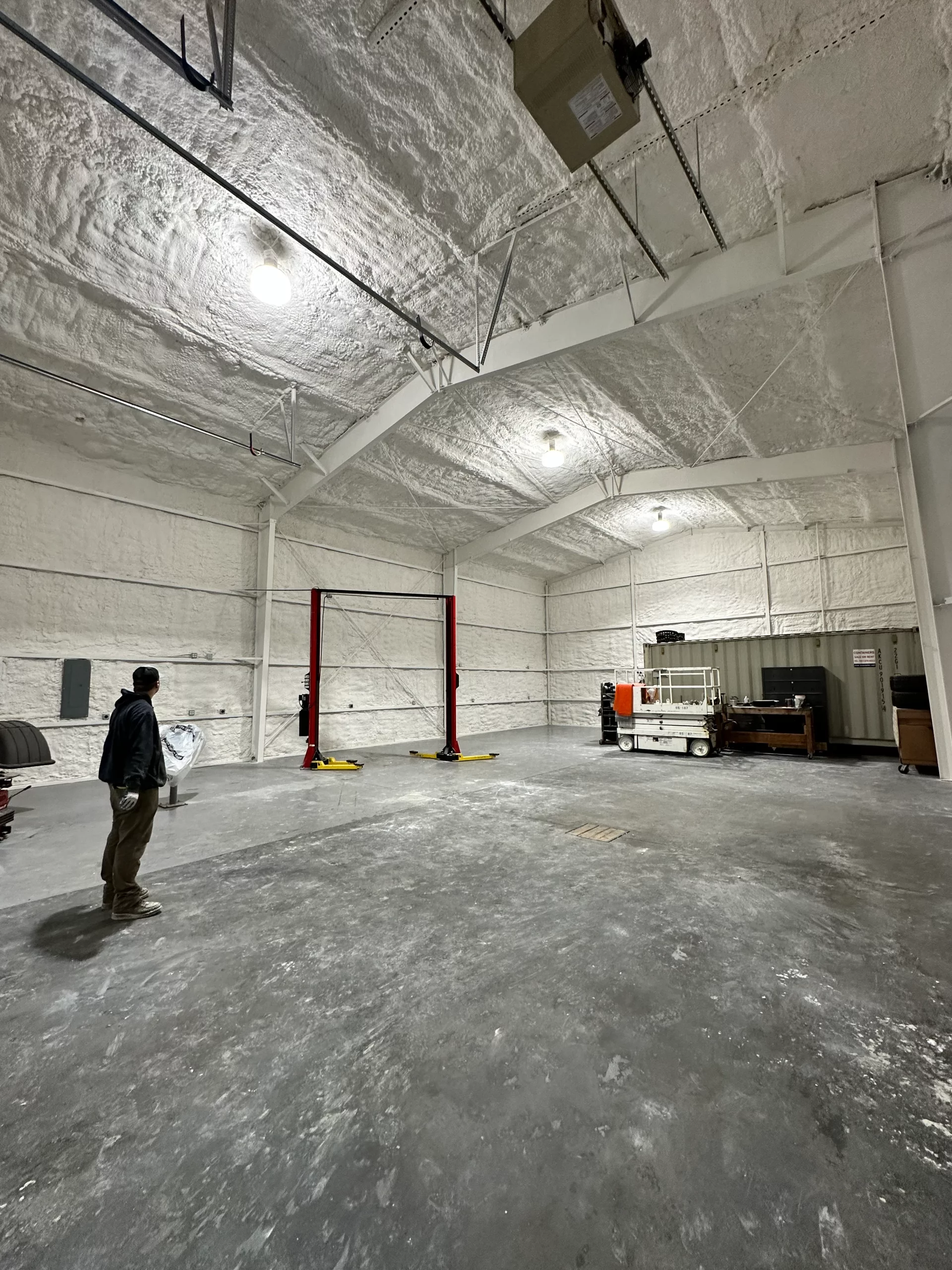
Before commercial spray foam installation, check your building’s condition, choose the right foam type for each area, and control moisture, since Anchorage’s cold makes wet walls a real risk. Also plan for fire barriers, building downtime, and re-entry time, and hire a trained crew that gives you a written scope.
Spray foam goes on as a liquid and expands into a solid layer. It insulates and seals air leaks in one pass. That matters where winter heating runs hard and every gap leaks warm air. Many owners searching for commercial spray foam insulation in Anchorage, AK want the same two things: lower heating bills and fewer cold spots. Foam can deliver both, but only when the right product goes in the right place. A wrong choice can mean costly repairs later.
Open-cell and closed-cell foam behave differently, and most commercial jobs use one or both depending on the area. This table shows the basics.
| Feature | Open-Cell | Closed-Cell |
|---|---|---|
| R-value per inch | About 3.5 | About 6 to 7 |
| Cost | Lower | Higher |
| Moisture | Lets vapor pass | Acts as a vapor barrier |
| Common use | Interior walls and ceilings | Metal buildings, roofs, cold storage |
Closed-cell is denser and often the better pick in cold climates where vapor control matters, though it costs more. Open-cell can work well inside conditioned spaces when you want a lower price and some sound dampening. We’ll walk through each area of your building and match the foam to the job.
Warm indoor air carries moisture. When that air reaches a cold surface inside a wall or roof, water can build up where you can’t see it. A Cold Climate Housing Research Center study in Fairbanks found that foam can act as a “double vapor barrier” and trap moisture in walls. That test used exterior foam on wood-frame walls in Interior Alaska, not an Anchorage commercial building, so treat it as a warning, not a rule. The lesson is that a foam layer changes how the whole wall or roof dries.
Forum posts from shop owners show the same worry. Some report trapped water under metal roofs and odors after poor installs. Those are personal accounts, not tests, yet the worry is a good reason to ask how your roof or wall will handle moisture before anyone sprays.
Spray foam can burn, so codes require a protective layer between the foam and the people inside. Skipping or botching that layer is a common reason jobs get reworked. According to Spray Foam Magazine, codes call for an approved thermal barrier, most often half-inch gypsum board, and it has to be continuous. Attics and crawl spaces may allow an ignition barrier instead, but your local code official makes that call. Inspectors may also check surface prep, foam thickness, and coverage, so ask what your inspection will involve.
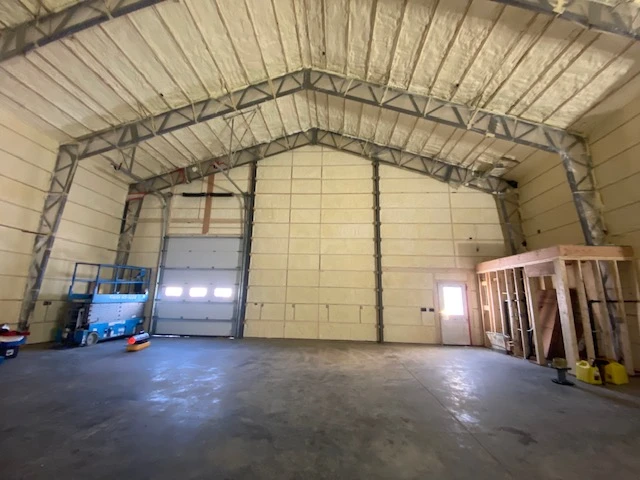
A spray job isn’t like painting a wall. Chemicals are in the air while foam is applied and curing, so your staff and customers need to stay out. Plan your schedule around that. The EPA says occupants and other trades should stay out until the manufacturer’s re-occupancy steps are met, and some manufacturers recommend 24 hours for professional two-part foam. Your product may differ, so get the re-entry time in writing before the job. For a store or office, that may mean an overnight or weekend closure.
A little prep keeps the job on schedule and the foam bonding well. Here’s what to line up first.
Price depends on your building, so a flat per-square-foot number tells you very little. These are the main drivers.
Bids can look similar on paper and still hide big differences in training and scope. When you compare a commercial spray foam insulation contractor against others, look past the lowest price.
Planning commercial spray foam for your Anchorage building? Polyseal Insulation offers free quotes, and we’ll talk through foam type, moisture control, and downtime before you commit.
Phone: (907) 341-4848
Email: [email protected]
A small space may wrap up in a day, while a large warehouse can take several days. Removing old insulation first adds time.
Properly mixed and fully cured foam typically has little odor. A strong smell that sticks around can point to a mixing or curing problem, so report it right away.
Sometimes, but wet, damaged, or loose insulation usually has to come out first. A site visit shows what can stay.
It often can, because closed-cell foam sealed tight to the steel keeps warm, moist air from reaching cold metal. The steel must be clean and dry for the foam to bond well.
Many owners see lower heating costs because foam cuts air leaks. Savings depend on your building, current insulation, and heating system.