

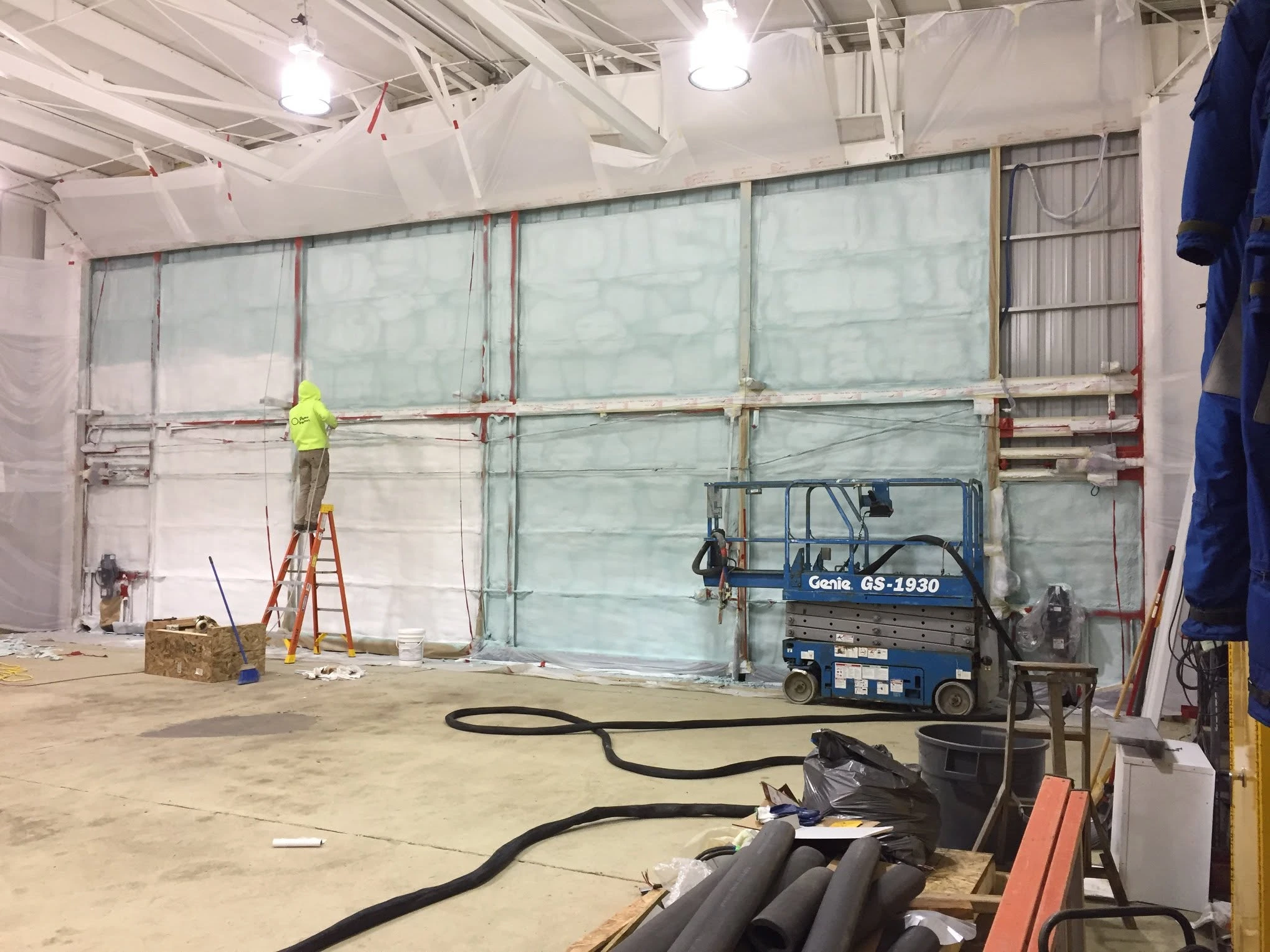
Polyurethane spray foam coatings create a seamless, high-density insulating shell that shields Mat-Su Valley roofs and commercial structures from severe thermal bridging, heavy snow loads, and wind-driven water intrusion. In sub-arctic climates, raw spray foam degrades rapidly under solar ultraviolet exposure and freeze-thaw cycles without a protective elastomeric topcoat. Long-term performance demands engineered spray polyurethane foam coatings paired with high-tensile polyurea or silicone membranes to form a monolithic barrier against the elements.
Commercial and low-slope roofs in the Valley take constant punishment from heavy snow loads and shifting temperatures. When traditional roofing materials begin to degrade, business owners and property managers often discover internal leaks long after insulation boards beneath the surface have rotted. Scheduling timely spray foam coating services stops recurring thermal leakage before structural decking requires a complete tear-off.
Watch for these primary warning signs across your roof deck and upper building envelope:
Seam and Fastener Separation: Standard single-ply membranes (such as EPDM or TPO) and standing-seam metal roofs depend on mechanical fasteners and adhesive glue lines. Extreme temperature swings pull seams apart and back out screws, creating immediate water entry channels.
Persistent Ice Damming Along Roof Edges: Massive ice accumulation along eaves signals that interior heat is escaping through weak insulation, melting roof snow, and refreezing at unheated overhangs. Applying continuous spray foam roof coatings stops warm air escape at the deck level.
Blistering, Cracking, and Surface Chalking: Direct ultraviolet light exposure breaks down aging asphalt emulsions and unprotected coatings, leaving base layers brittle and permeable to wind-driven rain.
Sagging Decking and Trapped Moisture: Spongy spots underfoot indicate that moisture has penetrated the roofing membrane and saturated the internal insulation, adding dead weight and promoting structural rot.
Ignoring these issues leads to chronic deck decay and soaring winter heating costs. Patching localized seams with basic mastic provides only temporary relief because expansion and contraction will reopen those joints during the next severe freeze.
Palmer's subarctic winter climate brings sustained sub-zero temperatures and high-velocity wind events funneling through the Matanuska River valley. According to the official municipal building design standards from the City of Palmer, commercial building designs must withstand an official basic wind speed of 130 MPH and account for a ground snow load of 50 pounds per square foot. When high-velocity winds sweep across mechanical fasteners, sheet edges, and metal flashing, traditional multi-ply membranes experience severe uplift forces that peel seams open. Once cold air penetrates those separations, it sweeps away building heat and exposes uninsulated decking directly to the sub-zero environment.
Furthermore, as outlined in cold-climate thermal standards published by the Insulation Institute, building envelopes in Alaska Climate Zones 7 and 8 require high continuous insulation values to prevent condensation from turning into hidden frost inside roof decks. Without flexible spray foam protective coatings, rigid surfaces crack, allowing meltwater to pool, freeze, expand, and tear the roof assembly apart.
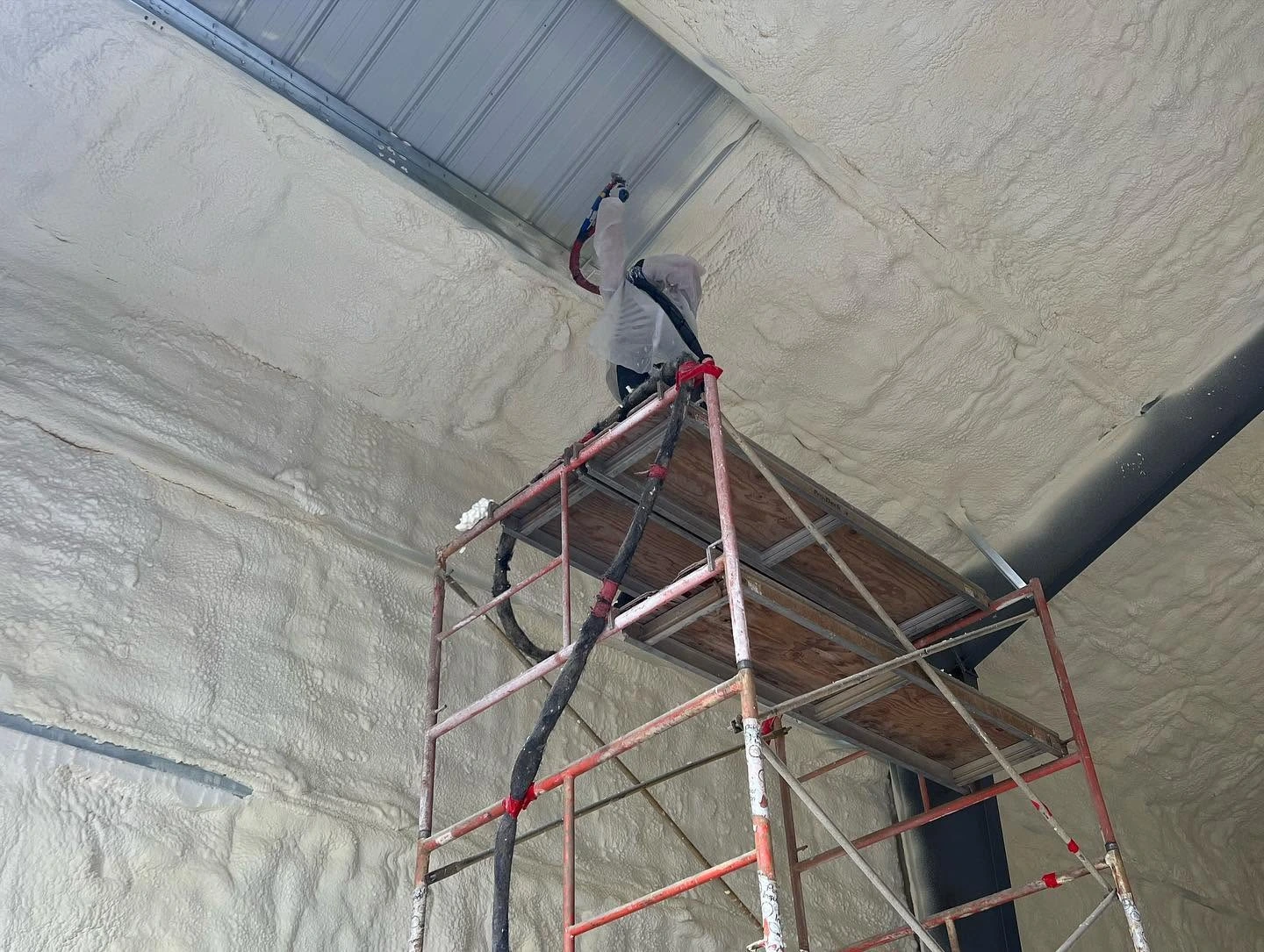
A durable spray-applied roofing installation combines high-compressive-strength polyurethane foam with a resilient protective topcoat. We do not spray foam and leave it exposed to the weather; an unprotected core quickly breaks down under sunlight and mechanical abrasion. Delivering dependable spray foam roof coating services requires matching each layer to the structural demands of the property.
Over this rigid core, we spray-apply durable spray foam protective coatings. Depending on roof traffic and drainage slopes, we apply plural-component polyurea or high-solids silicone membranes. Polyurea cures in seconds, remains flexible across sub-zero temperatures, and provides superior resistance to sliding ice and foot traffic. Silicone coatings provide long-term resistance to ponding water and reflect summer ultraviolet radiation. For properties with maintenance activity, we embed ceramic granules into the wet topcoat, creating an abrasive, slip-resistant surface that protects the system from equipment maintenance wear.
For commercial facilities, warehouses, and municipal buildings, full roof tear-offs generate high disposal expenses and disrupt daily business operations. Applying commercial spray foam coatings allows us to restore an existing roof assembly in place, provided the underlying structure remains sound and dry.
Substrate Preparation: We clean the existing membrane, clear dirt and loose debris, secure loose fasteners, and replace any moisture-damaged underlying insulation board.
Monolithic Application: We apply spray polyurethane foam coatings directly over aged metal, modified bitumen, or single-ply surfaces. The foam conforms to every corrugation and fastener head, converting multiple failure-prone seams into a single, continuous layer.
Flashing and Penetration Sealing: Rooftop mechanical curbs, vent stacks, and parapet edges present the highest risk for leaks on commercial properties. Spray-applied foam creates self-flashing transitions that eliminate the need for sheet-metal boots and seasonal pitch-pocket maintenance.
Property owners evaluating spray foam coating services should always verify that a contractor maintains an active Alaska General Contractor license, uses proportioning rigs with heated delivery hoses, and understands local building design codes.
Polyseal Insulation has served Palmer, Wasilla, and Southcentral Alaska since 2002. Our crews have more than two decades of field experience handling specialized spray polyurethane and protective membrane systems designed for Alaska's challenging environment.
Call us today at (907) 341-4848 or email [email protected] to discuss your project and schedule an on-site commercial roof evaluation.
Yes. Spray polyurethane foam adheres directly to clean metal decking, sealing every seam and fastener head while eliminating thermal bridging and condensation beneath the panels.
Rigid spray polyurethane foam degrades under direct ultraviolet sunlight. A topcoat of silicone or polyurea shields the foam from UV breakdown, moisture intrusion, and mechanical ice damage.
We apply high-density roofing foam rated at 2.8 to 3.0 pounds per cubic foot. This density yields high compressive strength capable of supporting maintenance traffic and deep snow loads.
A properly maintained system lasts 20 to 30 years or more. Property owners can recoat the elastomeric top membrane every 10 to 15 years to renew ultraviolet protection without tearing off the foam.
Yes, but the installation requires specialized heated rigs, pre-warmed chemical drums, and completely dry substrates. We monitor surface temperatures and ambient moisture carefully before beginning application.