

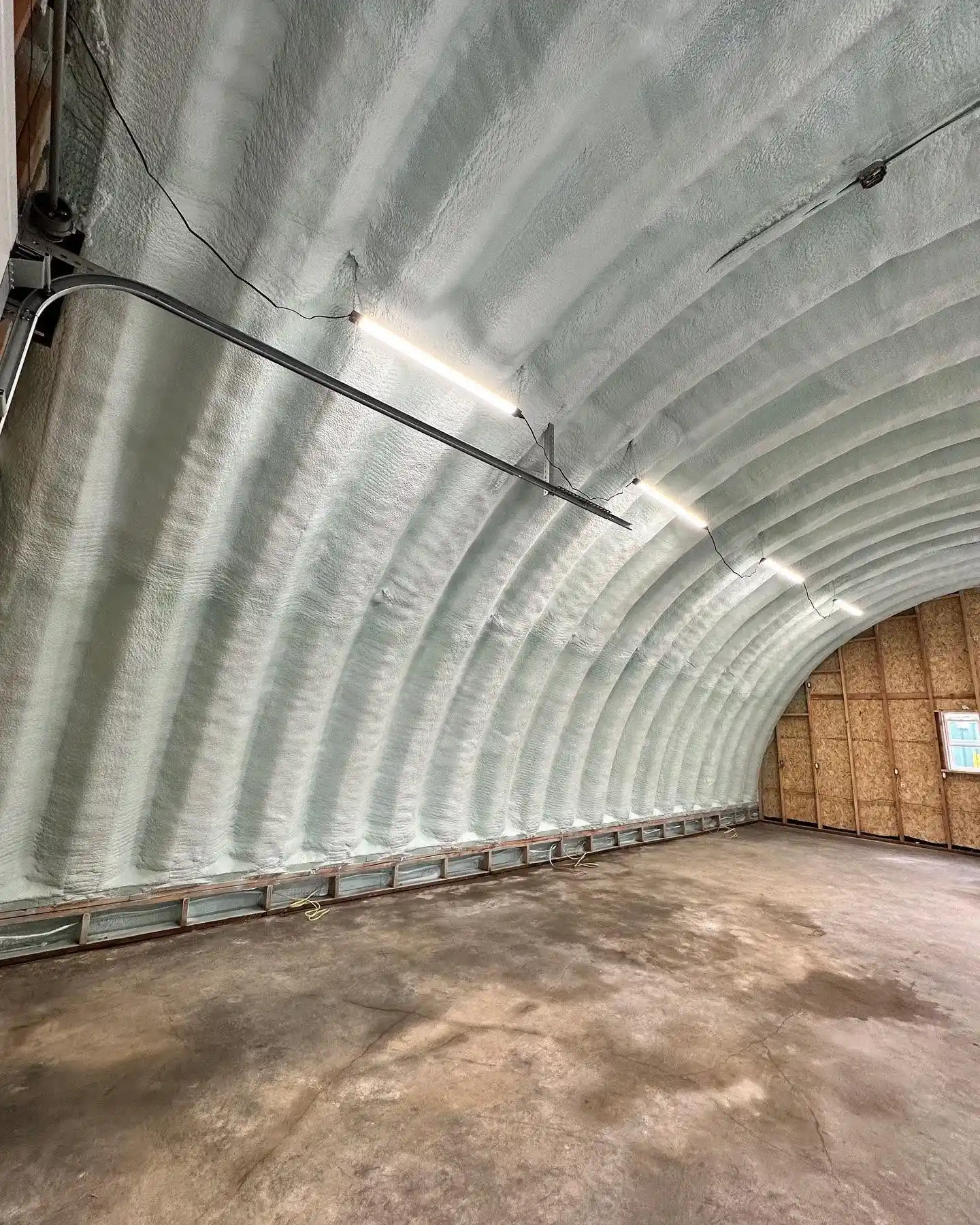
Picture a January night in Palmer with the thermometer sinking past minus ten, your barn full of animals, your greenhouse heater roaring, and your fuel bill climbing by the day. Polyseal Insulation provides advanced agricultural insulation services in Palmer, AK, that seal farm buildings against brutal cold, cut heating costs, and protect the livestock and crops that keep Matanuska Valley agriculture alive. From greenhouses and dairy barns to equipment shops, we build thermal envelopes that let your operation run strong every month of the year.
Palmer grew from a railroad whistle stop into a planned farming community in 1935, when 203 families relocated from Michigan, Minnesota, and Wisconsin as part of the federal Matanuska Valley Colony project. Each family drew a 40-acre tract, and many descendants of those original colonists still farm the valley today. That pioneer farming spirit shaped everything about the town, from its historic downtown district to its working family farms.
Palmer now hosts the Alaska State Fair, where giant vegetable contests draw crowds from across the state, including a 79-pound cabbage that took first prize in 2008. With Pioneer Peak rising more than 6,000 feet south of town and the Matanuska Glacier just up the valley, the community lives up to its motto, "Alaska at Its Best." Farming here is a point of pride, and it deserves buildings built for the climate.
Palmer sits between USDA Plant Hardiness Zones 4b and 5a, where winter lows around minus 20°F are routine and sub-zero nights number close to 29 each year, according to climate data for the area. An uninsulated or leaky farm building in those conditions bleeds heat around the clock. Proper agricultural insulation in Palmer, AK, locks in warmth, controls condensation, protects animal respiratory health, and keeps water lines from freezing.
Closed-cell spray foam, our most requested material, delivers an industry-rated R-6 to R-7 per inch while acting as an air and moisture barrier in one application. ENERGY STAR identifies air leakage as one of the largest sources of wasted energy in any building, which is why sealing matters as much as thickness. Here is how common options compare for farm structures:
| Insulation Type | R-Value Per Inch | Air Sealing | Moisture Resistance | Best Farm Use |
|---|---|---|---|---|
| Closed-cell spray foam | R-6 to R-7 | Excellent | Excellent | Barns, shops, freezers |
| Open-cell spray foam | R-3.5 to R-3.8 | Good | Fair | Walls, attics, sound control |
| Fiberglass batts | R-2.9 to R-3.8 | Poor | Poor | Budget wall cavities |
| Blown-in cellulose | R-3.2 to R-3.8 | Fair | Fair | Attics, hard-to-reach gaps |
Things to Consider
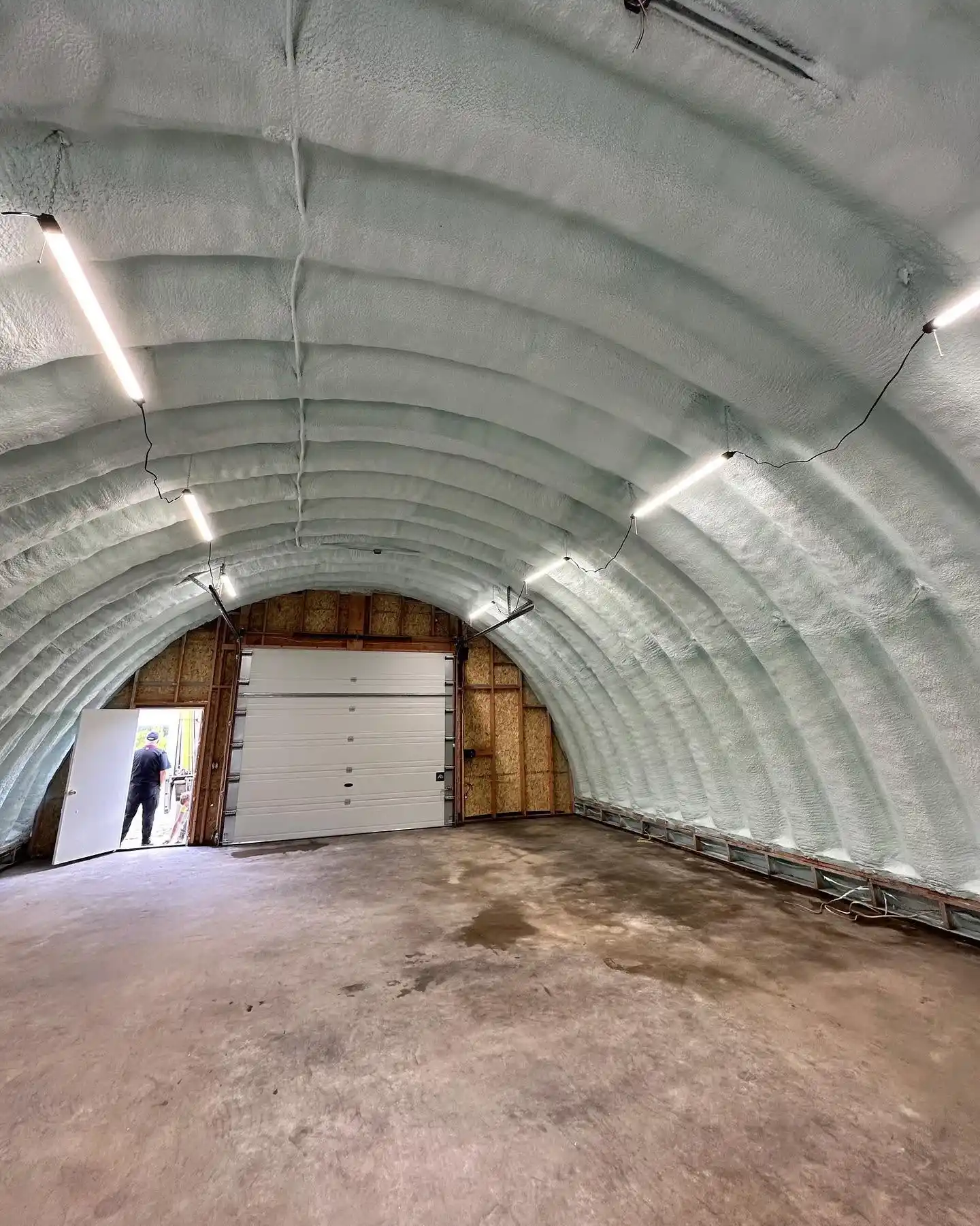
Every project begins with a free on-site evaluation of your buildings, where we measure, inspect, and identify the heat loss that costs you the most. You get a clear written plan with material recommendations and pricing, so there are no surprises later. We follow guidance consistent with cold-climate building science, including resources from the University of Alaska Fairbanks Cooperative Extension Service.
We insulate the full range of metal buildings across the valley. Greenhouses get insulated end walls and perimeter sealing that extends your growing season on both ends. Barns, poultry houses, machine shops, root cellars, and processing rooms each get a material plan matched to humidity levels, animal load, and how you use the space. Retrofit work on older colony-era buildings is a specialty, and we can tackle it one building at a time so your operation never stops.
Working with a local agricultural insulation contractor in Palmer, AK, means hiring people who know Chinook winds, wet Augusts, heavy snow loads, and a growing season measured in weeks. Polyseal Insulation is based right here in the Mat-Su Valley, and the people who quote your job are the people who perform it. No middlemen, no referral networks, just direct accountability from first call to final walkthrough.
A family vegetable operation off the Glenn Highway was losing heat through leaky end walls and struggling to start seedlings before May. We applied two inches of closed-cell spray foam to the end walls and sealed every frame gap in a single day. The grower reported roughly a 35% drop in propane use that first winter and moved seeding up six weeks. That is what a sealed building does for a valley farm.
Ready to stop heating the outdoors? Call (907) 745-7325 or email [email protected] for a free quote on your farm buildings. Polyseal Insulation schedules fast, works around your operation, and stands behind every square foot we insulate.
Cost depends on building size, material choice, and wall condition, which is why we provide a free on-site quote with exact pricing before any work begins.
Closed-cell spray foam performs best in most cases, combining high R-value per inch with built-in air sealing and moisture resistance for sub-zero winters.
Yes, retrofit work is one of our specialties, and we can complete it building by building so your daily operation keeps running.
Most barns and greenhouses take one to three days depending on size, and we schedule around chores, milking, and market dates.
Sealed, high-R-value buildings dramatically reduce heating load, and most farm owners see the difference in their first fuel delivery after installation.