

That hairline crack spreading across your foundation wall is telling you something: standard concrete was never built for Alaska's shifting ground. When you need a Cellular Concrete Contractor Palmer, AK residents turn to first, Polyseal Insulation delivers advanced lightweight concrete solutions that combine structural strength with thermal insulation, keeping your property warm, energy-efficient, and shielded from the worst freeze-thaw cycles. Our approach goes beyond basic construction to create lasting comfort, real savings on heating bills, and a healthier indoor environment for your family or business.
Alaska buildings face challenges that standard materials were never designed to handle. Cellular concrete delivers thermal R-values between 1.0 and 4.0 per inch, far exceeding the 0.07 per inch found in standard poured concrete. That difference in thermal performance translates directly into lower heating bills and more comfortable living spaces through Palmer's long, freezing winters.
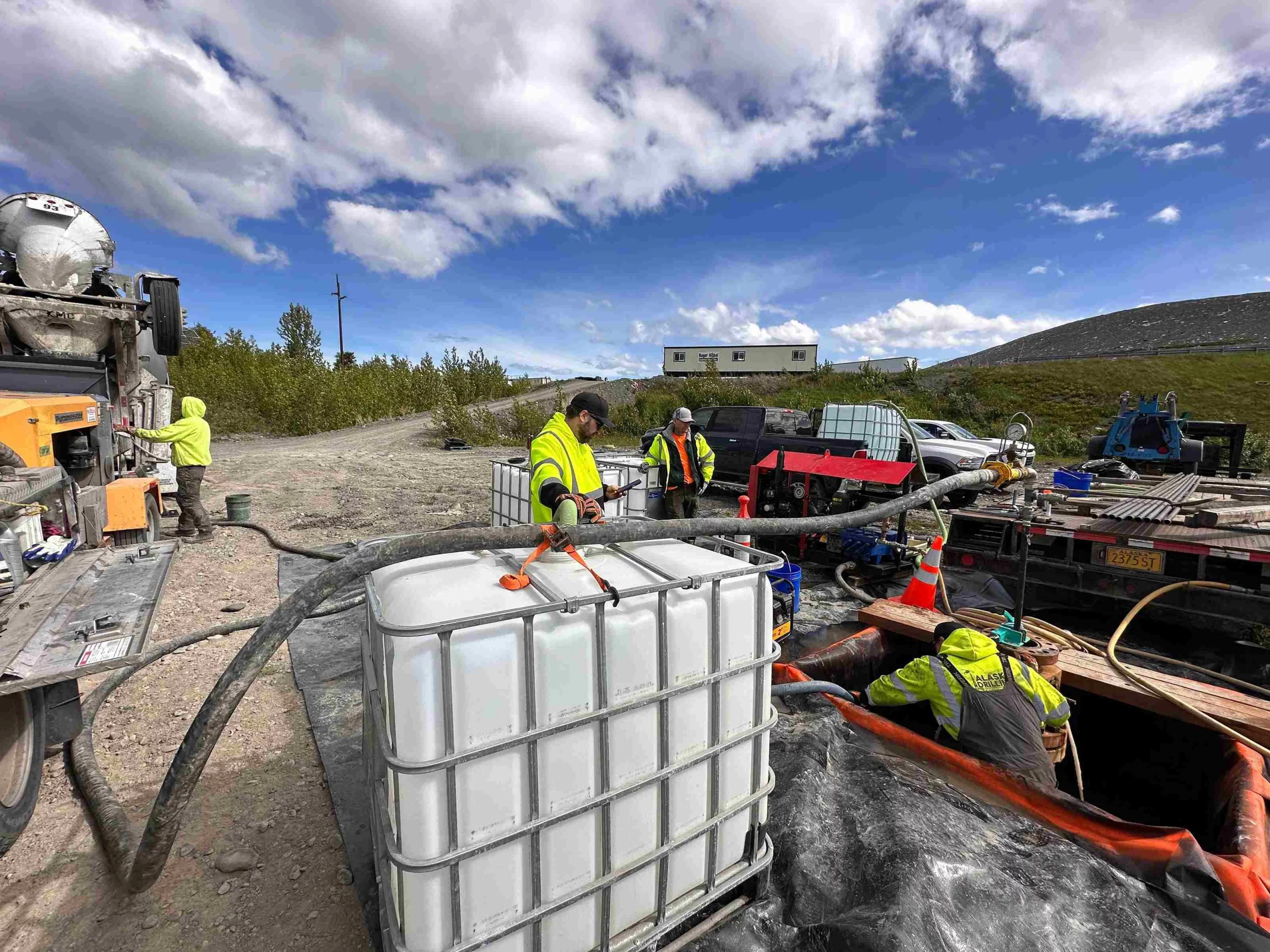
Foundation insulation using cellular concrete can reduce heating costs by 15 to 25 percent, making it one of the smartest investments you can make in your property. Our team at Polyseal Insulation mixes and places each batch on-site to match the exact density and performance your project demands. Whether you are building new or retrofitting an existing structure, cellular concrete adapts to the job with remarkable flexibility.
We handle every step of the process, from initial assessment to final placement, so you never have to coordinate between multiple providers. Our cellular concrete services cover residential foundations, commercial floor fills, geothermal ground loops, and void fills for trench restoration. Each application is engineered to deliver the right density, flow characteristics, and curing properties for the specific demands of your site.
Our professionals bring years of experience working with Palmer's unique soil conditions and frost depths. We use preformed foam technology that creates millions of discrete air pockets within the cement matrix, resulting in a material that is self-leveling and self-compacting. No vibration or mechanical compaction is needed during placement, which speeds up the job and reduces labor costs without sacrificing quality.
Every successful project starts with a thorough site evaluation. Our technicians assess soil conditions, frost depth requirements, load specifications, and drainage needs before recommending the ideal density and mix design. We prepare the preformed foam on-site and blend it with precise proportions of cement and water to achieve the target density, which typically ranges from 20 to 120 pounds per cubic foot depending on the application.
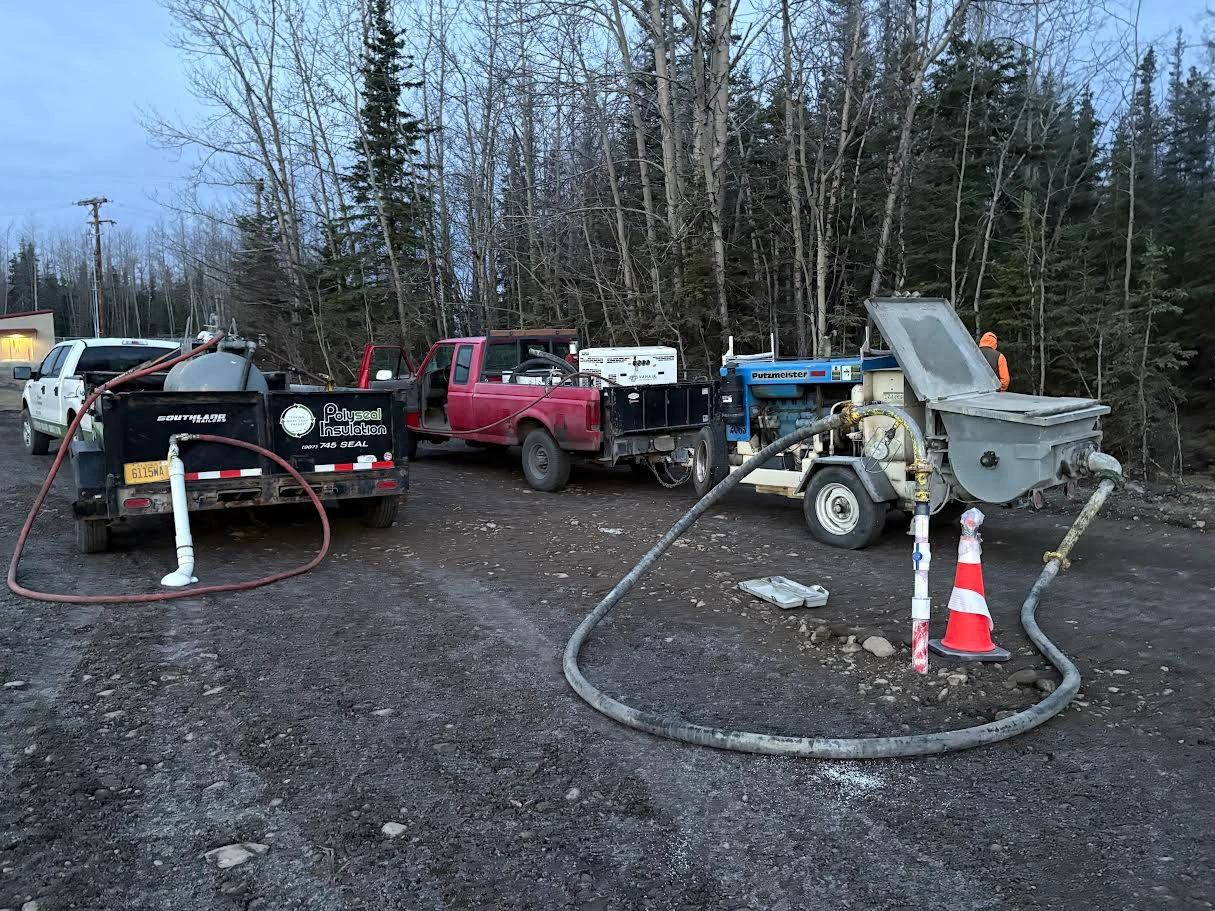
The installation itself is fast and efficient. Cellular concrete flows from our pumping equipment directly into the prepared area, filling every gap and conforming to irregular shapes without leaving voids. Temperature control during mixing stays between 60 and 80 degrees Fahrenheit to maintain foam stability and proper curing, which matters a great deal in Palmer's variable climate. We offer a free consultation and free quote so you know exactly what to expect before any work begins.
Understanding the differences between concrete types helps you make the right choice for your property. Cellular concrete weighs a fraction of standard concrete, with densities as low as 20 PCF compared to the 145 to 150 PCF typical of conventional mixes. This weight reduction eases the load on foundations and subgrades, which is especially valuable on Palmer's freeze-susceptible soils.
| Property | Cellular Concrete | Standard Concrete |
|---|---|---|
| Density Range | 20-120 PCF | 145-150 PCF |
| Thermal R-Value | 1.0-4.0 per inch | 0.07-0.2 per inch |
| Compaction | Self-compacting | Mechanical required |
| Fire Resistance | Excellent | Excellent |
| Freeze-Thaw Durability | High | Moderate |
Beyond the numbers, wall insulation helps regulate humidity naturally by absorbing excess moisture and releasing it when the air becomes dry. This built-in moisture management reduces the risk of mold and rot inside walls and crawlspaces, contributing to better indoor air quality for your home or workspace.
Palmer sits in the Matanuska-Susitna Valley where temperatures routinely plunge well below zero and the ground freezes to depths that challenge conventional construction methods. Our advanced cellular concrete solutions are specifically calibrated for these conditions, providing reliable frost heave protection, insulated shallow foundations, and thermal barriers that perform in extreme cold. The material's resistance to water penetration and freeze-thaw cycling makes it ideal for below-grade applications throughout the region.
Every property in Palmer has its own set of challenges, from permafrost-adjacent lots to expansive clay soils. Our team designs each cellular concrete application to address those specific site conditions, ensuring long-term stability and performance. Whether you need insulated foundation fills, road embankment stabilization, or roof deck insulation, we bring local knowledge and proven methods to every project we take on.
Choosing cellular concrete for your next project delivers advantages that extend far beyond basic construction:
Cellular concrete is used in a wide range of residential and commercial settings, including foundations, crawlspaces, roof decks, plaza fills, utility trenches, road embankments, geothermal systems, and below-grade walls. Our team will help you determine the best application and density for your specific project during your free consultation.
Ready to upgrade your property with a material that saves energy, reduces structural weight, and stands up to Alaska's toughest conditions? Contact Polyseal Insulation today at (907) 745-7325 or email [email protected] to schedule your free consultation and free quote.
Cellular concrete is made from portland cement, water, and preformed foam that creates millions of tiny air pockets throughout the mix.
Most residential projects are completed within one to two days, depending on the scope and volume of material required.
Yes, cellular concrete can be installed in existing structures for foundation insulation, crawl space fills, and retrofit applications.
The ideal density depends on your application, ranging from 20 PCF for insulation to 120 PCF for structural fills, and we determine this during your free consultation.
Cellular concrete uses less raw material than standard concrete, reduces energy consumption through insulation, and is fully recyclable at the end of its service life.