

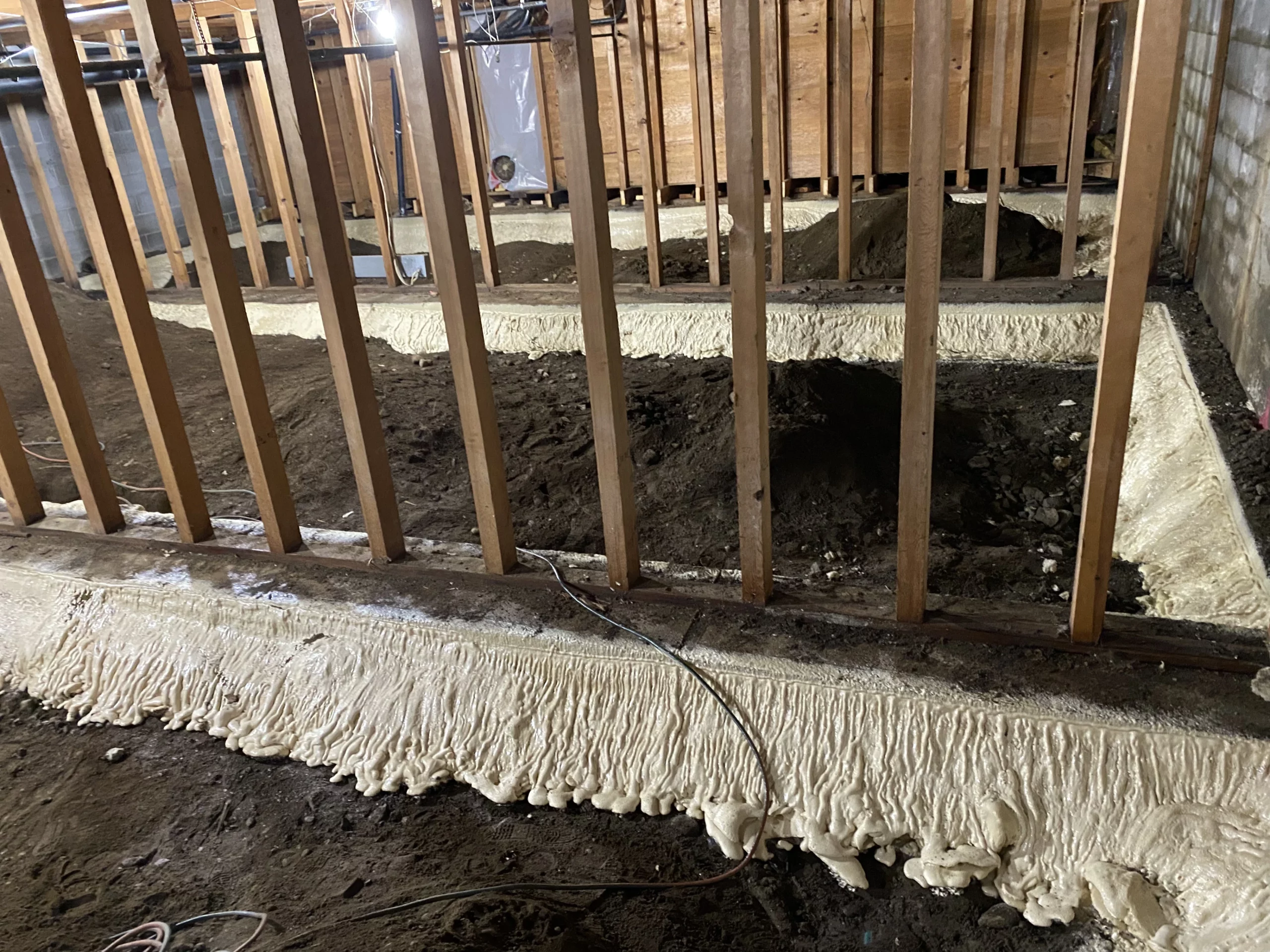
Voids beneath foundations and concrete slabs can develop from improper soil compaction, water infiltration, or melting permafrost and ice lenses. Polyseal Insulation provides professional void-filling services in Palmer, AK, using structural polyurethane geofoam to fill cavities ranging from 1/2 inch to several feet deep. Our injection process fills underground gaps, helps compact loose soil, and restores support beneath affected structures without extensive excavation.
Regional weather patterns and local soil conditions contribute to foundation and concrete settlement across Southcentral Alaska. A geological survey published by the U.S. Geological Survey describes glacial deposits in the Palmer area, including fine-grained silts and gravel. These materials can behave differently when exposed to moisture, freezing, and changing loads.
Long-term weather observations from the National Oceanic and Atmospheric Administration document prolonged freezing conditions and seasonal thawing across Southcentral Alaska. Spring snowmelt and water infiltration can move loose soil beneath structures, while melting ice lenses or permafrost may leave unsupported spaces. Improper compaction during construction can also allow gradual settlement.
Concrete slabs may crack, settle, or develop hollow areas when the supporting soil shifts or underground cavities form. Common causes include inadequate compaction, water infiltration, soil erosion, and thawing frozen ground.
You can identify possible sub-slab voids by checking for these warning signs:
These signs warrant an inspection to determine whether void filling, concrete lifting, or additional foundation repairs are appropriate.
Traditional cement slurry mudjacking adds substantial weight beneath concrete. High-density structural polyurethane geofoam offers a lighter alternative that can fill cavities, stabilize loose material, and provide support beneath foundations and slabs.
| Factor | Structural Polyurethane Geofoam | Traditional Mudjacking | Concrete Replacement |
|---|---|---|---|
| Material Weight | Typically 3–6 lbs/cu. ft. | Approximately 100–120 lbs/cu. ft. | Approximately 145 lbs/cu. ft. |
| Subgrade Impact | Lightweight; expansion can help compact loose soil | Adds weight to existing subgrade | Requires a suitable prepared base |
| Access Holes | Often around 5/8 inch | Typically 2–3 inches | Full removal of existing slab |
| Moisture Resistance | Closed-cell, water-resistant material | Cement-based material affected by site conditions | Depends on drainage and base preparation |
| Return to Service | Often 15–30 minutes | Commonly 24–48 hours | Depends on concrete strength and curing |
| Cost Profile | Depends on cavity volume and material | Often lower initial cost | Includes demolition, base preparation, and replacement |
The appropriate solution depends on cavity depth, soil stability, structural loads, and whether the slab requires lifting or stabilization.
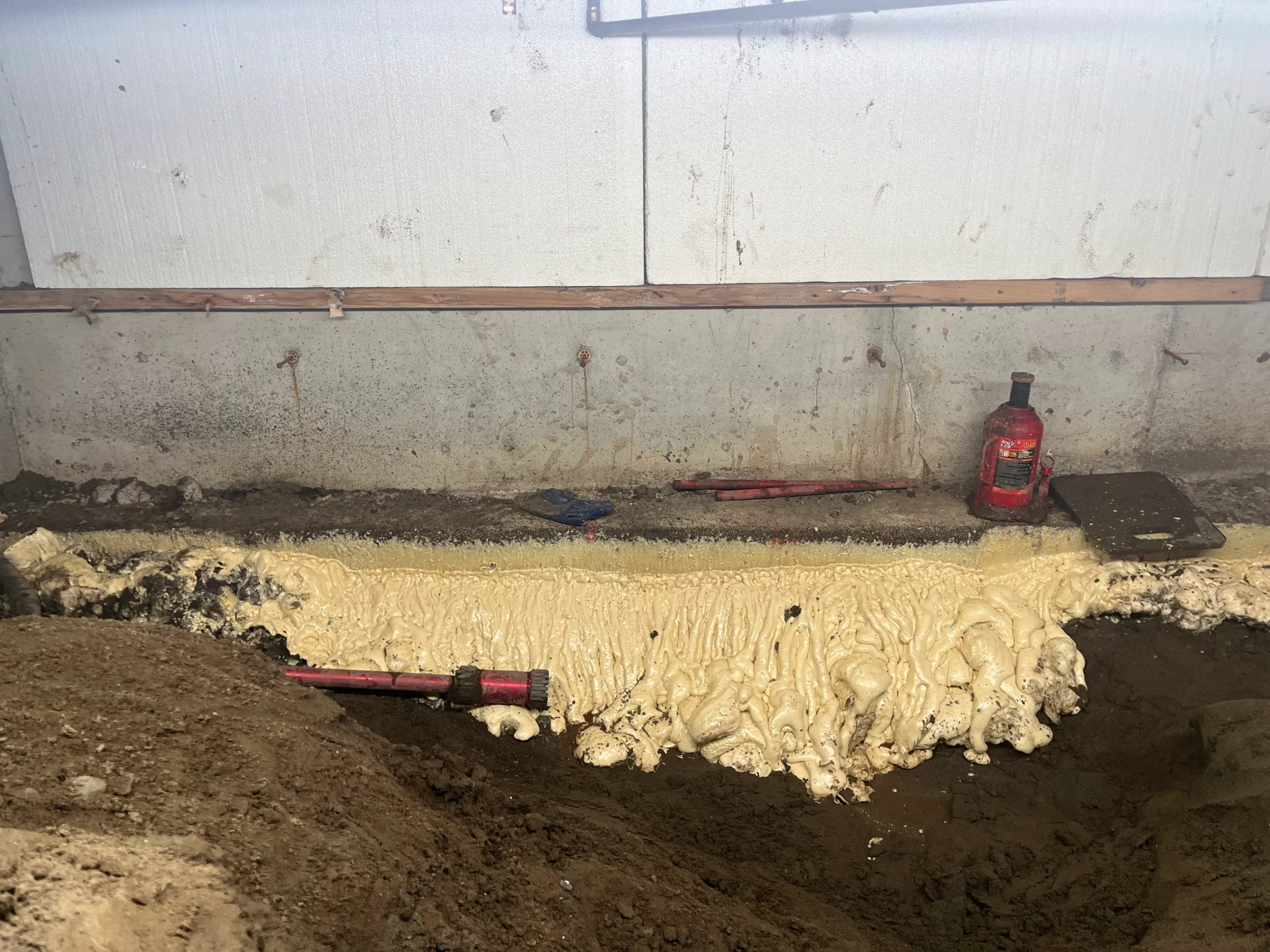
Polyseal Insulation uses structural polyurethane geofoam to fill underground cavities and improve support beneath affected concrete. Our approach minimizes excavation while addressing voids ranging from narrow 1/2-inch gaps to spaces several feet deep.
Void filling costs in Palmer depend on the size and depth of underground cavities, material requirements, access conditions, and structural support needs. Pricing is generally determined after evaluating the affected area.
Early void detection may help property owners avoid more extensive concrete damage. Polyseal evaluates the site and recommends a suitable structural geofill approach based on actual conditions.
Polyseal Insulation has served Southcentral Alaska since 2002, working with challenging ground conditions, changing seasonal temperatures, and specialized structural stabilization requirements.
Hollow concrete, uneven slabs, and gaps beneath foundations may indicate lost ground support. Polyseal Insulation provides structural void filling solutions to address underground cavities and help stabilize affected structures throughout Palmer and the Mat-Su Valley.
Call (907) 341-4848 or email [email protected] to schedule an on-site assessment.
No. Standard canned insulation foam is not designed for structural loads. Professional void filling requires appropriately rated polyurethane geofoam and controlled injection equipment.
Cured structural polyurethane geofoam is water-resistant and does not readily dissolve or wash away. However, existing drainage problems should be addressed to prevent further soil erosion.
Yes. Controlled polyurethane injection can sometimes lift settled concrete while filling underlying cavities. The feasibility depends on slab condition, structural loads, and the extent of settlement.
Yes. Polyseal's structural geofill can fill voids ranging from approximately 1/2 inch to several feet deep. Larger cavities require evaluation of structural loads and ground conditions.
Permit requirements depend on the project's scope and whether structural foundation modifications are involved. Confirm applicable requirements with the City of Palmer or local building authority.