What Are the Common Mistakes to Avoid When Insulating Metal Buildings?
Logan Korpela
November 18th, 2026
The most costly metal building insulation mistakes are skipping vapor control, leaving gaps at seams, choosing foam that doesn’t suit your climate, and insulating over active leaks. Each one lets humid air reach cold steel, where it condenses and damages the building. Fix any leaks first, then seal every seam.
TL;DR
Seal every seam and penetration.
Match the insulation to your climate and humidity.
Repair leaks and wet spots first.
Use closed-cell foam against metal panels.
Why Metal Buildings Fight Back Against Insulation
Steel moves heat fast, and a metal shell leaks more air than most owners expect. Those two traits turn small installation errors into expensive repairs.
Metal Construction News explains that condensation forms on surfaces at or below the dew point of indoor air. Trapped moisture can corrode metal parts and weaken the insulation’s thermal performance, so many metal building insulation problems start with water, not R-value.
Vapor Retarder and Seam Mistakes
A vapor retarder keeps humid air away from cold metal. It only works when it sits on the right side of the insulation and stays sealed.
Wrong placement: Metal Construction News says the low-permeance retarder usually goes on the warm, interior face of the insulation. In hot, humid climates, it may go outside instead.
Retarders on both faces: A low-permeance layer on each side can trap moisture in the middle.
Open seams and holes: Seamless sheets with sealed perimeters tend to outperform systems with many joints. Tape every seam, and seal around purlins, girts, fasteners and utility penetrations. One missed gap lets warm air find cold metal, and condensation follows.
Why Does Condensation Keep Showing Up After Insulating?
Usually the insulation went in, but the moisture source stayed. Humidity, air leaks and trapped water do most of the damage.
Relative humidity above roughly 40 to 45 percent can cause problems in cold weather, and Metal Construction News notes that metal buildings are generally non-vented, so mechanical ventilation is preferred. Washing equipment, wet storage and livestock all push humidity up.
Insulating over an active roof leak or wet insulation seals the problem in. We find and fix the water source first, then insulate. Warm seasons may dry some trapped moisture, but nobody should count on that.
Choosing the Wrong Insulation for Your Building
Not every product suits a steel frame. Choosing by price or R-value alone is where many owners go wrong.
Ignoring thermal bridges: Steel purlins and girts conduct heat around the insulation, so installed performance can fall well below the label.
Compressing batts: Squashed fiberglass loses R-value, and sagging leaves gaps where moist air reaches cold metal.
Skipping odd spots: Doors, eave transitions and framing corners leak heat too. Don’t bury vents either, since they keep air moving.
Forgetting radiant heat: Sun-heated panels pass heat inward, so a reflective layer may help in hot climates.
Spray Foam Mistakes That Cost Owners Money
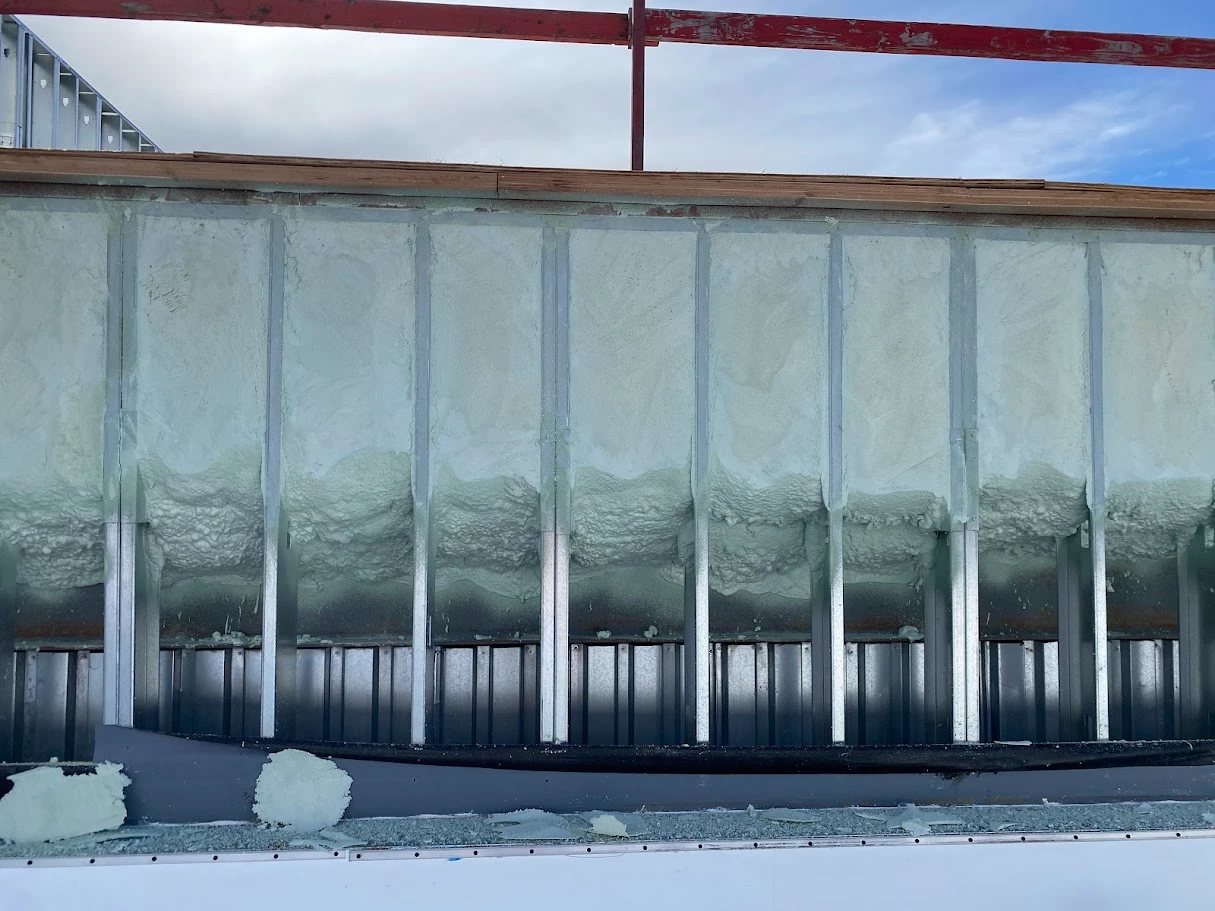
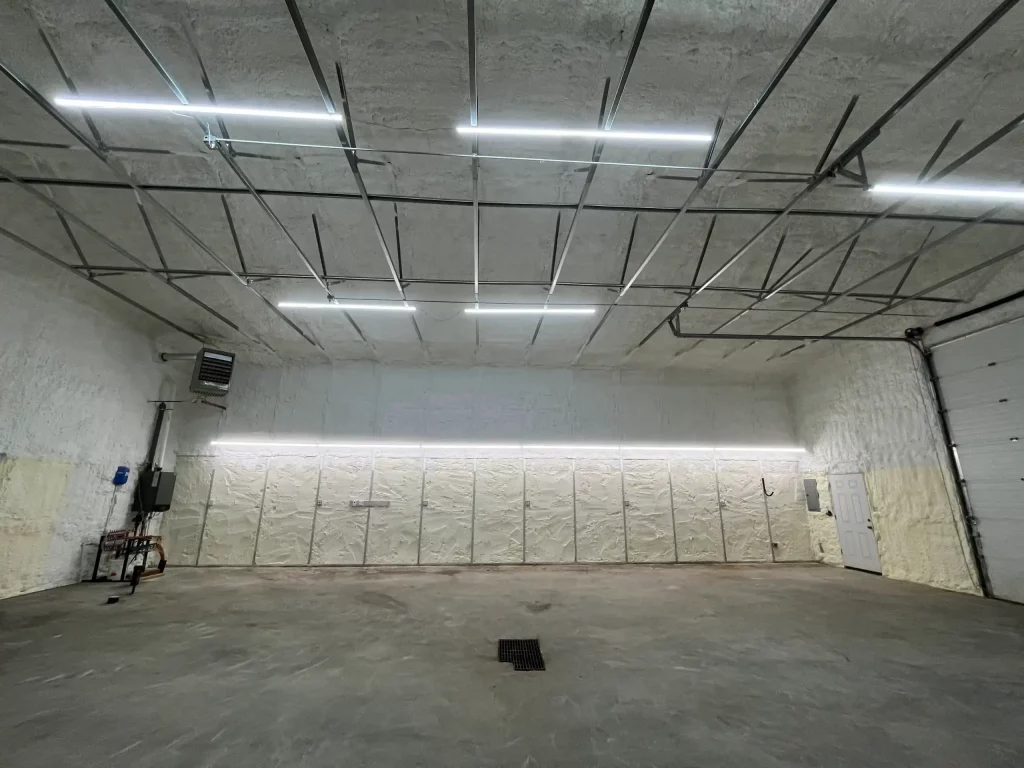
Foam can seal air leaks, insulate and slow vapor in one pass. It only works when the foam type, thickness and application fit the building.
When we plan metal building spray foam insulation jobs at Polyseal Insulation, we pick the foam type first, because open-cell and closed-cell act very differently on steel. MBCI recommends closed-cell foam on metal panels because it resists water.
Feature
Closed-Cell
Open-Cell
Aged R-value per inch
About 6 to 7
About 3.5
Moisture
Resists water, under 1 perm
Vapor permeable
Extra vapor retarder
Generally not needed
Needed for condensation control
Open-cell where moisture can reach it: A Walls & Ceilings analysis found open-cell foam on metal skins showed problem condensation in all three climate zones it modeled, while closed-cell held up.
Skipping the panel maker: MBCI advises checking with the panel manufacturer first, since foam shouldn’t restrict a standing seam roof designed to move.
Spraying too thick, too fast: Curing closed-cell foam can raise panel temperature by as much as 80°F, and thin panels are more prone to oil canning. Follow maximum pass thickness and cooling times.
Spraying dirty or wet metal: Surfaces need to be clean and free of moisture, oil and rust before we spray, or the foam won’t bond.
Leaving foam bare: MBCI notes exposed foam may need a thermal barrier or other fire protection, so ask before you leave it uncovered.
Hiring an uncertified crew: MBCI recommends an applicator accredited through the Spray Polyurethane Foam Alliance’s certification program.
Checklist Before You Insulate
Measure indoor humidity during your coldest weeks.
Patch roof, trim, and flashing leaks.
Map every penetration that needs sealing.
Pick the insulation type for your climate and building use.
Confirm the panel maker’s requirements before any spraying.
Get a Free Quote From Polyseal Insulation
If your building already shows damp insulation, rust streaks or drips, let us look before you add another layer. Call Polyseal Insulation at (907) 341-4848 or email [email protected] for a free quote. Our team will check your seams, humidity, and panel type before recommending anything.
Frequently Asked Questions About Insulating Metal Buildings
Can I add insulation over old, failed insulation?
Usually not until you know why it failed. Wet or sagging material hides leaks and holds moisture against the metal, so remove it and fix the source first.
Is it better to insulate between or over the framing?
A continuous layer over the framing usually cuts thermal bridging better than cavity fill alone. The right choice still depends on your building design and budget.
How can I tell if my insulation has failed?
Look for damp spots, drips, rust streaks near fasteners, sagging sections and cold areas on a thermal camera scan.
Will spray foam make my steel building rust?
Closed-cell foam applied to clean, dry metal seals out moisture. Trapped leaks or wet surfaces under the foam are what cause rust.
How thick should closed-cell foam be on metal panels?
MBCI describes roughly 2 inches of closed-cell foam as reaching under 1 perm. Your climate and energy goals decide the final thickness.
Sources
Metal Construction News – condensation causes, vapor retarder placement, humidity and ventilation guidance.
MBCI – closed-cell versus open-cell foam on metal panels, cure heat and application guidance.
Walls & Ceilings – open-cell condensation modeling in metal-skinned buildings.
I’m Logan Korpela, owner of Polyseal, a family-owned insulation company serving Alaska since 2003. With over 20 years of experience, I focus on durable insulation systems and dependable installation for residential and commercial projects.