
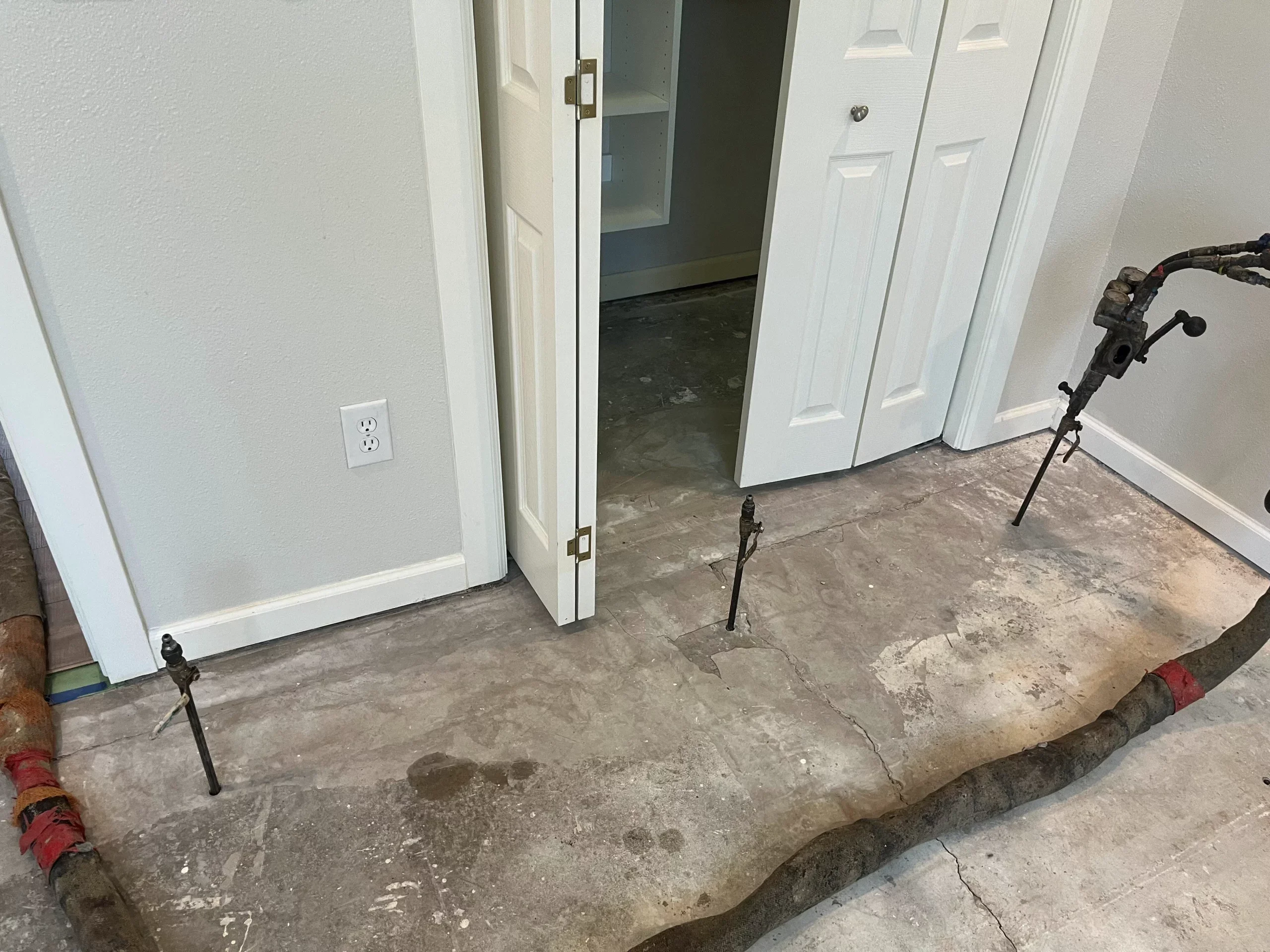
Concrete lifting succeeds when the root cause of settlement, typically void space or unstable subgrade,is addressed alongside the slab itself. If the underlying soil remains weak or prone to shifting, your concrete will likely sink again regardless of the leveling technique used. Long-term stability depends on the soil’s ability to support the weight of the slab and resist moisture-driven changes.
Most people view concrete as a solid, permanent structure, but it is actually a system that rests on the soil beneath it. When we talk about concrete lifting solutions, we are rarely talking about the slab failing; we are talking about the subgrade failing. If the soil compresses, erodes, or shifts, it leaves a void, and the concrete settles into that space.
Polyurethane injection is effective because it does more than just lift the slab. When performed correctly, the resin expands to fill those specific voids, effectively creating a new, stable base. However, this process works best when the soil is capable of supporting the restored structure. If the subgrade is entirely unstable, such as in areas with uncontrolled fill or extreme organic matter, lifting provides a temporary fix rather than a permanent solution.
Different soil types behave in ways that dictate how quickly a slab might settle again after a repair. Understanding what lies beneath your property helps determine the best approach for a lasting lift.
Before you invest in lifting, it is important to identify why the concrete sank in the first place. Fixing the slab is only half the job if the environmental factors remain unchanged.
Water management is the most common culprit. If your gutters, downspouts, or surface grading direct water toward your foundation or slab, you are inviting soil erosion. A study from the University of Minnesota Extension highlights how improper drainage can lead to significant soil saturation and subsequent settlement. If you see a dip near your downspouts, that is likely where your soil problems began.
The material used to lift your concrete directly affects how it interacts with the soil.
| Feature | Mudjacking | Polyurethane Injection |
|---|---|---|
| Material Weight | Heavy (Cement/Sand) | Lightweight (Polymer) |
| Soil Consolidation | Low | High |
| Water Resistance | Porous/Absorbent | Hydrophobic (Repels water) |
| Curing Time | Days | Minutes |
Mudjacking relies on a heavy slurry to raise the concrete. In many cases, this added weight can further compress weak soil, leading to future settlement. Polyurethane is significantly lighter, meaning it does not put unnecessary stress on an already compromised subgrade. Furthermore, polyurethane is hydrophobic, according to technical data from HMI, which means it will not wash away or break down when exposed to the groundwater that caused the original settlement.
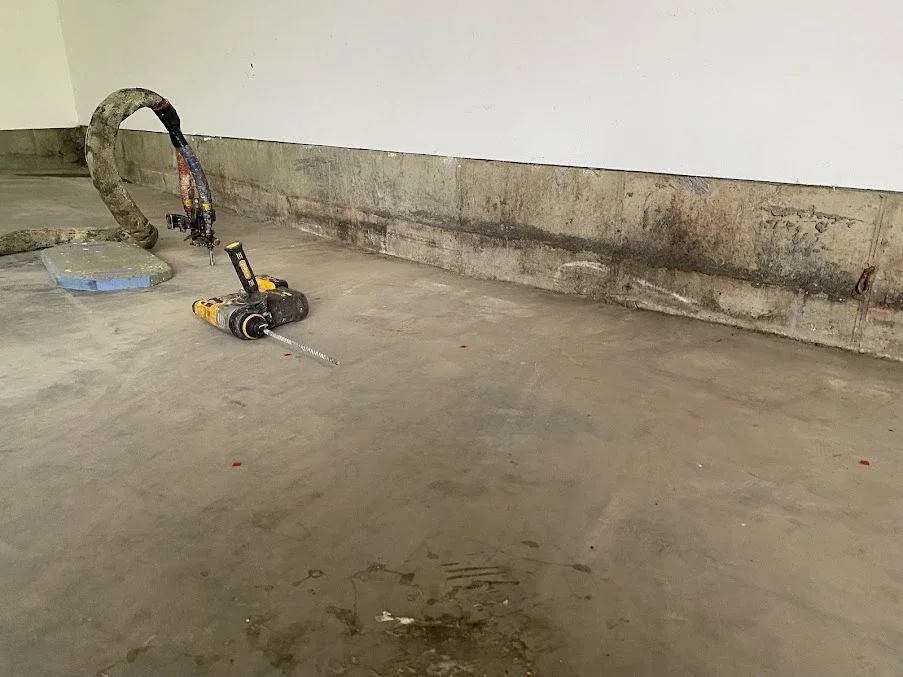
Once your concrete is lifted and the subgrade is stabilized, the goal is to keep the soil in that condition. Stability is not just about the repair; it is about protecting the area from future moisture fluctuations.
Ensure that your property’s grading slopes away from your concrete surfaces at a pitch of at least one inch per foot for the first several feet. Regularly check your downspout extensions to ensure they carry water far enough from the slab to prevent washout. Sealing control joints and cracks is also vital, as this prevents surface water from reaching the subgrade and re-initiating the cycle of erosion, as noted by InterNACHI.
Polyseal Insulation knows that every slab and soil profile is unique. Lifting concrete is a technical process that requires understanding the specific subgrade conditions on your property. We don’t just pump material under a slab; we evaluate the cause of the settlement to ensure our lifting solutions provide the stability you need. If you are concerned about sinking concrete at your property in Alaska, we can help you determine the right path forward.
Contact us today at (907) 341-4848 or email [email protected] to discuss your project.
It shouldn’t, provided the voids are fully filled and the underlying water management issues, like poor drainage or roof runoff, are corrected after the lift.
Yes. Extremely saturated soil can impact how polyurethane cures and interacts with the subgrade, so professional assessment of site conditions is always necessary.
Polyurethane typically cures to 90% of its full strength within 15 minutes of injection, allowing for a quick return to use for your concrete.
Yes, but the lifting technique must focus on filling the voids created by the clay’s shrinking without adding excessive weight that would trigger further compression.
Polyurethane is lightweight, which avoids overloading the weak subgrade, and it expands to fill voids, whereas mudjacking can be too heavy and leave gaps.