
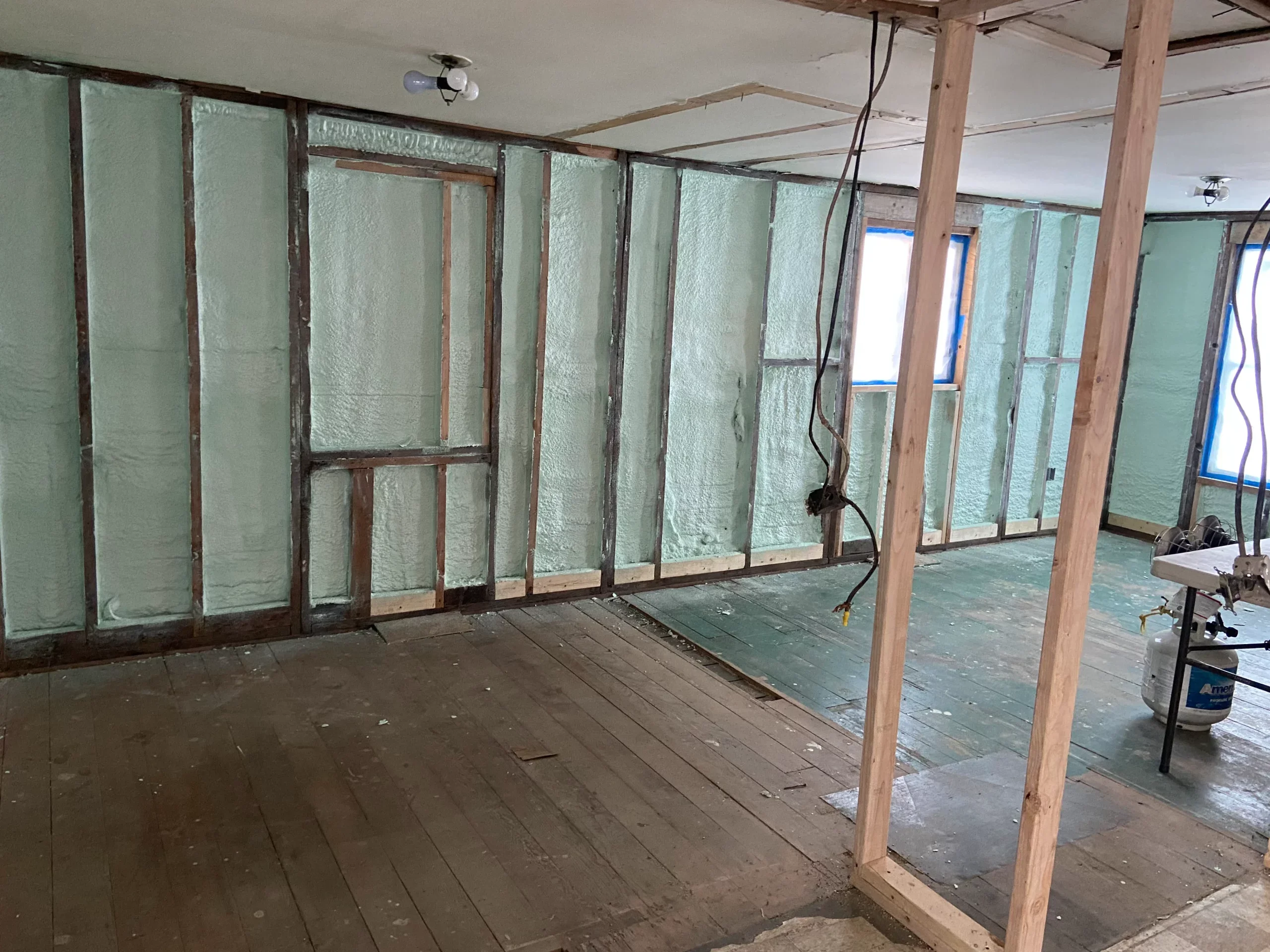
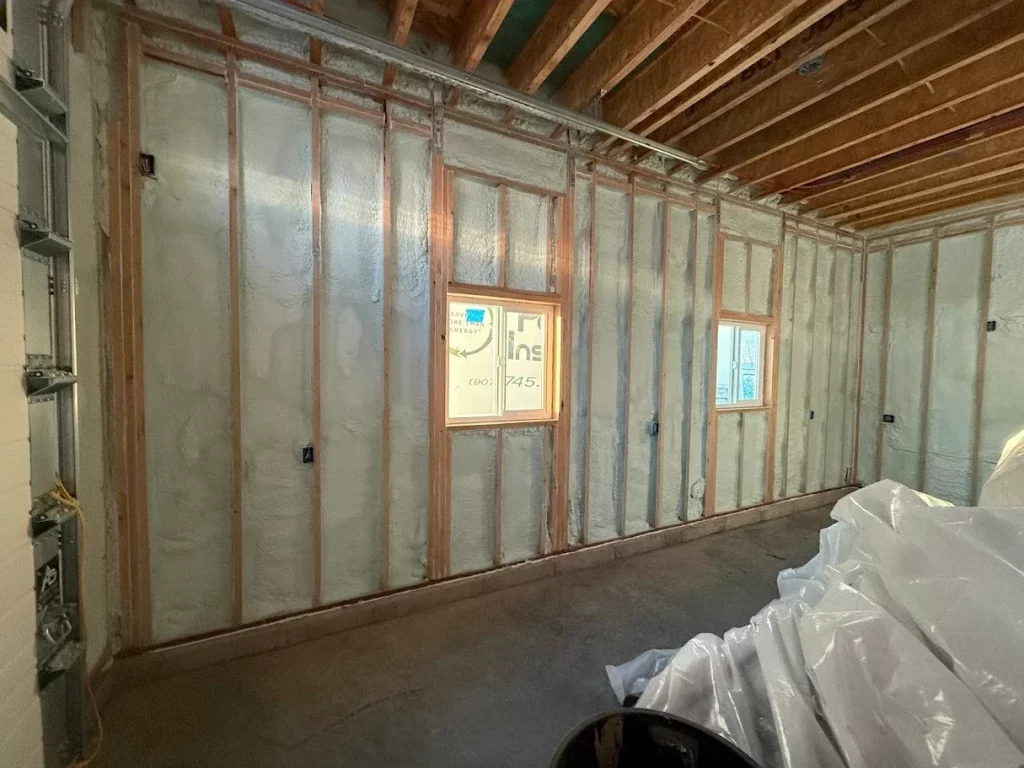
Closed-cell spray foam is the most effective solution for foundation walls and irregular building gaps because it provides a rigid, high-density barrier that simultaneously acts as an insulator, an air seal, and a vapor retarder. Unlike fibrous materials that can trap moisture against masonry, closed-cell foam bonds directly to the surface, stopping air movement and preventing liquid water from penetrating the assembly.
The performance of closed-cell spray foam comes down to its chemical structure. When the two liquid components mix and expand during application, they form millions of tiny, sealed bubbles filled with a specialized gas. This rigid, high-density structure is what sets it apart from open-cell foam or traditional fiberglass.
Because the cells are sealed, they do not allow air or moisture to pass through the material. This provides an industry-leading R-value per inch, typically ranging from 6 to 7. Because it is rigid once cured, it also adds a degree of structural integrity to the framing or substrate it covers.
Foundation walls, particularly those below grade, face constant pressure from moisture in the soil. Traditional insulation like fiberglass batts often fails in these environments because it is air-permeable and moisture-absorbent. If moisture gets behind fiberglass insulation in a basement, it creates a cold, damp environment that encourages mold growth.
Closed-cell foam solves this by creating a monolithic seal. When we apply it to a concrete or block foundation wall, it adheres permanently to the masonry. This creates a thermal break that prevents the interior air from hitting the cold concrete, which is how condensation forms.
| Material | Air Barrier | Vapor Control | Moisture Resistant |
|---|---|---|---|
| Closed-Cell Foam | Excellent | Yes (Class II) | Yes |
| Open-Cell Foam | Good | No | No |
| Fiberglass Batts | None | No | No |
According to guidance from the Department of Energy, selecting the right material for foundation walls is critical for maintaining indoor air quality and preventing energy loss in below-grade spaces.
Every home has irregular framing junctions, such as rim joists, masonry-to-wood transitions, and areas where multiple building materials meet. These spots are often where air leaks occur, leading to cold floors and high energy bills.
Because this foam is applied as a liquid that expands rapidly, it flows into nooks and crannies that are impossible to reach with rigid board insulation or batts. It fills every void, effectively eliminating the path for outside air to enter your home. By sealing these junctions, you stop the stack effect, where warm air escapes through the top of the house and pulls cold, damp air in through the foundation gaps.
While closed-cell foam is a high-performance material, it is not a “cure-all” for every building problem. It is important to address the root causes of moisture before applying any insulation.
If your foundation has cracks that allow bulk liquid water to enter, you must repair those structural issues and ensure proper exterior drainage first. Spray foam is an excellent vapor retarder and air seal, but it is not a substitute for a functioning foundation waterproofing system. Additionally, professional closed-cell foam installation is required to ensure the chemical ratio is correct and the foam cures to the proper density, as Building Science Corporation notes that improper mixing can lead to performance failures or off-gassing issues during the curing process.
Determining whether your specific foundation or building gaps require closed-cell foam, and what thickness is necessary to meet local building codes, requires a professional assessment. We evaluate the moisture profile of your walls and the specific framing challenges of your property to ensure the application provides the performance you expect.
If you are dealing with damp basement walls or persistent drafts from irregular building gaps, reach out to our team. You can contact Polyseal Insulation at (907) 341-4848 or send an email to [email protected] to discuss your property needs.
Is closed-cell foam a vapor barrier?
It acts as a Class II vapor retarder, meaning it significantly slows the movement of moisture vapor through the wall assembly, which is ideal for basements.
Why is it more expensive than fiberglass?
You are paying for a multi-functional material that provides insulation, an air seal, and a vapor retarder in one, whereas fiberglass requires separate, labor-intensive components.
Does it help with soundproofing?
Its high density does provide better sound dampening than air-permeable materials, though its primary purpose is thermal and moisture control, not acoustic isolation.
How long does the insulation last?
Because it is a stable, rigid plastic that does not settle or lose its shape, it typically lasts for the lifetime of the building structure.
Can it be applied to damp concrete?
No, the substrate should be clean, dry, and free of debris for the foam to adhere correctly and provide the intended performance benefits.