
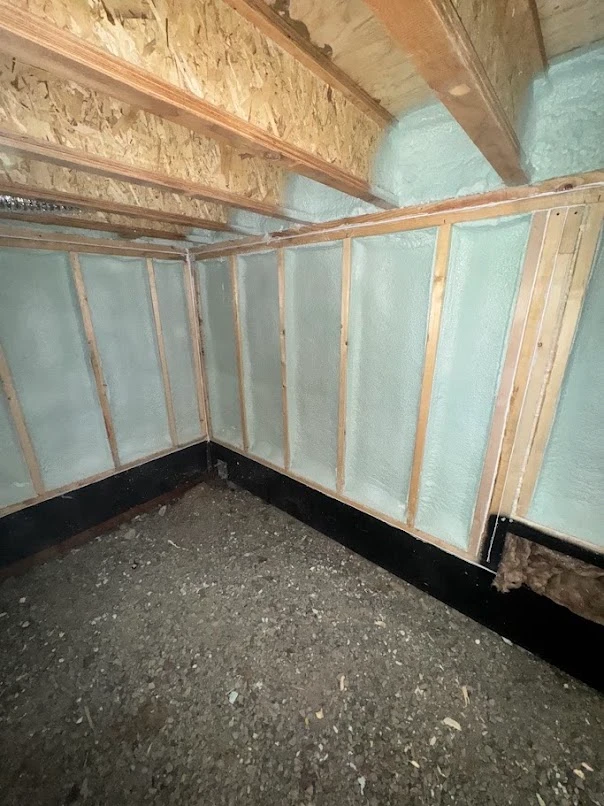
If you have ever felt a persistent draft near a window in January, noticed ice dams forming on your roof edge, or watched your heating bill climb each winter despite keeping the thermostat low, the problem almost always comes back to the same source: your building envelope is not doing its job. Most homes and buildings in cold climates lose a staggering amount of energy through air leakage, poorly insulated walls, and crawlspaces that act as open channels for heat to escape. The solution that addresses all of these issues at once is closed-cell spray foam insulation, and after years of working with it across residential and commercial projects in Alaska, we have seen firsthand what it can do.
This guide covers everything you need to know about closed-cell spray foam, from the chemistry behind how it forms to where it belongs in a building, how it gets installed, and what you should expect in terms of energy savings, safety, and long-term performance. Whether you are planning a new build, retrofitting an existing home, or evaluating insulation options for a commercial property, this resource is designed to give you the full picture.
Closed-cell spray polyurethane foam (ccSPF) is a two-part insulation material that gets sprayed into wall cavities, roof assemblies, crawlspaces, and other building cavities as a liquid and then expands and hardens into a dense, rigid solid. It belongs to a broader family of spray polyurethane foams, but its physical structure is what sets it apart from every other insulation type on the market.
According to the U.S. Department of Energy Building America Spray Foam Guide, closed-cell foam primarily uses non-ozone-depleting hydrofluorocarbons (HFCs) as its blowing agent, while open-cell foam uses water.
When the two liquid components meet at the spray gun, a rapid exothermic reaction occurs. The foam expands roughly 35 to 50 times its original liquid volume, filling gaps, cracks, and voids as it goes. Unlike fiberglass batts or blown cellulose, which are simply placed into cavities and leave countless air gaps around framing members, wires, and pipes, spray foam expands into and around every obstruction, creating a continuous sealed layer.
The defining feature of closed-cell foam is right in the name: over 90% of its cells remain sealed after curing. These tiny closed pockets trap insulating gases inside them, and air or moisture cannot move from one cell to the next. This is the fundamental reason closed-cell spray foam delivers higher R-values per inch, resists moisture absorption, and acts as a vapor retarder, all at the same time. By contrast, open-cell foam has a matrix of broken, interconnected cells that allow air and moisture vapor to pass through.
Key Takeaways
Understanding what happens during installation helps you appreciate why the process demands trained professionals with the right equipment. The two liquid components, commonly called the “A-side” (isocyanate) and “B-side” (the resin blend), are stored in separate heated drums. They travel through heated hoses to a proportioning unit that meters them precisely, then combine at the spray gun where the reaction begins instantly.
As the mixed material hits the substrate, it starts expanding and curing within seconds. The applicator sprays in thin passes, typically limited to about 2 to 3 inches of thickness per pass for closed-cell foam. If you need 4 inches of total thickness, the crew applies two separate passes, allowing each layer to partially cure before adding the next. This multi-pass approach prevents the foam from generating excessive heat during the reaction, which could damage the material or surrounding structures.
Within minutes, the surface becomes tack-free and feels firm to the touch. But curing is not complete at that point. The internal chemical reactions continue for hours, and the foam does not reach its full physical properties and fully stable state until well after the surface has hardened. This distinction matters a great deal for safety and re-occupancy, which we cover in detail later in this guide.
Once fully cured, the foam becomes a rigid, adhered, and dimensionally stable material. It does not settle, shrink, or sag over time, which means the R-value you start with is the R-value you keep for the life of the building. The foam bonds directly to wood, metal, concrete, and most other substrates, forming a structural adhesive connection in addition to its insulating properties. Studies have documented that ccSPF can substantially increase the racking strength of frame walls when applied in stud cavities, making it valuable for both seismic and high-wind zones.
Expert Tip: If your project involves a retrofit and you are unsure whether old insulation should be removed before spray foam is applied, have a professional assess the existing cavity first. Leaving degraded fiberglass or wet cellulose behind closed-cell foam can trap moisture against framing and create hidden problems.
To evaluate any insulation material fairly, you need to look at the numbers. Closed-cell spray foam consistently outperforms other common insulation types across most measurable categories, but the trade-off is a higher material cost per board foot. Here are the properties that matter most, drawn from established performance metrics:
| Property | Closed-Cell SPF | Open-Cell SPF | Fiberglass Batt | Blown Cellulose |
|---|---|---|---|---|
| R-Value per Inch | R-6.0 to R-6.5 | R-3.5 to R-3.7 | R-2.9 to R-3.8 | R-3.1 to R-3.8 |
| Density | ~2.0 lb/cf | ~0.5 lb/cf | 0.5 to 1.0 lb/cf | 1.5 to 2.5 lb/cf |
| Air Permeance | Air-impermeable | Air-impermeable | Air-permeable | Air-permeable |
| Vapor Permeance | Less than 1 perm at 2″ | 5 to 10 perms at 5″ | Varies with facing | Varies |
| Absorbs Water | No (hydrophobic) | Yes (up to 1/3 by volume) | Minimal | Yes |
| Compressive Strength | ~22 psi | Less than 2 psi | Negligible | Low |
R-value measures resistance to heat flow. The higher the number, the better the material resists thermal transfer. Closed-cell spray foam delivers an aged R-value of approximately R-6.0 to R-6.5 per inch. That means a 3-inch application in a 2×4 wall cavity gives you roughly R-18 to R-19.5 in a single material that also seals every gap.
For comparison, standard fiberglass batting rated for the same 3.5-inch cavity typically delivers R-11 to R-15. To match the thermal performance of 3 inches of closed-cell foam, you would need roughly 5 to 6 inches of fiberglass, which a standard wall cavity cannot accommodate without advanced framing techniques.
Research notes that insulation placed between studs does not stop heat flow through the studs themselves, a phenomenon called thermal bridging. This means the actual whole-wall R-value is always lower than the rated R-value of the insulation alone. Because spray foam fills around and against framing members, it reduces but does not eliminate thermal bridging. For the best whole-wall performance, some builders combine closed-cell foam with continuous exterior rigid insulation.
This is where closed-cell spray foam separates itself from nearly every other insulation material. At a typical applied thickness of 2 inches or more, closed-cell foam has a vapor permeance rating of less than 1 perm, which qualifies it as a Class II vapor retarder under the International Residential Code. Water in both liquid and vapor form cannot pass through it.
This property makes closed-cell foam the right choice for below-grade applications like basement walls and crawlspace foundations, where contact with moist soil and groundwater is inevitable. Open-cell foam, which can absorb and hold up to one-third of its volume in water, is explicitly listed as “not acceptable” for below-grade applications in standard building guides.
Expert Tip: In cold climates like ours, moisture driven from the warm interior toward the cold exterior is a constant threat. Closed-cell foam applied at the exterior face of wall cavities or directly against foundation walls keeps that moisture from ever reaching cold surfaces where condensation and mold would form.
Key Takeaways
Not every insulation problem calls for closed-cell foam, and understanding where it delivers the most value helps you make smart spending decisions. Experts evaluate specific applications across different climate zones and rate them as preferred, acceptable, or not acceptable. Here is a summary based on that guidance:
| Application Area | Rating | Why |
|---|---|---|
| Frame wall cavities (cold climates) | Preferred | Air sealing + high R-value + vapor control in one step |
| Sloped roof rafters | Preferred | High R-value per inch where cavity depth is limited |
| Foundations and below-grade | Preferred | Water resistance + air sealing against foundation walls |
| Band joists and rim joists | Preferred | Seals one of the leakiest areas in any building |
| Cantilevered floors and overhangs | Preferred | Handles thermal and moisture challenges at floor transitions |
| HVAC duct insulation | Preferred | Provides air sealing and dew-point control for ducts in unconditioned spaces |
In hot-dry climates, open-cell foam can handle frame wall cavities effectively at lower cost. For vented attic floors in mild climates, blown fiberglass or cellulose over the ceiling plane may be sufficient, especially if budget is a concern. The key is matching the material to the specific performance demands of each location.
Expert Tip: Rim joist and band joist areas are among the most cost-effective places to use closed-cell foam. These perimeter zones where floor framing meets exterior walls are notoriously leaky and difficult to insulate with batts. A relatively small investment in foam here eliminates one of the biggest sources of air infiltration in any building.
We regularly get asked which type of spray foam is better, and the honest answer is that neither is universally superior. The right choice depends entirely on the application, climate, budget, and what you need the insulation to accomplish. That said, there are clear scenarios where closed-cell foam is the only appropriate option.
| Factor | Closed-Cell Foam | Open-Cell Foam |
|---|---|---|
| R-Value per Inch | R-6.0 to R-6.5 | R-3.5 to R-3.7 |
| Density | ~2.0 lb/cf (rigid) | ~0.5 lb/cf (flexible) |
| Vapor Barrier | Yes (at 2″+ thickness) | No (moisture permeable) |
| Water Absorption | No | Yes (significant) |
| Expansion Ratio | 35 to 50x | Up to 150x |
| Sound Damping | Moderate | Excellent |
| Structural Strength | High (used as adhesive) | Low |
| Cost per Board Foot | Higher | Lower |
| Best For | Exterior walls, roofs, crawlspaces, foundations | Interior walls, sound control, budget-sensitive projects |
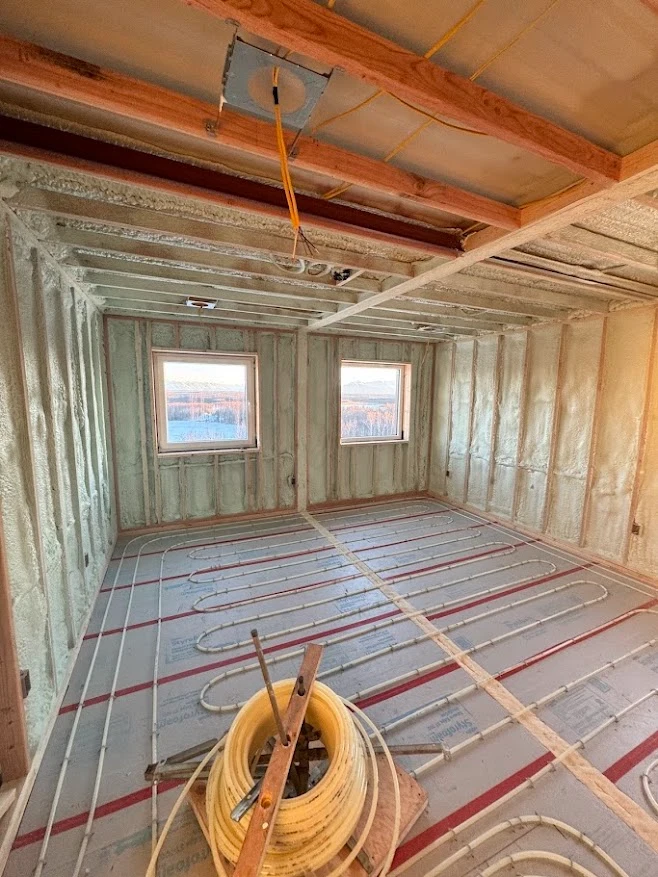
Choose closed-cell foam when you need moisture resistance, when the insulation must serve as a vapor retarder, when cavity depth is limited but you need high total R-value, or when the assembly requires structural reinforcement. In cold climates, where the temperature differential between inside and outside is extreme for months at a time, the combination of high R-value, air impermeability, and vapor control makes closed-cell foam the most reliable single material you can install.
Choose open-cell foam when you need sound attenuation in interior partitions, when budget is a primary constraint, or when the assembly requires vapor permeability for drying. Open-cell is also preferred in some hot-humid climate wall assemblies where the designer wants the wall to dry toward the interior.
A professional spray foam installation is a multi-step process that begins well before the spray gun is turned on. Understanding each stage helps you prepare properly and know what to expect on installation day.
The installation crew will protect all surfaces that should not receive foam, including windows, finished floors, and any mechanical equipment. In retrofit projects, existing insulation may need to be removed from the target cavities. Any moisture issues, such as active leaks or standing water in crawlspaces, must be resolved before foam is applied. Applying closed-cell foam over wet surfaces or active moisture problems would trap those conditions inside the wall assembly.
The temperature of the substrate and ambient air matters. Cold substrates slow the curing reaction, while high humidity can affect foam expansion and cell structure. In cold-weather installations, crews may need to heat the work area temporarily to achieve proper curing conditions.
The applicator sprays the foam in controlled passes, building up to the target thickness. Professional installers use depth probes, small pins inserted into the cured foam, to verify that the specified thickness has been achieved at multiple points throughout the project. Any areas falling short receive additional foam before the job is considered complete.
After spraying, the foam goes through its curing cycle. It appears solid within minutes, but the internal chemistry continues reacting for hours. Industry safety guidelines recommend 24 hours after application for re-occupancy by residents and building occupants when using two-component professional SPF systems, though recommended times may vary based on product formulation, thickness, temperature, and humidity.
During spraying, the work area must be restricted to trained personnel wearing appropriate personal protective equipment, including respirators, because the application generates isocyanate vapors and aerosols that can exceed occupational exposure limits. Vapors can migrate through the building if the area is not properly isolated and ventilated.
Guidance on potential chemical exposures from the U.S. Environmental Protection Agency emphasizes that the application generates isocyanate vapors and aerosols that can exceed occupational exposure limits.
Safety highlights also indicate that once spray foam is fully cured, it is considered relatively inert. However, maintenance workers, plumbers, and electricians should avoid heat-generating processes like grinding, welding, or soldering on or near the foam, as these can generate toxic emissions including isocyanates and hydrogen cyanide from the cured material.
Expert Tip: Before your installation date, confirm with your contractor exactly how long you and your family will need to stay out of the building. Re-occupancy times vary based on foam type, thickness, temperature, and humidity. Plan for at least 24 hours with professional two-component systems, and have a ventilation strategy in place for when you return.
The fundamental reason to invest in insulation is to reduce the energy required to heat and cool your building. Heating and cooling account for 50 to 70% of the energy used in the average American home, and inadequate insulation and air leakage are the leading causes of energy waste in most homes.
As noted in the ENERGY STAR Insulation Fact Sheet, heating and cooling account for 50 to 70% of the energy used in the average American home.
The EPA’s ENERGY STAR program estimates that homeowners can save up to 20% on heating and cooling costs by adding insulation and sealing air leaks. In practice, the savings from closed-cell spray foam can exceed that figure in buildings that previously had significant air leakage or inadequate insulation, because spray foam addresses both problems in a single application.
For closed-cell spray foam projects, several factors influence the final cost. Based on our pricing data, the typical average project falls in the range where most residential jobs land. The key factors that increase pricing include greater thickness and higher R-value requirements, difficult access to the area being insulated, removal of old insulation, ventilation modifications needed to maintain building safety, low crawlspace height that slows the crew, and travel distance to the job site. Projects that are straightforward in scope, with simple access and no old insulation to remove, come in at the lower end.
The return on investment for spray foam insulation depends on your climate, existing insulation levels, energy costs, and how long you plan to stay in the building. In cold climates with long heating seasons, the payback period tends to be shorter because the energy savings accumulate quickly over those months. In milder climates with shorter heating and cooling seasons, the payback takes longer but the comfort and durability benefits remain.
Beyond monthly energy bills, closed-cell spray foam contributes to building durability by preventing moisture infiltration that leads to rot, mold, and structural damage. It also reduces the load on your HVAC equipment, potentially extending the system’s lifespan. These indirect savings are harder to quantify but they are real.
Expert Tip: If you are building new, the cost of spray foam insulation is relatively small compared to the total construction budget, and it pays dividends for the entire life of the building. If you are retrofitting, focus on the areas that leak the most air first, like rim joists, crawlspaces, and attics, to get the biggest impact for your investment.
Closed-cell spray foam is a combustible organic material, which means its use in buildings is regulated under the International Residential Code (IRC) Section R314 for foam plastics. The code requires that in all habitable spaces and most accessible building cavities, the foam must be covered by a 15-minute thermal barrier, typically equivalent to half-inch gypsum board, as tested under ASTM E 119.
For attics and crawlspaces that are entered only for utility servicing, the code allows an ignition barrier instead of a full thermal barrier, depending on the specific product and application. Some manufacturers have had their specific foam-and-assembly combinations tested and approved for exposed use in certain configurations without additional barriers. These approvals are documented in individual product Evaluation Service Reports, and the specifics vary by manufacturer.
Building guides note that both open-cell and closed-cell spray foams are formulated with fire-retardant additives and typically achieve strong fire-performance ratings. While these are reliable results, the thermal barrier requirement exists because foam plastics can contribute to fire spread if exposed to an ignition source without protection.
The DOE Building America guide notes that both open-cell and closed-cell spray foams are formulated with fire-retardant additives and typically achieve flame spread indices below 25 and smoke development indices below 450 per ASTM E 84 testing. While these are strong fire-performance ratings, the thermal barrier requirement exists because foam plastics can contribute to fire spread if exposed to an ignition source without protection.
Properly applied closed-cell spray foam maintains its R-value and physical properties for decades. The rigid cell structure does not settle, compress, or degrade under normal conditions. Because the foam is adhered to the substrate and sealed within the building assembly, it is not subject to the moisture cycling, pest intrusion, or air movement that can degrade other insulation types over time.
In roof assemblies, one important consideration is that if a roof leak occurs, water will not penetrate through the closed-cell foam, which means the leak may not become immediately apparent inside the building. This can be a benefit during catastrophic events, but in the case of a slow roof leak, it can make finding the source more difficult. Regular roof inspections remain important regardless of insulation type.
Living and working in a place where winter temperatures regularly drop well below freezing changes the calculus on insulation decisions. The temperature differential between a heated interior and the outdoor air in January can be enormous, and that differential drives both heat loss and moisture movement through the building envelope.
Closed-cell spray foam is particularly well suited to extreme cold for several reasons. First, its high R-value per inch means you can achieve demanding total R-values even in standard-depth wall cavities. In a 2×6 wall with 5.5 inches of cavity depth, full-depth closed-cell foam delivers roughly R-33 to R-36, which meets or exceeds prescriptive code requirements for most cold climate zones.
Second, the vapor retarder properties of closed-cell foam are essential in cold climates. Warm interior air holds significant moisture, and when that air moves through the building envelope toward the cold exterior, it can condense inside wall cavities or attic assemblies. Cold-climate frame wall assemblies with closed-cell foam are rated as “preferred” specifically because the foam prevents both air leakage and vapor transmission that would otherwise lead to condensation, mold, and structural decay.
Third, closed-cell foam applied to foundations and crawlspaces keeps pipes from freezing by maintaining warmer temperatures in those below-grade and semi-conditioned spaces. In regions where ground frost extends several feet deep, this protection alone can prevent costly plumbing failures.
Standard recommendations also suggest that in colder climate zones, a minimum of 2 inches of closed-cell foam should be used in hybrid wall systems to ensure the interior surface of the foam stays above the dew point. Many parts of Alaska far exceed that threshold, making the 2-inch minimum a practical starting point for hybrid assemblies.
Expert Tip: In extreme cold climates, pay special attention to the rim joist and floor assembly where the first floor meets the foundation. This transition zone is one of the weakest thermal points in any building. Applying closed-cell foam here eliminates both the air leakage and the thermal bridge that make these areas so vulnerable to frost and condensation damage.
After years of seeing spray foam projects done right and some done wrong, we have identified the errors that cause the most problems. Avoiding these will save you money, protect your building, and ensure you get the performance you paid for.
Spray foam only delivers its rated performance if it reaches the specified thickness across the entire application area. If the crew sprays too thin in spots, the R-value drops and the vapor retarder properties may not meet code requirements. Professional installers verify thickness with depth probes at multiple points during and after application. Always ask your installer how they confirm thickness before they leave the job.
Spray foam should never be applied over active moisture problems. If you have a roof leak, a plumbing leak, or standing water in a crawlspace, fix the moisture source first. Closed-cell foam is water-resistant, not a waterproofing system. Trapping active moisture behind foam creates a hidden problem that can damage framing and sheathing over time.
In some assemblies, especially hot-humid climates, the building code and material science require that you avoid having two vapor-impermeable layers on opposite sides of the same wall cavity. If closed-cell foam is applied against the exterior sheathing (creating one vapor retarder), and you then install a polyethylene sheet or low-perm vapor barrier on the interior side, any moisture that gets into the cavity from either direction cannot dry out. Building experts specifically warn against interior vapor retarders when ccSPF is used in hot-humid climate walls for this reason.
Spray foam dramatically reduces air leakage, which is exactly what you want for energy efficiency. But a tighter building needs mechanical ventilation to maintain healthy indoor air quality. If you are significantly tightening an existing building with spray foam, discuss ventilation upgrades with your contractor or an HVAC professional to ensure the building can still breathe in a controlled way.
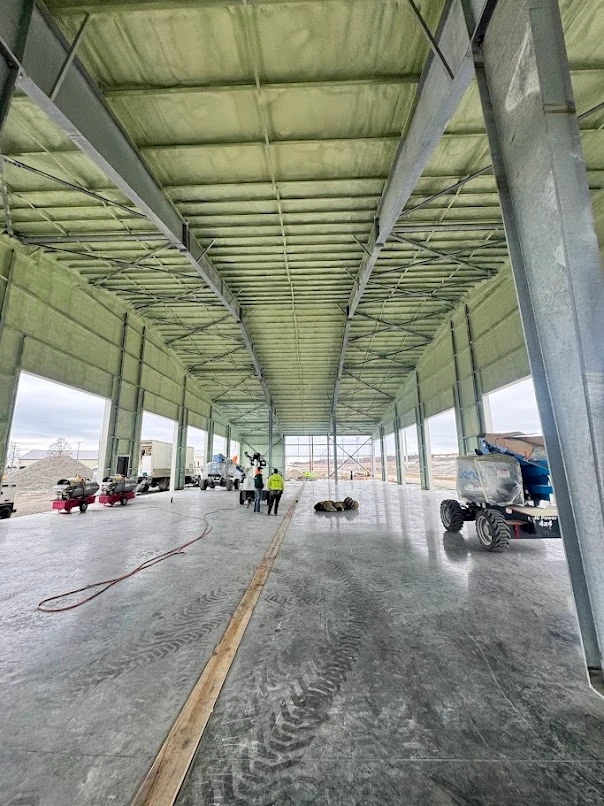
Closed-cell spray foam insulation is not the cheapest option on the market, but it is one of the most versatile and high-performing building materials available. Its ability to deliver thermal resistance, air sealing, and vapor control in a single application makes it uniquely valuable for demanding climates, moisture-prone areas, and assemblies where cavity depth is limited.
Technical resources from the American Chemistry Council highlight that closed-cell spray foam is one of the most versatile and high-performing building materials available.
The most important steps you can take right now are these: identify the areas of your building where air leakage and inadequate insulation are costing you the most energy and comfort, get a professional assessment of what insulation improvements would deliver the best return, and make sure whoever installs your spray foam has the training, equipment, and experience to do it correctly. The material performs exceptionally when applied right, and cutting corners on installation is the fastest way to waste your investment.
Use this guide as a reference as you move through the planning process. Every building is different, and the right insulation strategy accounts for your climate, your building’s construction, your budget, and your long-term goals.
If you are considering closed-cell spray foam for your home or commercial building and want to talk through your options with someone who has worked with it extensively, reach out to us. Polyseal Insulation serves the Anchorage and Matsu Valley area, and our team is happy to assess your project, answer your questions, and help you make the right call for your building. You can reach us at [email protected] or call us directly at (907) 745-7325.
When properly installed, closed-cell spray foam is a permanent building insulation. It does not settle, degrade, or lose R-value over time. The rigid cell structure and adhesive bond to the substrate keep it performing for the life of the building.
Installation can happen in cold weather, but substrate and ambient temperatures must be within the manufacturer’s recommended range for proper curing. In very cold conditions, crews may need to heat the work area. Curing times also extend in cold temperatures.
In most applications, closed-cell foam at 2 inches or more thickness serves as its own Class II vapor retarder. A separate polyethylene vapor barrier is usually not needed and in some cases should be avoided to prevent creating a double vapor retarder condition.
Fully cured spray foam is considered relatively inert. The primary safety concerns relate to the installation and curing period, not to the long-term presence of the material in a building.
In some cases, closed-cell foam can be applied over existing insulation if the old material is dry, in good condition, and the cavity is clean. However, in many retrofit situations, removing old insulation is preferred so the foam can adhere directly to the substrate and seal the cavity completely.
Both are closed-cell foam materials, but spray foam is applied as a liquid that expands to fill every gap and irregular shape, creating a seamless monolithic layer. Rigid foam boards are manufactured at fixed sizes and thicknesses, and must be cut, fitted, and sealed at joints, which leaves potential gaps unless meticulously detailed.