

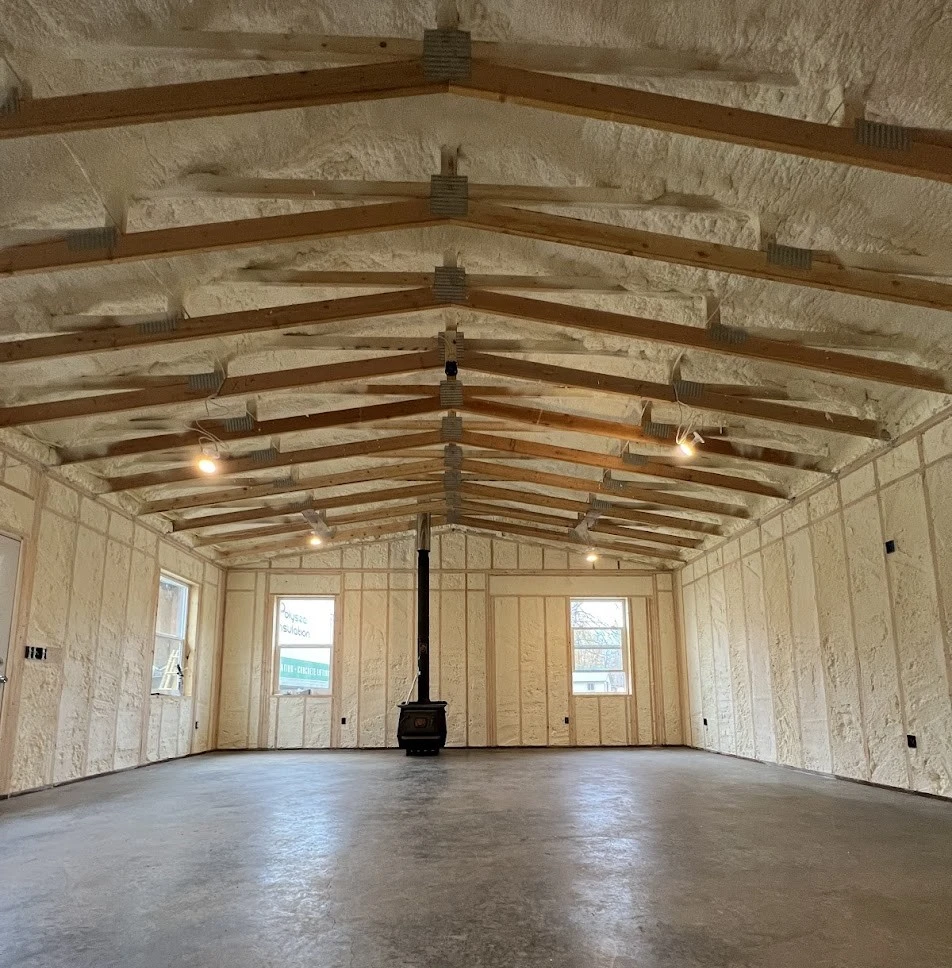
Choosing the right insulation in Wasilla means starting with your climate zone and building code requirements, then matching the insulation type to the specific area of your home. Wasilla falls within the Matanuska-Susitna census area, classified as IECC Climate Zone 7, which demands some of the highest R-value minimums in the country Alaska Housing Finance Corporation (AHFC). The decision is not about picking a single “best” material. It is about selecting the right combination of insulation type, R-value, air sealing strategy, and vapor barrier placement for each part of your building envelope, including ceilings, walls, floors, crawlspaces, and the rim joist. Each area has different code requirements, and long-term performance depends on proper installation as much as material choice.
Climate Zone 7 covers areas with 9,000 to 12,600 heating degree days, meaning Wasilla experiences extended, severe heating seasons where heat loss through the building envelope directly impacts comfort and energy costs year after year. The Alaska Building Energy Efficiency Standard (BEES), adopted by AHFC, sets prescriptive R-value minimums that are significantly higher than what most Lower 48 homes require. For example, a ceiling in Wasilla needs a minimum of R-54 (or R-43 when using energy-heel trusses), while a comparable home in a milder climate might need only R-38 AHFC.
These are minimums, not targets. Many homeowners and builders in the Mat-Su Valley choose to exceed them for better long-term comfort and lower heating costs. Exceeding the minimums is explicitly encouraged in the Alaska BEES prescriptive compliance path AHFC.
The DOE Building Science Education program identifies insulation materials as ranging from bulky fiber materials like fiberglass, rockwool, and cellulose, to rigid foam boards and sprayed-in-place foams. Each has strengths that suit specific applications in a cold-climate home.
Spray foam insulation is mixed and applied on-site, expanding to fill cavities and seal gaps. Closed-cell spray foam delivers R-5 to R-8 per inch, offers moisture resistance, adds structural rigidity, and serves as both an air barrier and vapor retarder in a single application Wikipedia. Open-cell spray foam is less dense, permeable to moisture vapor, and typically achieves R-3 to R-4 per inch. Open-cell allows wood framing to breathe, which can be beneficial in certain wall assemblies.
Fiberglass and mineral wool are manufactured in controlled factory environments and available in batts, rolls, and loose-fill forms. Quality of installation can be visually assessed after the fact, making it easier to verify that cavities are fully filled without gaps or compression. Mineral wool has a higher melting point than fiberglass, providing additional fire resistance. Both materials require a separate air sealing strategy to perform at their rated R-value Insulation Institute.
Cellulose is made primarily from recycled paper and treated with fire retardants. It has an R-value of approximately R-3.4 to R-3.8 per inch and fills cavities effectively when dense-packed, reducing air movement within the wall cavity. It can settle over time in attic applications, which is a consideration for long-term performance Wikipedia.
| Insulation Type | R-Value Per Inch | Air Sealing | Moisture Resistance | Best Applications |
|---|---|---|---|---|
| Closed-cell spray foam | R-5 to R-8 | Built-in air and vapor barrier | High, acts as vapor retarder | Rim joist, crawlspaces, limited-depth cavities |
| Open-cell spray foam | R-3 to R-4 | Partial air sealing | Vapor permeable | Walls where wood needs to dry, sound control |
| Fiberglass batts/loose-fill | R-2.2 to R-3.8 | Requires separate air sealing | Low when wet, recovers when dried | Attics, walls, floors with standard cavity depths |
| Mineral wool batts | R-3.0 to R-3.7 | Requires separate air sealing | Drains and dries without losing R-value | Walls, floors, fire-rated assemblies |
| Cellulose loose-fill | R-3.4 to R-3.8 | Good cavity fill, some air sealing | Absorbs moisture; can settle | Attics, retrofit wall cavities |
Insulation in Wasilla faces conditions that go beyond simple R-value ratings. The University of Alaska Fairbanks Cooperative Extension Service identifies several factors unique to Alaska construction that directly affect insulation longevity and effectiveness UAF Cooperative Extension.
Vapor barrier integrity is one of the most critical elements. In Zone 7, a 6-mil polyethylene vapor barrier must be installed on the warm (interior) side of the insulation in walls, ceilings, and floors. Every penetration for plumbing, electrical wiring, and chimneys must be sealed. Even small breaches allow warm interior air to carry moisture into the insulation and wall cavity, where it condenses on cold surfaces, potentially causing mold, wood rot, and insulation degradation UAF Cooperative Extension.
Compression reduces performance. Placing a thick insulation batt into a shallower cavity compresses it and lowers its effective R-value. The UAF guide notes that placing a standard R-30 batt into a 2×8 joist space (7.25 inches) drops its performance from R-30 to approximately R-26 UAF Cooperative Extension. Matching insulation depth to cavity depth matters for achieving the performance you paid for.
Attic ventilation must work with your insulation, not against it. The roof cavity needs continuous ventilation at the eaves combined with exhaust at the gable ends. Thick ceiling insulation at the eaves can block soffit vents if not properly managed with baffles or raised-heel trusses UAF Cooperative Extension.
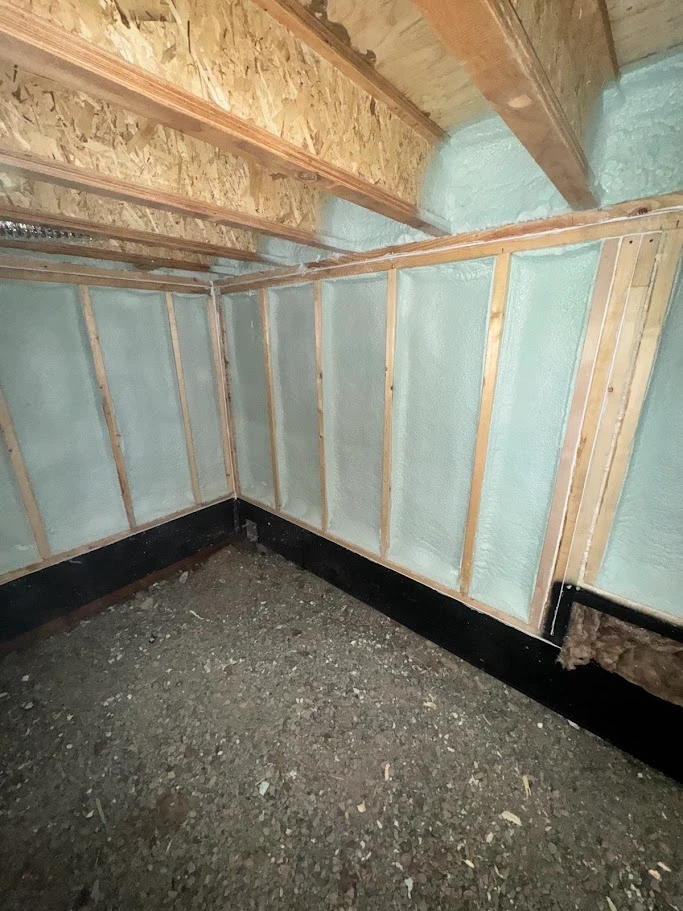
Rim joist insulation is often overlooked. The rim joist area should be insulated to the same R-value as the floor assembly, making closed-cell spray foam a popular choice because it seals both the air leaks and the cavity in one step, and AHFC amendments note that a vapor retarder is not required when the rim joist is insulated to R-21 with spray foam of at least 2 pounds per cubic foot density AHFC.
Not every area of your home needs the same insulation type. The right choice depends on the space available, the code requirement for that specific assembly, and the moisture conditions involved.
Ceilings and attics typically have the room for deep insulation layers. Blown-in fiberglass, cellulose, or mineral wool can easily achieve the R-54 target when cavity depth allows. The AHFC code permits R-43 as a substitute when full-height uncompressed insulation extends over the wall top plate at the eaves AHFC.
Walls in standard 2×6 framing have roughly 5.5 inches of cavity depth. Achieving R-25 in a 2×6 wall requires high-density materials. Closed-cell spray foam at R-6 to R-7 per inch can reach R-33 to R-38 within that cavity, exceeding the code minimum. Fiberglass or mineral wool batts rated for 2×6 walls typically achieve R-21 to R-23, which may require an additional layer of continuous exterior insulation to meet the R-25 target.
Crawlspaces in Wasilla benefit from closed-cell spray foam on the walls and rim joist. AHFC requires crawl space wall insulation to extend from the floor to the footer and then horizontally at least 24 inches when the crawl space is unvented AHFC. Closed-cell foam provides the moisture resistance needed in below-grade and near-grade applications.
How do you know a contractor or insulation plan is built for long-term performance in a cold climate?
Polyseal Insulation has been serving the Anchorage and Matanuska-Susitna Valley area, working on homes ranging from 1,500 to 4,000 square feet. Our team handles closed-cell spray foam, open-cell spray foam, attic insulation, crawlspace insulation, and commercial insulation projects, and we account for the specific conditions that affect long-term performance in Alaska’s cold climate.
Request a Quote | Schedule an Insulation Assessment
Call us at (907) 745-7325 or email [email protected] to get started. We will help you choose the insulation that matches your home, your budget, and Alaska’s demanding climate requirements.
Climate Zone 7 requires a minimum of R-54 for ceiling insulation, or R-43 if you use an energy-heel truss and the full uncompressed insulation extends over the wall top plate at the eaves.
In a cold climate like Wasilla, closed-cell spray foam is a strong choice for crawlspaces because it provides high R-value per inch, acts as a vapor retarder, and resists moisture, which is critical for below-grade and rim joist applications.
It depends on the application. AHFC amendments state that a vapor retarder is not required when the rim joist is insulated to at least R-21 with closed-cell spray foam at 2 pounds per cubic foot density, but most other wall and ceiling assemblies still require a continuous warm-side vapor barrier.
Yes. Blown-in cellulose or fiberglass can be installed through small holes drilled into wall cavities, and spray foam can be applied through similar access points. Dense-pack cellulose and spray foam are both effective retrofit methods for existing walls.
Look for uneven indoor temperatures, ice dams on the roof, high heating bills, and drafts. A blower door test can measure air leakage rates against the Alaska BEES standard of 4 ACH50, and thermal imaging can identify gaps and missing insulation in wall and ceiling assemblies.