
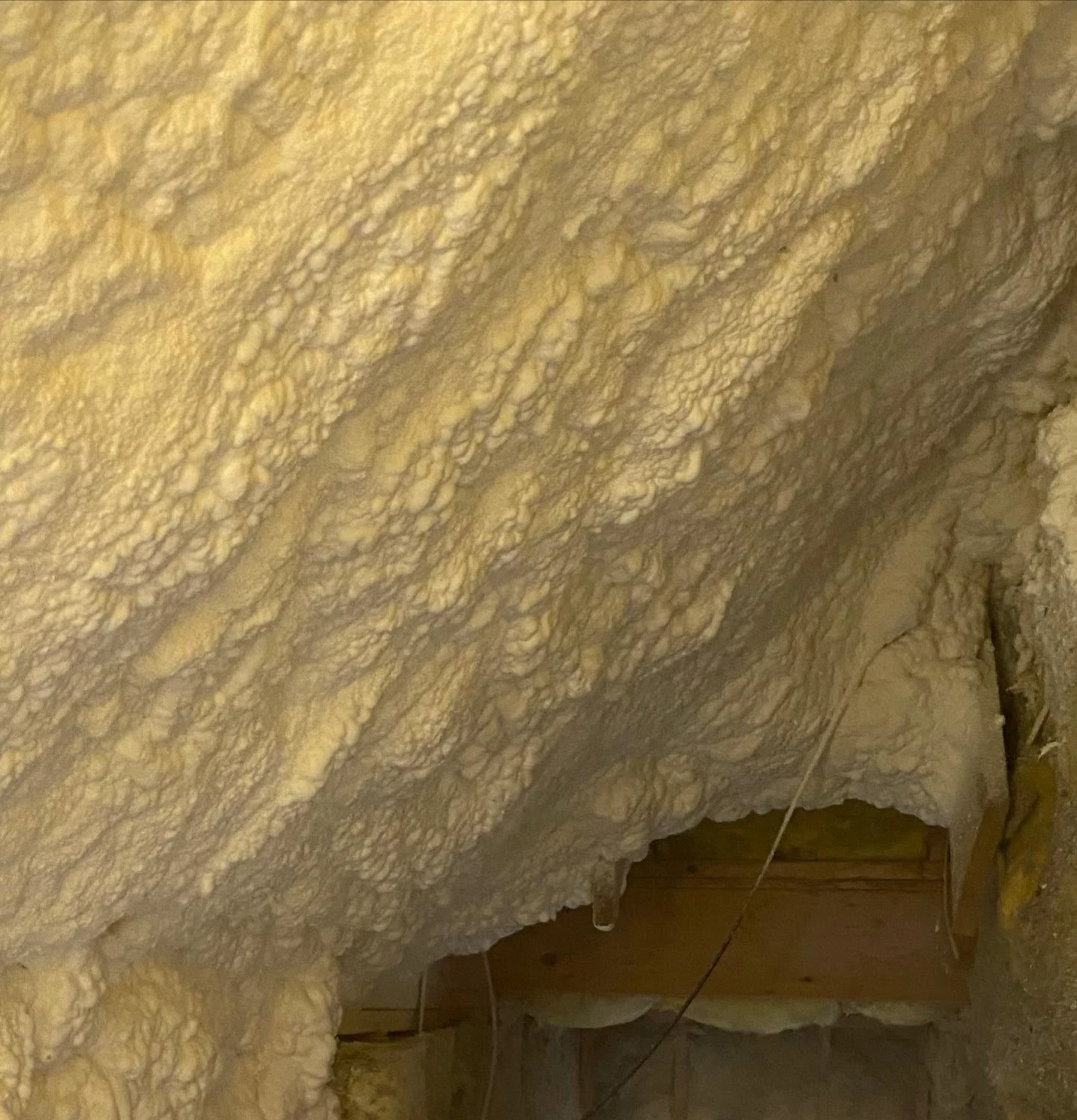
Open-cell spray foam is one of the most misunderstood insulation products on the market, especially in a climate as demanding as Meadow Lakes, AK. Homeowners hear conflicting advice about R-values, moisture, vapor barriers, and whether open-cell foam can handle subzero temperatures DOE Building Energy Codes Program – Resource Cente. The truth is that open-cell spray foam is highly effective when used in the right applications and paired with the right strategy, but it is not a universal solution for every surface of every home. What determines success is matching the product to the specific building assembly, understanding how it interacts with Meadow Lakes’ climate zone, and following The Essential Guide to Open-Cell Spray Foam while accounting for local conditions rather than applying a one-size-fits-all approach.
Most of the skepticism around open-cell spray foam comes from installers and homeowners applying it incorrectly, then blaming the material when problems arise. The material itself is well-documented and well-understood in building science circles. The R-value of open-cell polyurethane spray foam is approximately R-3.6 per inch, placing it in the same performance range as fiberglass batts and blown cellulose. Where it separates from those materials is in its ability to adhere to Performance Story Behind Open-Cell Spray Foam, expand into irregular cavities, and create an airtight seal that eliminates air leakage through the building envelope.Air infiltration accounts for a significant portion of heat loss in homes, and open-cell foam addresses that directly.
The reputation problem starts when open-cell foam is installed in locations where its vapor permeability and relatively modest R-value per inch create problems. In climate zones like Meadow Lakes (Climate Zone 7, per ASHRAE 90.1 prescriptive requirements), wall assemblies require substantial total R-values and careful management of vapor drive. Open-cell foam allows moisture vapor to pass through, which is a benefit in many assemblies, but it also means it cannot serve as a vapor retarder. If the rest of the assembly is not designed to handle that vapor movement, condensation can form within the wall or ceiling cavity.
According to research compiled on R-value (insulation) , moisture absorption in insulation materials can increase thermal conductivity and reduce effective R-value. Open-cell foam is particularly susceptible to this because its cell structure is open and can absorb and hold water if exposed to liquid moisture or prolonged high humidity. This is why it must never be used below grade, in direct contact with wet conditions, or in assemblies where it might act as a moisture reservoir.
One of the most persistent misconceptions is framing the choice as “open-cell versus closed-cell foam” without considering the building assembly. These are different products with different properties, and they serve different purposes. The table below shows how they compare on the factors that actually matter:
| Property | Open-Cell Spray Foam | Closed-Cell Spray Foam |
|---|---|---|
| R-value per inch | ~R-3.6 | ~R-5.5 to R-6.5 |
| Vapor permeability | Vapor-permeable (allows drying) | Vapor-retarder (Class II) |
| Density | Low (0.5 lb/ft3) | High (2.0 lb/ft3) |
| Air sealing | Excellent | Excellent |
| Water absorption | Can absorb and hold water | Resists water absorption |
| Best applications | Wall cavities, attic floors, sound control | Foundations, rim joists, unvented roofs, exterior sheathing |
Closed-cell foam is a higher-density, higher-R-value product that also acts as a vapor retarder. Open-cell foam is a lower-density product that air-seals effectively but allows vapor transmission. Neither is “better” in isolation. The right choice depends on the substrate, the climate zone, the building assembly, and the drying potential of the assembly.
For Meadow Lakes homeowners, the practical distinction is this: if the assembly needs a vapor retarder, structural rigidity, or resistance to liquid water, closed-cell is the appropriate choice. If the assembly needs air sealing with vapor openness and the cavity depth allows sufficient total R-value, open-cell foam is an excellent option.
Meadow Lakes, AK falls within IECC Climate Zone 7, which has some of the highest prescriptive insulation requirements in the United States. The Polyurethane table for residential wood-framed walls in Zone 7 calls for cavity insulation of R-20 plus continuous exterior insulation of R-5, or an equivalent total assembly. For ceilings with attic spaces, the requirement is R-49 minimum.
At R-3.6 per inch, open-cell foam would need to be installed at roughly 5.5 inches just to reach R-20 in a wall cavity. That is achievable in a standard 2×6 wall (5.5-inch cavity depth), but it leaves no room for error and assumes the cavity is fully filled without voids. In a 2×4 wall (3.5-inch cavity), open-cell foam alone would only reach approximately R-12.6, which falls short of Zone 7 requirements without additional continuous insulation on the exterior.
This is not a defect of open-cell foam. It is simply a reality of its physics. The material does what it does. The problem occurs when installers sell it as meeting code requirements in assemblies where it cannot, unless supplemented. A proper proposal for a Meadow Lakes home should specify total assembly R-value, not just the R-value of the foam layer, and should show how the assembly meets or exceeds code.
Open-cell spray foam is vapor-permeable, with a permeance rating typically around 5 to 10 perms per inch. This means water vapor can diffuse through the foam in both directions. In cold climates, this is actually desirable in many wall and ceiling assemblies because it allows the cavity to dry toward the interior during the heating season.
The building science research on insulation in damp environments confirms that managing moisture vapor profiles across assemblies is more important than simply blocking vapor at one plane. When open-cell foam is installed in a wall cavity with a proper exterior weather-resistive barrier and appropriate interior vapor control, the assembly can dry effectively, reducing the risk of mold, rot, and long-term degradation.
Where open-cell foam causes problems is when it is used in unvented roof assemblies or below-grade applications where the temperature of the foam layer can drop below the dew point of the interior air. In those cases, condensation can form within or on the surface of the foam, and because the foam can absorb water, it holds that moisture against the framing. In Meadow Lakes, unvented cathedral ceilings and flat roofs are common, and these assemblies demand either closed-cell foam or a vented design with open-cell foam below the vented space.
Despite the caveats, open-cell spray foam is the right choice for several specific applications in Meadow Lakes:
Interior partition walls and bonus rooms. Open-cell foam fills wall cavities completely, providing both thermal insulation and excellent sound dampening. Its low density makes it ideal for reducing noise transmission between rooms.
Vented attic floors. When an attic is properly ventilated, open-cell foam applied to the attic floor (the ceiling plane of the living space below) seals air leaks and provides R-value while allowing the attic above to remain ventilated and cool. This is one of the most cost-effective uses of spray foam in any climate.
Existing wall cavities during retrofit. Open-cell foam expands to fill gaps and voids around wiring, plumbing, and framing that fiberglass batts cannot reach. For retrofit projects where walls are already closed, injecting open-cell foam through small holes can dramatically improve air sealing without requiring full wall demolition.
Sound control in multi-family or shared-wall construction. The open-cell structure absorbs sound energy effectively, making it a strong choice for party walls and floor-ceiling assemblies where noise reduction is a priority.
Choosing the right insulation strategy in Meadow Lakes goes beyond picking a product. Here are the indicators that your insulation plan is sound:
| Project Type | Recommended Foam | Why |
|---|---|---|
| New construction walls (2×6) | Open-cell or hybrid | Cavity depth supports sufficient R-value; air sealing is the priority |
| New construction walls (2×4) | Closed-cell or open-cell with exterior rigid | 3.5-inch cavity limits open-cell R-value; needs supplemental continuous insulation |
| Rim joist / band joist | Closed-cell | Exposed to exterior temperatures; needs vapor retarder and moisture resistance |
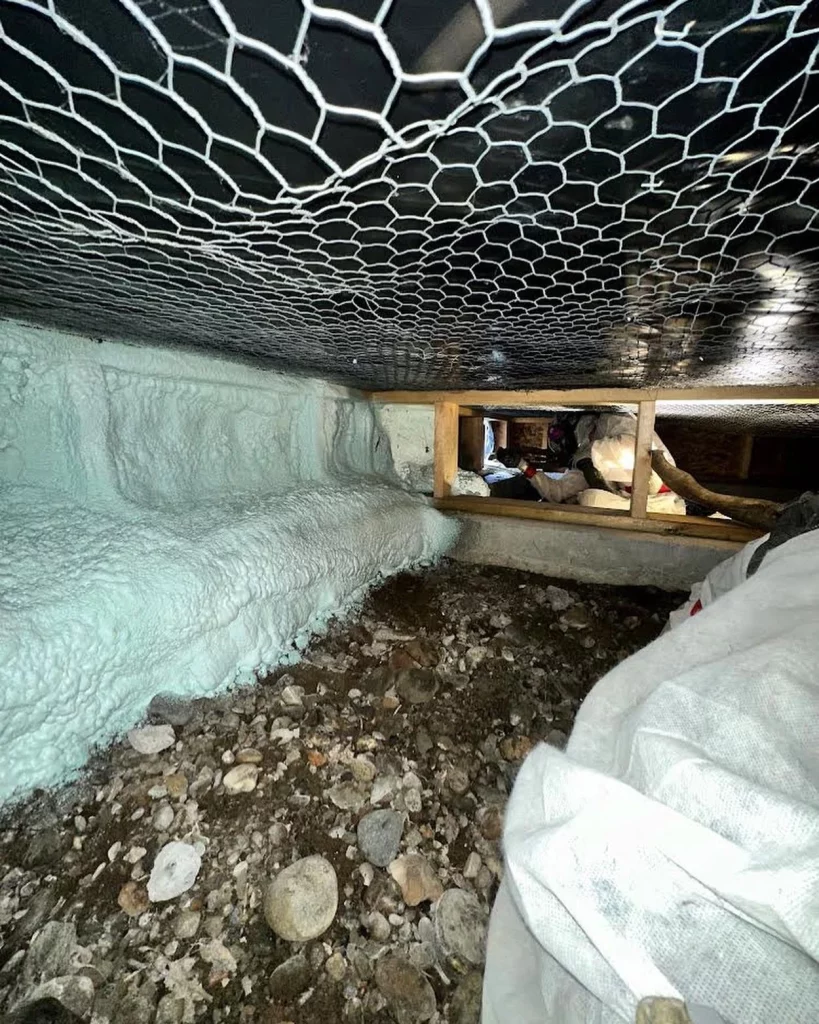
| Crawlspace walls | Closed-cell | Below-grade contact and moisture exposure demand high-density foam |
| Vented attic floor | Open-cell | Air sealing and sound control in living space below; attic remains vented |
| Unvented cathedral ceiling | Closed-cell | No ventilation means condensation risk; needs vapor-retarding foam |
| Interior partitions | Open-cell | Sound control and air sealing at lower material cost |
| Retrofit wall injection | Open-cell | Expands into existing cavities; fills voids around framing and utilities |
Polyseal Insulation has been serving homeowners and builders across the Anchorage/Matsu Valley area, including Meadow Lakes, with honest assessments and professional spray foam installation. We evaluate every project individually, recommend the right product for each assembly, and never oversell a material that does not fit the application. Whether you need open-cell foam for a vented attic retrofit, closed-cell foam for a crawlspace encapsulation, or a combination approach for a new build, our team handles it all.
Request a Quote | Schedule an Insulation Assessment
Call us at (907) 745-7325 or email [email protected] to discuss your project. We will walk through your specific building assembly, explain which products make sense and why, and provide a detailed proposal with no pressure and no surprises.
Yes, cured open-cell foam maintains its structural integrity and insulating properties well below zero. The temperature concern is not about the foam itself failing, but about ensuring the total assembly R-value meets Climate Zone 7 requirements.
No. It provides excellent air sealing and sound control. The question is whether it is the right product for each specific assembly, not whether it works at all.
In most wall assemblies, the foam itself does not need an interior vapor barrier because it is vapor-permeable, but the overall assembly may need vapor control depending on the design. Your installer should specify this.
In a standard 2×6 wall cavity (5.5 inches), open-cell foam fills the full depth and achieves approximately R-20. In a 2×4 wall, it reaches only about R-12.6, which will not meet code without additional exterior insulation.
Any insulation that improves your building envelope will reduce heat loss and lower heating costs. The amount of savings depends on your existing insulation, air leakage rates, and how much of the envelope is improved.