

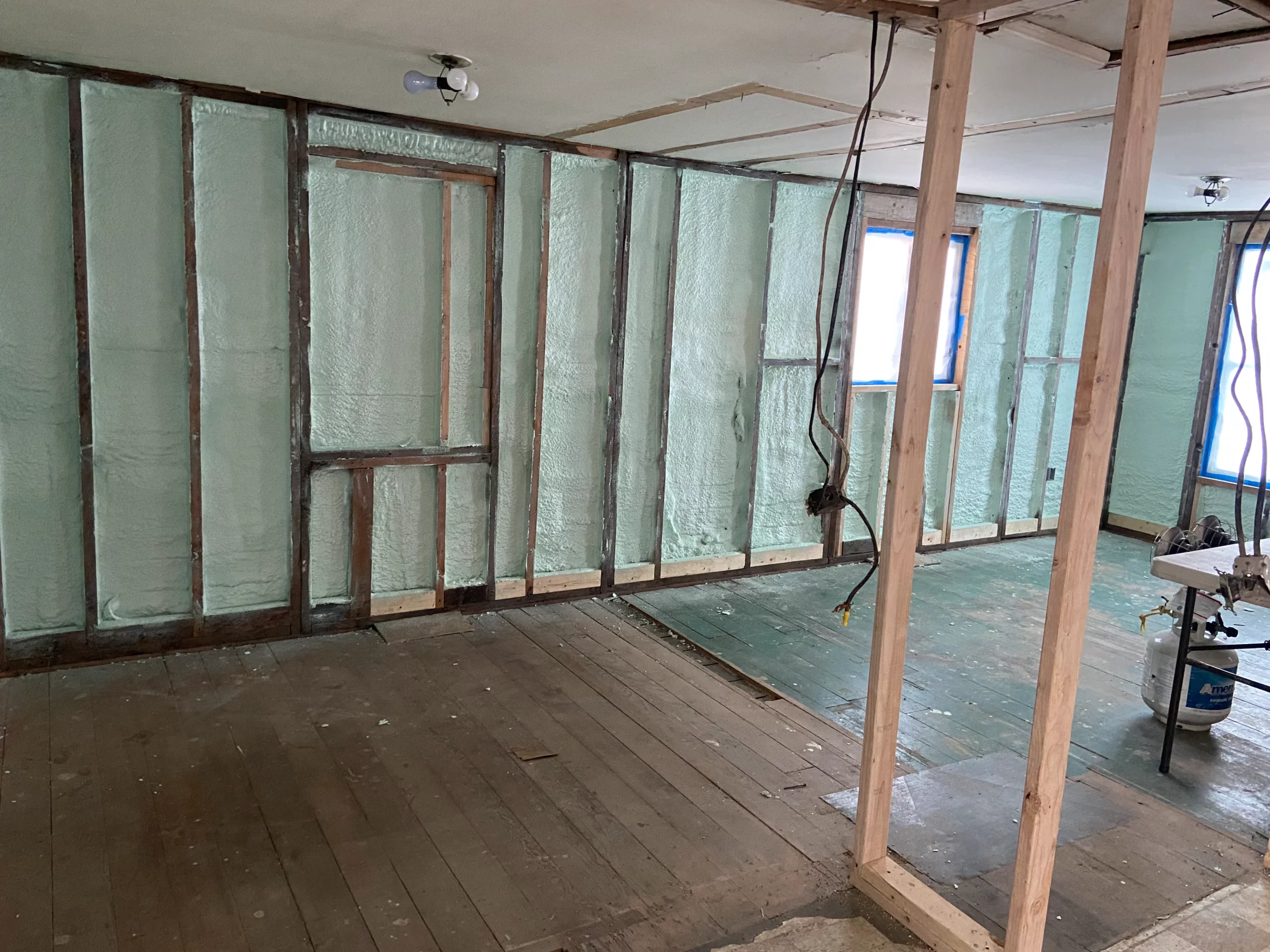
Installing new insulation in Mat Su Valley means planning around one of the most demanding thermal environments in the United States. The Mat Su Valley falls within Alaska’s Southcentral climate region, which is classified as IECC Climate Zone 7, meaning winter temperatures regularly drop well below zero and heating season stretches for six to eight months. Before moving forward with any insulation project in 2026, homeowners and builders need to evaluate R-value requirements specific to the region, vapor barrier placement to prevent condensation damage, the right insulation material for each area of the home, air sealing priorities, and whether existing insulation needs removal first. Each of these factors directly affects comfort, energy costs, and the long-term structural health of the building.
The Mat Su Valley sits in the Southcentral Alaska region, which the University of Alaska Fairbanks Cooperative Extension Service identifies as requiring some of the highest insulation levels in the country. Alaska is primarily classified as Climate Zone 7, with only northern boroughs reaching Zone 8. The prescriptive R-value minimums for this region are substantially higher than what builders encounter in the Lower 48:
| Building Component | Minimum R-Value (Southcentral AK) | Notes |
|---|---|---|
| Ceiling / Attic | R-49 or R-38 | Lower value allowed with energy-heel truss |
| Above-Grade Walls | R-20 | Applies to frame walls including rim joists |
| Floors | R-30 | Thermal envelope floors |
| Below-Grade Walls | R-15 ci or R-19 cavity | Continuous or cavity insulation |
| Slab-on-Grade | R-15 at 4ft depth | Perimeter insulation required |
| Crawl Space Walls | R-15 ci or R-19 cavity | Full height of wall |
These are minimums, and exceeding them is encouraged. The prescriptive method does not allow trading R-value between assemblies, meaning more ceiling insulation does not reduce the wall requirement. This matters because homeowners sometimes assume upgrading the attic alone is enough, when under-insulated walls and floors continue to lose heat at high rates.
Moisture management is arguably the single most important consideration for insulation projects in Mat Su Valley. In a cold climate where indoor air carries significant moisture from cooking, breathing, and bathing, that vapor migrates toward the cold exterior. If it reaches a surface below the dew point inside a wall or ceiling cavity, it condenses into liquid water or frost. When frost melts during spring, the resulting liquid can rot framing, delaminate sheathing, and promote mold growth.
The Building Science Corporation recommends that cold climate wall assemblies use a Class I or Class II vapor retarder on the interior (warm) side. In Climate Zone 7, this typically means 6-mil polyethylene sheeting or kraft-faced batts. The Insulation Institute further clarifies that vapor retarder class depends on perm rating: Class I materials are 0.1 perm or less, Class II are 1.0 perm or less, and Class III are 10 perms or less.
Critical moisture control steps for Mat Su Valley homes:
The Building America Solution Center adds that exterior continuous insulation is one of the most effective strategies for reducing condensation risk in cold climates. When insulation is placed outside the structural sheathing, framing members and sheathing stay warm enough to remain above the dew point throughout the heating season. For Climate Zone 7, the minimum ratio of exterior continuous insulation to total wall R-value is 45 percent.
Different areas of a Mat Su Valley home demand different insulation materials. The right product depends on the cavity type, access constraints, moisture exposure, and whether the space will be vented or unvented.
| Insulation Type | R-Value Per Inch | Best Applications in Zone 7 | Key Considerations |
|---|---|---|---|
| Closed Cell Spray Foam | 6.0 – 7.0 | Crawlspaces, rim joists, basement walls | Acts as vapor retarder and air barrier; excellent for moisture-prone areas |
| Open Cell Spray Foam | 3.5 – 3.7 | Walls, sound damping | Lower cost per inch but requires separate vapor barrier in Zone 7 |
| Fiberglass Batts | 2.9 – 3.8 | Walls, attics, floors | Must be uncompressed; compressed batts lose significant R-value |
| Rigid Foam Board | 3.8 – 6.5 | Exterior continuous insulation, basement walls | Provides condensation control when applied to wall exterior |
| Blown-In Cellulose | 3.1 – 3.8 | Attics, existing wall cavities | Good air sealing when dense-packed; treated for fire resistance |
One common mistake in Alaska homes is compressing fiberglass batts into cavities that are too narrow. The UAF building manual notes that compressing a standard R-30 batt from 9.5 inches into a 7.25-inch 2×8 cavity reduces its effective R-value to approximately R-26. This kind of compression happens frequently in retrofit projects where cavity depths are limited by existing framing.
Air leakage is responsible for a significant portion of heat loss in most homes, and adding insulation without first sealing air leaks can actually worsen moisture problems. Warm, humid indoor air that leaks through gaps around electrical boxes, plumbing penetrations, recessed lights, and rim joists carries moisture directly into cold wall and ceiling cavities. Once inside, that moisture condenses and can cause damage that is hidden from view for years.
In Climate Zone 7, the Building America Solution Center recommends verifying air barrier continuity with a blower door test before finish materials are installed. Common air sealing priorities for Mat Su Valley homes include:
The EPA estimates that air sealing combined with insulation upgrades can reduce heating and cooling costs significantly, though the exact savings depend on the starting condition of the home.
When insulation levels increase and air leakage decreases, the building envelope becomes tighter. In a cold climate like the Mat Su Valley, this is generally beneficial for energy efficiency, but it creates a new challenge: indoor humidity from daily activities has fewer pathways to escape. Without adequate ventilation, that humidity builds up and increases the risk of condensation within wall assemblies and on window surfaces.
The UAF Cooperative Extension Service states that mechanical ventilation, particularly heat recovery ventilation (HRV) systems, is now the standard for new energy-efficient housing in Alaska. HRVs exchange stale indoor air with fresh outdoor air while recovering heat from the outgoing airstream, so ventilation does not come at the cost of energy waste. For homeowners upgrading insulation in existing homes, adding or upgrading mechanical ventilation should be part of the planning conversation, not an afterthought.
New builds in the Mat Su Valley benefit from the ability to design wall assemblies from the ground up. This allows for exterior continuous insulation, proper vapor barrier integration, and optimized framing layouts that minimize thermal bridging. The opportunity to use advanced wall systems that place the primary insulation layer outside the structural sheathing offers superior moisture protection and condensation resistance compared to cavity-only insulation.
Retrofit projects require a more careful assessment. Before adding insulation to an existing wall or attic, our team evaluates the current condition of the building envelope, identifies air leakage pathways, and determines whether existing insulation has been compromised by moisture, pests, or compression. In some cases, removing old insulation is necessary before new material can be installed effectively.
Crawlspaces in Alaska are particularly vulnerable to moisture problems. Ground moisture evaporates upward into the crawl space, and cold floor assemblies above can create condensation conditions. The UAF guide recommends insulating crawl space walls to the full required R-value for the height of the wall, with a polyethylene vapor barrier laid on the ground to prevent soil moisture migration.
Attic insulation is one of the most common upgrade projects, but it requires attention to ventilation and eave clearance. Thick ceiling insulation should not block soffit vents, as this prevents the roof cavity from ventilating and can cause ice dams and condensation staining along the eaves.
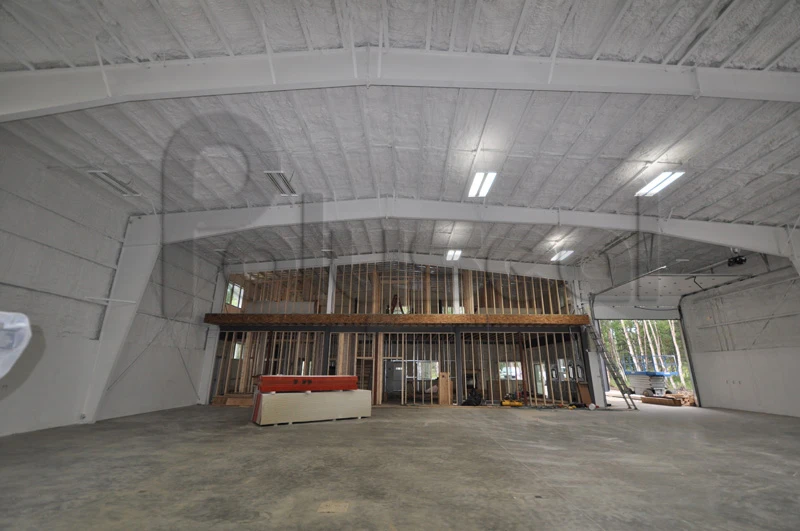
Several factors influence the final investment for an insulation project in the Anchorage and Mat Su Valley area. Understanding these variables helps homeowners plan realistically and make informed decisions about scope and material selection.
Typical project ranges for our service area:
| Service Type | Typical Low | Typical Average | Typical High |
|---|---|---|---|
| Commercial Insulation | $1,500 | $50,000 | $500,000 |
| Closed Cell Spray Foam | $1,500 | $5,000 | $100,000 |
| Open Cell Spray Foam | $1,500 | $10,000 | $100,000 |
| Crawlspace Insulation | $1,500 | $5,000 | $20,000 |
| Attic Insulation | $1,500 | $5,000 | $15,000 |
Factors that typically increase pricing include larger square footage, greater insulation thickness, higher R-value targets, difficult access conditions, and the need to remove old insulation or modify ventilation. Simpler projects with straightforward access and standard R-value requirements generally fall on the lower end of these ranges.
Choosing a contractor for an insulation project in the Mat Su Valley requires more than comparing quotes. The right partner should demonstrate specific qualities that indicate they understand cold climate building science:
Polyseal Insulation serves the Anchorage and Mat Su Valley area with residential and commercial insulation solutions tailored to Alaska’s demanding climate. Our team evaluates each project individually, accounting for your building’s specific conditions, code requirements, and long-term performance goals. Whether you are planning new construction, upgrading an existing home, or addressing moisture issues in a crawlspace, we provide honest assessments and clear recommendations.
Request a Quote | Schedule an Insulation Assessment
Reach us at [email protected] or call (907) 745-7325 to discuss your project. We are here to help you make the right choice for your home or business in the Mat Su Valley.
The minimum code requirement for ceilings in Southcentral Alaska is R-49, or R-38 when using a properly sized energy-heel truss. Exceeding these minimums is encouraged for improved comfort and energy savings.
It depends on the foam type. Closed cell spray foam acts as a vapor retarder itself, so an additional polyethylene barrier may not be necessary. Open cell spray foam is vapor-permeable and requires a separate Class I or II vapor retarder on the warm side in Climate Zone 7.
In many cases, yes, provided the existing insulation is dry, undamaged, and free of mold or pest contamination. If the old insulation has been compressed, wet, or otherwise compromised, removal is recommended before adding new material.
Air sealing is equally important, if not more so, in a cold climate. Warm indoor air leaking into wall and ceiling cavities carries moisture that condenses on cold surfaces, causing hidden damage. Insulation without air sealing can actually worsen moisture problems by reducing the drying potential of the assembly.
Not always, but it is strongly recommended for homes that will become significantly tighter after an insulation upgrade. In Alaska’s Climate Zone 7, a heat recovery ventilation (HRV) system helps manage indoor humidity and maintain air quality without wasting the heat you are paying to keep indoors.