

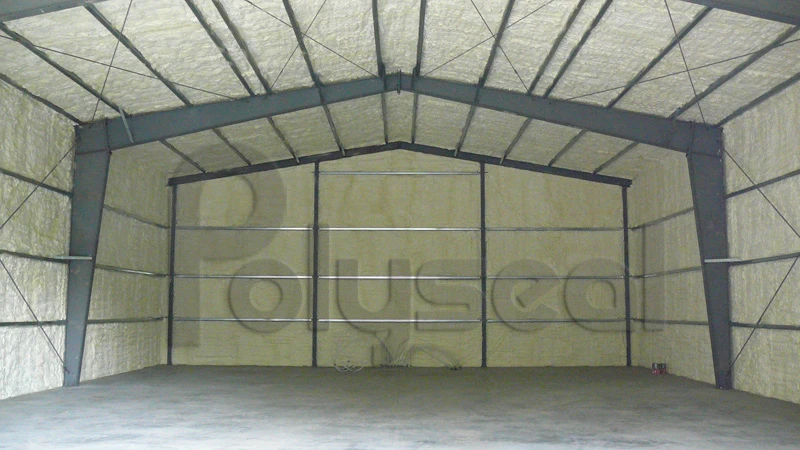
Insulation in Anchorage homes degrades faster than in milder climates because the combination of extreme cold, dramatic temperature differentials, persistent moisture intrusion, and seismic activity creates a uniquely punishing environment for every type of building envelope. Homeowners who installed insulation just five or ten years ago often find themselves dealing with higher heating bills, cold spots, and condensation issues they did not expect. The reasons go well beyond normal material aging, and understanding what accelerates performance loss is the first step toward fixing it.
The AHFC Building Science Basics manual identifies six specific factors that reduce the installed R-value of any insulation system. In Anchorage, each one is amplified by the local climate and building conditions.
Wall studs, floor joists, and ceiling rafters act as conductive heat highways that bypass insulation entirely. In a typical 2×6 framed wall, even though 89% of the wall cavity holds R-21 insulation, the studs themselves pull the overall wall performance down to approximately R-19.9. Over a full heating season in Anchorage, where heating degree days average around 14,000 to 15,000, the cumulative heat loss through these thermal bridges is substantial and often mistaken for failing insulation.
Gaps, folds, compressed corners, and unfilled stud cavities create pathways for convective loops. Warm air rises into these voids, transfers heat through the building envelope, and cool air drops back to repeat the cycle. According to AHFC research, if just 3% of an R-21 wall consists of insulation voids, the average R-value drops below R-16. That is a 24% performance loss from gaps alone, before accounting for any moisture or compression issues.
Insulation works by trapping still air. When air is allowed to pass through it, performance drops sharply. Fiberglass is particularly vulnerable to air intrusion from wind washing in attic cavities, where cold air enters through soffit vents and flows across the top surface of the insulation, stripping captured heat. In Anchorage, where winter wind chills regularly push below minus 30 degrees Fahrenheit, this effect is relentless for months at a time.
Insulation products are manufactured at an optimal density for their rated R-value. Compressing them into spaces that are too narrow forces out the trapped air pockets that do the actual insulating work. The UAF Cooperative Extension Service’s building challenges guide provides a clear example: placing a standard R-30 batt into a 2×8 wall cavity compresses it from 9 inches down to 7.25 inches, dropping the effective R-value from 30 to approximately 26. The same issue occurs in floors and ceilings where insulation is forced into shallow cavities or crowded by wiring, plumbing, and ductwork.
This is the single most damaging factor in Anchorage. Moisture reduces insulation value as it accumulates, and fiberglass and cellulose can be reduced to essentially no insulating value when saturated. The moisture arrives through two primary mechanisms: air leakage carrying warm, humid indoor air into cavities where it condenses on cold surfaces, and capillary action drawing ground moisture up through foundations. Once inside the insulation, the moisture can freeze during Anchorage’s extended subzero periods, expanding and physically breaking down fiberglass fibers and cellulose structures. When it thaws in spring, the material may settle, sag, or compact, permanently reducing its R-value.
While most insulation materials actually achieve slightly higher R-values at lower temperatures, the extreme temperature swings in Anchorage stress the materials in other ways. Repeated contraction and expansion of framing members, sheathing, and the insulation itself creates friction, settling, and separation from surrounding surfaces. This is especially true in attics, where summer temperatures can reach well above 100 degrees inside a poorly vented roof cavity, and winter temperatures drop the same space below zero.
Anchorage sits in a region with roughly 14,000 to 15,000 annual heating degree days. That means the temperature differential between indoor and outdoor environments is enormous for the majority of the year. Higher differentials drive faster heat loss, which means even small deficiencies in insulation performance show up as noticeable comfort problems and elevated energy bills immediately.
The EPA notes that climate change is disrupting freeze-thaw cycles across Alaska, leading to increased frost heaves and ground subsidence. This ground movement transfers into foundations and framing, creating cracks in vapor barriers, shifting insulation away from its intended position, and opening new air leakage pathways that did not exist when the home was originally insulated. A crawlspace that was properly insulated and sealed five years ago may now have gaps along the foundation wall where the ground has shifted.
Anchorage is located in one of the most seismically active zones in North America. Even minor tremors that cause no visible structural damage can shift insulation within wall cavities, separate taped seams in vapor barriers, and loosen mechanical fasteners holding rigid foam in place. Over years and decades, repeated seismic stress compounds the degradation process.
The AHFC building science manual emphasizes that the vapor retarder must be placed on the warm side of the dew point. In Anchorage’s extreme cold, this placement is especially critical. However, in many older homes and even some newer construction, vapor barriers were installed with gaps at electrical boxes, plumbing penetrations, and ceiling light fixtures. The AHFC retrofit guide notes that a 1-inch square hole in a 4×8 sheet of gypsum board can transport 30 quarts of water into a wall cavity per season through air leakage, compared to only one-third of a quart through vapor diffusion across the entire sheet. These small penetrations become major moisture delivery systems in Anchorage’s climate.
Different insulation materials respond differently to the specific challenges Anchorage presents. The table below compares common types across the factors that matter most in this climate.
| Insulation Type | Moisture Resistance | Air Intrusion Vulnerability | Compression Sensitivity | Long-Term Stability in Cold |
|---|---|---|---|---|
| Fiberglass batts | Low when wet | High | High | Moderate to low |
| Blown-in fiberglass | Low when wet | Moderate | Low | Moderate |
| Cellulose | Low when saturated | Low | Low | Moderate (can settle) |
| Closed cell spray foam | High | Very low | Very low | High |
| Open cell spray foam | Moderate | Low | Low | Moderate |
| Rigid foam board | High | Very low | N/A (fixed density) | High |
Detecting insulation degradation early allows you to address it before the damage compounds. Watch for these indicators:
The AHFC blog recommends starting with the attic and basement or crawlspace, since these areas are accessible and account for a disproportionate share of total heat loss. Uninsulated basements alone may account for up to one-third of a home’s heat loss. ENERGY STAR advises that attic insulation at or below the level of the floor joists needs additional material immediately.
Adding insulation on top of an airtightness problem does not solve the underlying moisture transport. Warm indoor air leaking through gaps in the ceiling vapor barrier carries moisture into the attic, where it condenses and soaks the insulation from above. Air sealing with caulk and weatherstripping should always precede or accompany any insulation upgrade. The ENERGY STAR recommended R-values for Alaska’s climate zones call for R-60 in the attic and R-38 for floors over unconditioned spaces.
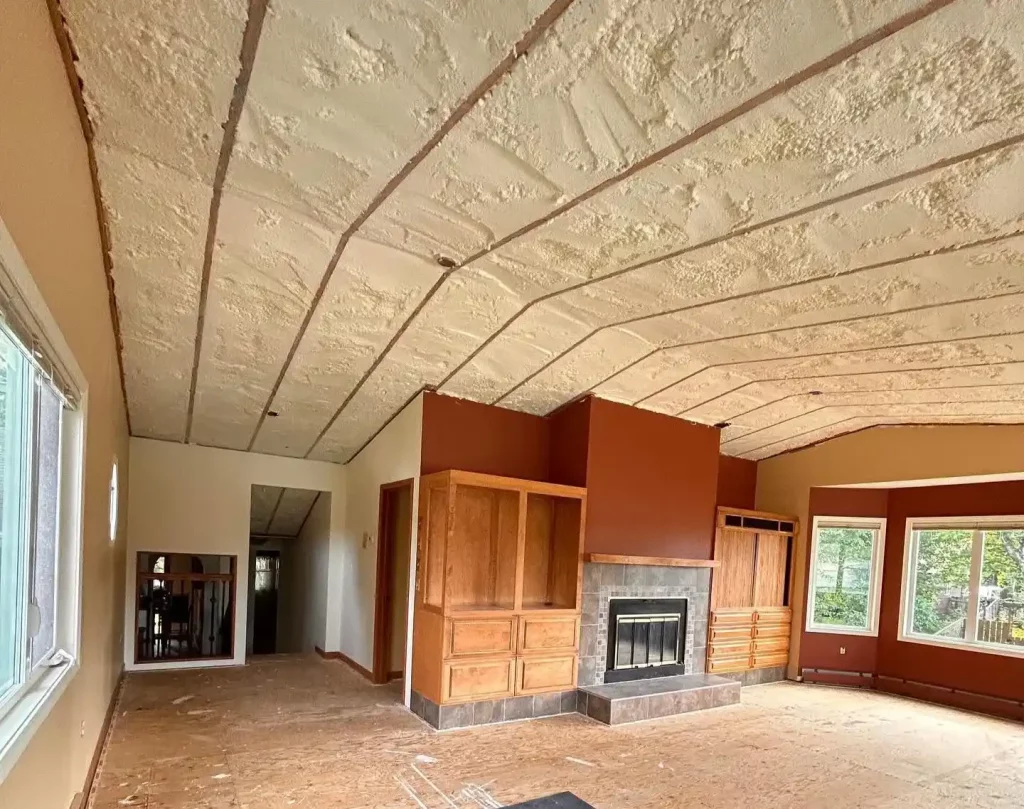
In existing homes, checking for and repairing vapor barrier continuity is essential before any insulation work begins. All penetrations for plumbing stacks, electrical wiring, chimneys, and recessed lighting should be sealed. The UAF Extension guide recommends using a 6-mil polyethylene sheet, sealed at all edges and seams with non-hardening caulking compound, as the standard for existing homes being reinsulated.
| Home Type | Primary Concern | Recommended Approach |
|---|---|---|
| Pre-1980s construction | Missing vapor barriers, settled fiberglass | Air seal all penetrations, install new polyethylene vapor barrier, add blown-in or batt insulation to recommended R-values |
| 1980s-2000s construction | Compressed batts, aging vapor barriers | Inspect for compression and voids, supplement with additional insulation, repair torn vapor barriers |
| Post-2000s construction | Air leakage around penetrations, settling blown-in | Blower door test to locate leaks, air seal, top off settled areas |
| Crawlspaces | Ground moisture, inadequate wall insulation | Closed crawlspace strategy with rigid foam on walls and sealed vapor barrier on floor |
| Commercial buildings | Thermal bridging, large envelope area | Continuous insulation systems, thermal break detailing, professional air barrier installation |
Working with a qualified team makes the difference between a lasting solution and a repair that needs to be redone in a few years. Look for professionals who conduct a thorough inspection before recommending any work, who discuss air sealing and vapor barrier conditions alongside insulation R-values, and who explain why a specific material and method suits the Anchorage climate. Clear communication about project timeline, material choices, and what increases or decreases project cost demonstrates the kind of transparency that leads to better outcomes for homeowners in harsh climates.
At Polyseal Insulation, we understand the specific demands Anchorage’s climate places on every home and building in the Mat-Su Valley. Our team evaluates your building envelope for air leakage, moisture damage, and insulation degradation before recommending a targeted solution. From attic insulation starting at $1,500 for typical projects to closed cell spray foam and crawlspace insulation tailored to your needs, we provide transparent pricing and materials built for extreme cold performance.
Request a Quote | Schedule an Insulation Assessment
Call us at (907) 745-7325 or email [email protected] to get started. The right insulation, properly installed and protected from moisture, will perform for decades in Anchorage when the building science is done right.
Insulation in Anchorage degrades measurably faster due to extreme temperature differentials, freeze-thaw cycling, and persistent moisture transport through building envelopes. Where a home in a temperate climate might see noticeable degradation after 15 to 20 years, Anchorage homes can show measurable R-value loss within 5 to 10 years if vapor barriers and air sealing are inadequate.
Adding insulation over degraded material without addressing the underlying cause of the loss, such as air leaks, moisture intrusion, or compression, will not restore full performance. The existing moisture and gaps will still be present and will continue to affect the new layer. Air sealing and vapor barrier repair should come first.
The most common mistake is treating insulation as a standalone solution without ensuring proper air sealing and continuous vapor barrier placement on the warm side of the assembly. In Anchorage, even small gaps in the vapor barrier can deliver large volumes of moisture into wall and ceiling cavities, where it destroys insulation effectiveness.
Look for signs of moisture staining on ceilings and walls, frost or condensation at framing lines, and water stains around electrical outlets during spring thaw. A professional blower door test combined with a visual inspection of accessible cavities can definitively identify vapor barrier failures.
Closed cell spray foam resists moisture penetration and air intrusion significantly better than fiberglass batts or blown-in materials. It also maintains its R-value without settling, compressing, or absorbing water, making it well suited to Anchorage’s moisture challenges and seismic conditions.