
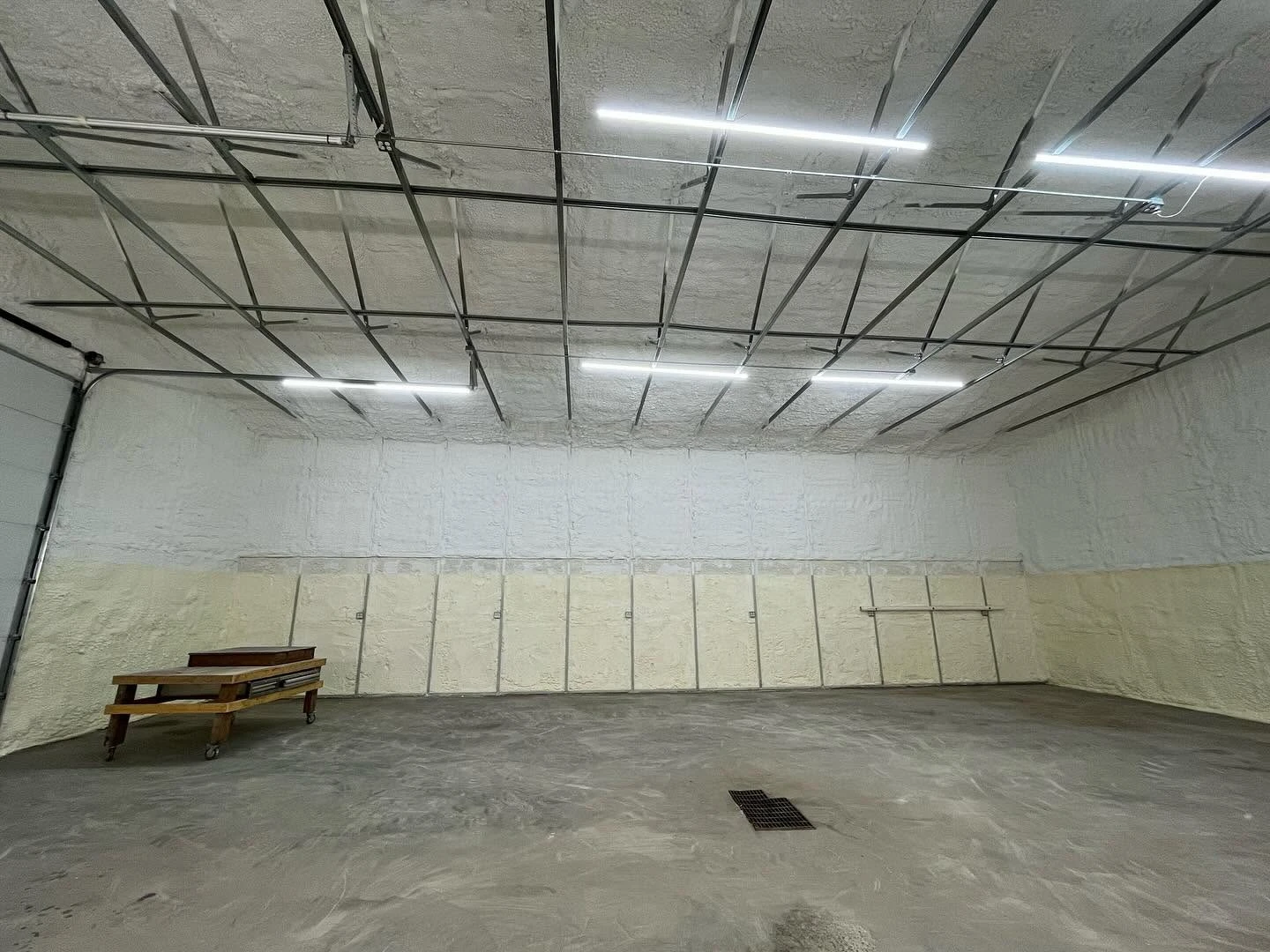
Closed-cell spray foam insulation has earned strong recognition in Meadow Lakes, AK because it addresses the specific challenges that come with building and living in a subarctic climate. It delivers high thermal resistance per inch, acts as a vapor retarder, seals air leaks, and adds structural rigidity, all in a single application. For homeowners in the Matanuska-Susitna Valley where winter temperatures routinely drop well below zero, Understanding Closed-Cell Spray Foam makes those combined properties a practical and effective option compared to traditional insulation materials like fiberglass or cellulose.
Meadow Lakes sits in the Matanuska-Susitna Borough, an area classified under the Southcentral Alaska climate region in IECC Climate Zone 7. This zone experiences long, harsh winters with heating degree days that place extraordinary demands on a building’s thermal envelope. The University of Alaska Fairbanks Cooperative Extension Service identifies the Southcentral region as requiring some of the highest insulation R-values in North America, with minimum code-prescribed levels of R-38 for ceilings, R-25 for exterior walls, and R-30 for floors when not using natural gas heating.
In this environment, the choice of insulation material is not a cosmetic preference. It directly affects heating costs, occupant comfort, and the long-term durability of the building envelope. Inadequate insulation and air leakage are the leading causes of energy waste in most homes, according to the U.S. Department of Energy’s Insulation Fact Sheet. Heat flows from warm to cold, and in an Alaskan winter that temperature differential is extreme and persistent for months.
Closed-cell spray polyurethane foam is a high-density material, typically 2 pounds per cubic foot, that expands during application to fill gaps, cracks, and cavities in walls, roofs, and foundations. According to the Building Science Corporation’s Residential Spray Foam Guide, spray foam insulation is unique in its ability to provide continuity of water control, air control, vapor control, and thermal control layers in a single material.
Key performance characteristics for cold climate applications include:
The Building Science Corporation explicitly states that high density closed cell insulation is preferred in cold climates and meets code requirements for both condensation control and vapor retardation in Climate Zones 5 through 8. For Meadow Lakes homeowners, this means closed-cell foam addresses the two biggest moisture-related risks in cold climate construction: condensation within wall cavities and moisture migration through the building envelope.
Both foam types work in most climates, but the choice between them matters significantly in Alaska. The following comparison highlights why closed-cell is the stronger option for this region.
| Property | Closed-Cell Spray Foam | Open-Cell Spray Foam |
|---|---|---|
| R-value per inch | ~R-6.5 | ~R-3.5 |
| Density | ~2 lb/ft³ | ~0.5 lb/ft³ |
| Vapor permeability | ~3 perms per inch | ~50 perms per inch |
| Vapor retarder class | Class II above 1.5 inches | Not rated as vapor retarder |
| Air barrier | Yes, at minimum spray depth | Yes, at minimum spray depth |
| Recommended for IECC Zone 7 | Yes, all applications | Limited to interior partitions with supplemental vapor control |
| Structural reinforcement | Adds wall racking strength | No structural benefit |
| Moisture resistance | Low absorption, resistant to water intrusion | High absorption, can hold moisture |
The critical difference for Meadow Lakes is vapor control. In IECC Climate Zones 5 and higher, closed-cell spray foam high-performance insulation should be used for unvented conditioned attics and vented crawl space floor assemblies. Its high density and low vapor permeability help prevent interior moisture from diffusing through the insulation and condensing on cold roof sheathing or floor assemblies. By contrast, open-cell foam allows more vapor movement, which can create conditions favorable for mold growth and wood decay.
Understanding which building assemblies benefit most helps homeowners prioritize where to invest in insulation upgrades.
For new construction and retrofits, applying closed-cell spray foam to wall cavities provides continuous insulation that eliminates thermal bridging through studs. In the Southcentral Alaska region, exterior walls require a minimum of R-25 cavity insulation (for non-natural gas heating). With an R-value of R-6.5 per inch, approximately 4 inches of closed-cell foam meets this requirement, fitting within standard 2×6 framing.
Meadow Lakes homes with vented crawlspaces face a particular moisture challenge. Cold outside air meeting warm floor framing creates condensation risk. The Building Science Corporation recommends that only high density closed cell spray foam be used for vented crawlspace floor assemblies in all IECC climate zones. The foam seals against air and vapor infiltration while insulating the floor above.
For homes with ductwork or mechanical systems located in attic spaces, converting to an unvented conditioned attic using closed-cell spray foam applied directly to the underside of the roof deck prevents heat loss from ductwork and eliminates ice dam formation. In Climate Zones 5 and higher, open-cell foam is not recommended for this application.
These areas are among the most leaky and poorly insulated locations in any home. Closed-cell spray foam fills the irregular framing cavities, seals air leaks, and provides the required insulation level in a single step.
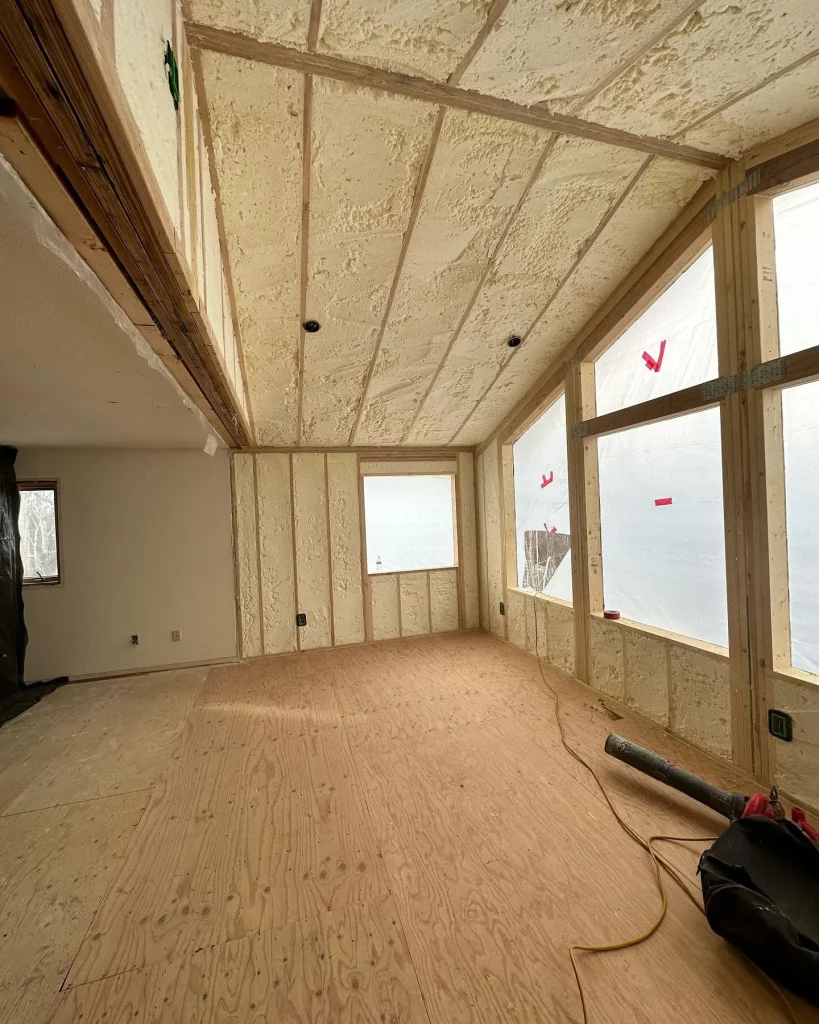
Our closed-cell spray foam projects in the Anchorage/Mat-Su Valley area (zip code 99508) typically start at $1,500 for smaller applications, with an average project around $5,000. Several factors influence the final cost:
Simpler projects with straightforward access and lower R-value requirements fall at the lower end of the range. Homes requiring full wall and attic encapsulation with high R-values will be at the higher end.
Choosing the right insulation provider matters as much as choosing the right material. Here is what to look for:
Polyseal Insulation provides closed-cell spray foam insulation services throughout the Anchorage/Mat-Su Valley area, including Meadow Lakes. Our team understands the demands of Climate Zone 7 construction and can help you determine the right insulation strategy for your home or building project, whether it is new construction, a retrofit, or a specific area like a crawlspace or attic.
Request a Quote | Schedule an Insulation Assessment
Call us at (907) 745-7325 or email [email protected] to discuss your project. We work with homeowners and builders on residential and commercial projects ranging from 1,500 to 2,500 square feet and beyond, and we are happy to walk you through your options before any work begins.
For older homes with drafty walls, under-insulated attics, or vented crawlspaces, closed-cell spray foam can significantly reduce heating costs and moisture damage. The return depends on current insulation levels and heating fuel costs.
Installation requires specific temperature and humidity conditions for proper curing. Our team evaluates site conditions and schedules work during suitable windows to ensure the foam adheres and expands correctly.
Closed-cell foam provides higher R-value per inch, acts as both an air barrier and vapor retarder, and fills gaps around framing and obstructions that fiberglass cannot seal. Fiberglass costs less per R-value but does not address air leakage or vapor drive.
At thicknesses above 1.5 inches, closed-cell spray foam qualifies as a Class II vapor retarder per the International Residential Code, so a separate polyethylene vapor barrier is typically not required for wall and roof assemblies.
Timeline depends on project scope, square footage, and accessibility. A typical crawlspace or attic project in a 1,500 to 2,500 square foot home can often be completed in one to two days, while full-home encapsulation takes longer.