
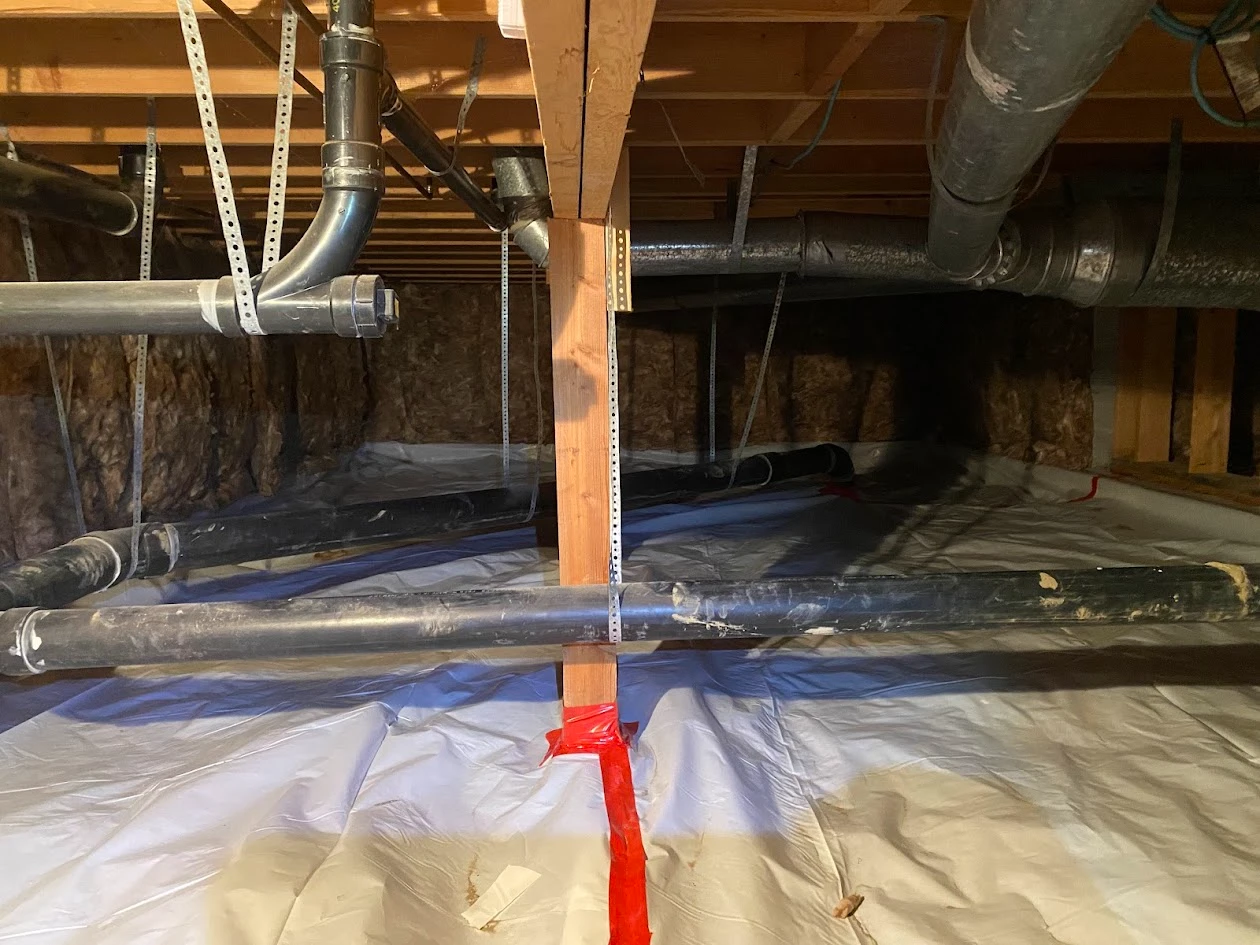
Professional crawlspace upgrades in Anchorage combine moisture control, air sealing, and insulation to create a healthier, more durable home. Anchorage’s cold, long winters and freeze-thaw cycles make unconditioned crawlspaces particularly vulnerable to moisture damage, mold growth, and heat loss. The right approach depends on your home’s foundation type, current condition, and whether the crawlspace is vented or unvented. Encapsulation, spray foam insulation, vapor barriers, and proper drainage each address different problems and deliver different results.
Homes in Anchorage and the Mat-Su Valley face a combination of extreme cold, heavy snowmelt, and freeze-thaw cycling that puts crawlspaces under year-round stress. According to the U.S. Department of Energy’s Building Science Education portal, floors above unconditioned crawlspaces are a prime source of heat loss and result in uncomfortable cold floors. When insulation is absent, damaged, or poorly installed, the subfloor alone serves as the air barrier, which is rarely sufficient.
The Wikipedia entry on crawl spaces explains that encapsulation involves adding a vapor barrier to the floor, sealing all openings to the outdoors, adding thermal insulation to the walls, and sealing gaps and cracks between the crawlspace and the home’s floor. A 2005 DOE study found that closed crawlspaces with sealed foundation wall vents and sealed polyethylene liners had significantly reduced space conditioning energy use compared to traditional vented crawlspaces.
In Anchorage specifically, the long heating season means that even small gaps in crawlspace insulation translate into measurable energy waste over months. Frozen pipes, condensation on ductwork, and moisture-driven wood rot are common problems our team sees in local homes that were built with vented crawlspaces and minimal ground moisture protection.
The connection between crawlspace conditions and the air you breathe inside your home is direct. The stack effect, which causes warm air to rise and escape through the upper portions of a building, draws air from below to replace it. If your crawlspace contains mold spores, soil gases, or elevated humidity, those contaminants get pulled into your living space through floor penetrations, plumbing openings, and even tiny gaps in the subfloor.
The EPA’s guide on mold and moisture states that molds produce allergens, irritants, and in some cases potentially toxic substances called mycotoxins. Inhaling or touching mold spores can cause allergic reactions including sneezing, runny nose, red eyes, and skin rash. Molds can also trigger asthma attacks in sensitive individuals. The EPA emphasizes that indoor mold growth can and should be prevented by controlling moisture indoors.
In Anchorage homes, crawlspace moisture commonly originates from:
When these moisture sources are not controlled, the result is mold growth on floor joists, subflooring, and insulation, along with wood rot that can compromise structural integrity over time.
Not every crawlspace needs the same treatment. The right strategy depends on the current condition of the space, the foundation type, and your priorities for comfort, air quality, and energy efficiency. Here is a comparison of the main upgrade approaches:
| Upgrade Type | Best For | Key Materials | Primary Benefit | Limitation |
|---|---|---|---|---|
| Vapor Barrier Only | Damp crawlspaces with existing insulation in fair condition | 10-mil to 20-mil polyethylene sheeting, mastic, mesh tape | Stops ground moisture from entering living space | Does not address air sealing or heat loss |
| Full Encapsulation | Crawlspaces with visible moisture, mold risk, or musty odors | Vapor barrier, sealed vents, wall insulation, dehumidifier or HVAC supply | Comprehensive moisture and air quality control | Higher upfront investment, requires drying mechanism |
| Spray Foam Insulation | Irregular crawlspace geometries, hard-to-reach areas | Closed cell or open cell polyurethane spray foam | Air seals and insulates in one step; high R-value per inch | Cost increases with thickness; requires trained installers |
| Rigid Foam Board | Standard crawlspace walls with regular geometry | XPS, EPS, or polyisocyanurate rigid panels | Consistent R-value, low permeance, cost-effective per square foot | Requires mechanical fasteners and sealing at seams |
| Drainage + Encapsulation | Crawlspaces with standing water or high water table issues | French drains, sump pump, vapor barrier, wall insulation | Addresses bulk water before sealing | Requires exterior grading work; most complex approach |
A full crawlspace encapsulation is the most complete upgrade available. According to the DOE Building America Solution Center, unvented, air-sealed, insulated, and conditioned crawlspaces reduce the opportunity for condensation on cold floor joists, keep floors warmer, protect HVAC equipment and plumbing from freezing temperatures, and are less likely to harbor pests.
Our encapsulation process includes these steps:
The insulation material you choose matters for both performance and durability in Anchorage’s climate. The DOE recommends that insulation must be in full contact with a continuous air barrier that separates the house from the unconditioned space below. Here is how the main options compare:
| Material | R-Value Per Inch | Air Barrier | Vapor Retarder | Best Application |
|---|---|---|---|---|
| Closed cell spray foam | ~6.5 | Yes at 1.5 in. | Yes | Crawlspace walls, band joists, irregular surfaces |
| Open cell spray foam | ~3.5 | Yes at 5.5 in. | No | Wall cavities where higher thickness is acceptable |
| Polyisocyanurate board | ~5.6-6.0 | No (requires sealing) | Low permeance | Crawlspace walls (most cost-effective rigid option) |
| Extruded polystyrene (XPS) | ~5.0 | No (requires sealing) | Low permeance | Crawlspace walls below grade |
| Fiberglass batt | ~3.2-3.8 | No | No | Floor insulation above crawlspace (less effective in cold climates) |
For Anchorage homeowners, closed cell spray foam and polyisocyanurate rigid board are the strongest performers. Closed cell spray foam provides an integrated air barrier and vapor retarder in a single application, making it ideal for band joists and irregular wall surfaces. Rigid foam board offers the best value per R-value for standard crawlspace walls.
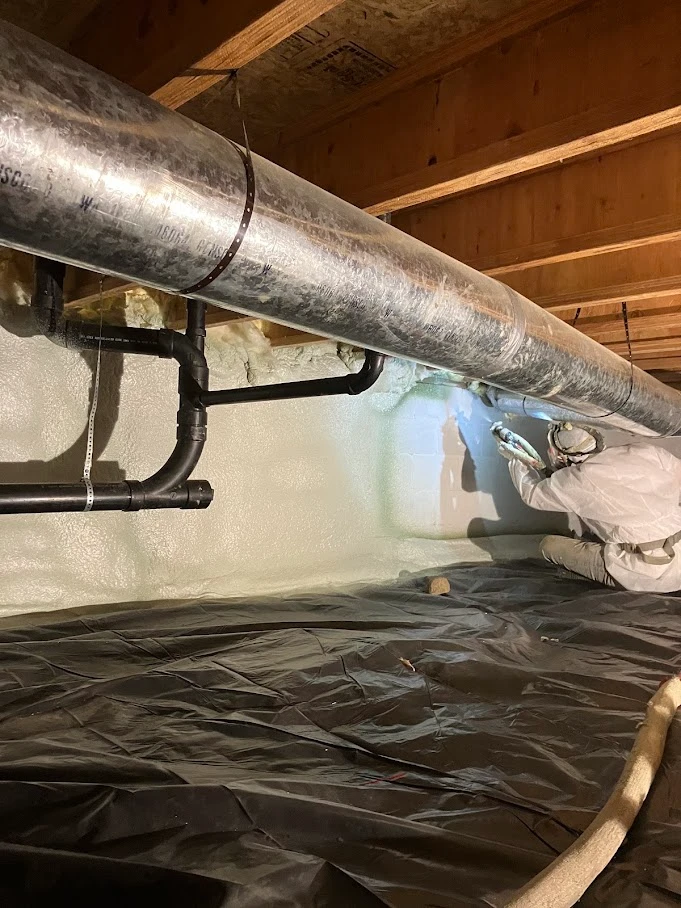
The right crawlspace upgrade depends on the type of home and its current condition.
Older Anchorage homes with vented crawlspaces: These homes benefit most from full encapsulation. Vented crawlspaces were designed for warmer, drier climates and often perform poorly in Anchorage. Sealing the vents, installing a vapor barrier, and adding wall insulation addresses moisture, air quality, and energy efficiency simultaneously.
Newer homes with unvented crawlspaces that lack proper sealing: Even if vents have been closed, many newer homes still have exposed soil, unsealed penetrations, and no wall insulation. Adding a vapor barrier and wall insulation completes the enclosure and prevents the problems that arise from a partially sealed space.
Homes with HVAC equipment in the crawlspace: When ductwork and mechanical systems are located in the crawlspace, encapsulation protects this equipment from corrosion and freezing while ensuring that conditioned air reaches the living spaces without losses through leaky ductwork in unconditioned space.
Homes with known moisture or radon concerns: Encapsulation creates a controlled environment that makes it easier to manage radon through a dedicated mitigation system and keeps humidity within the 30-50% range recommended by the EPA for preventing mold growth.
Choosing a contractor for crawlspace work in Anchorage requires careful evaluation. Here are indicators that signal a qualified, trustworthy team:
Our team at Polyseal Insulation has been helping Anchorage and Mat-Su Valley homeowners upgrade their crawlspaces with professional-grade encapsulation, spray foam insulation, and moisture management systems. We assess every crawlspace individually, identify the specific problems affecting your home, and recommend a solution that fits your needs and budget. Whether you are dealing with cold floors, musty odors, high energy bills, or visible moisture, we have the experience and equipment to get the job done right.
Request a Quote | Schedule an Assessment
Call us at (907) 745-7325 or email [email protected] to discuss your crawlspace upgrade today.
Encapsulation is the process of sealing a crawlspace by installing a continuous vapor barrier on the floor and walls, sealing all foundation vents, adding insulation to the walls, and air sealing all penetrations. This converts the crawlspace into a conditioned, dry space that no longer contributes moisture or contaminants to the living area.
Most residential crawlspace encapsulation projects in Anchorage take two to four days to complete, depending on the square footage, accessibility, and whether old insulation needs to be removed first. Larger or more complex projects may require additional time.
Yes. Sealing a crawlspace without addressing moisture sources or providing a drying mechanism can trap moisture and make conditions worse. That is why a thorough assessment, proper drainage, and a drying strategy such as HVAC supply air or a dehumidifier are essential parts of every encapsulation we perform.
In most cases, yes. Existing fiberglass batt insulation in the floor system is typically removed when converting to a sealed, wall-insulated crawlspace. Damaged, fallen, or moisture-saturated insulation should always be removed, as it can harbor mold and no longer provides effective thermal resistance.
Radon is a naturally occurring soil gas that can enter homes through crawlspaces, and the EPA recommends testing all homes for radon. Encapsulation creates a controlled environment that makes it easier to install and manage a radon mitigation system if testing shows elevated levels in your home.