
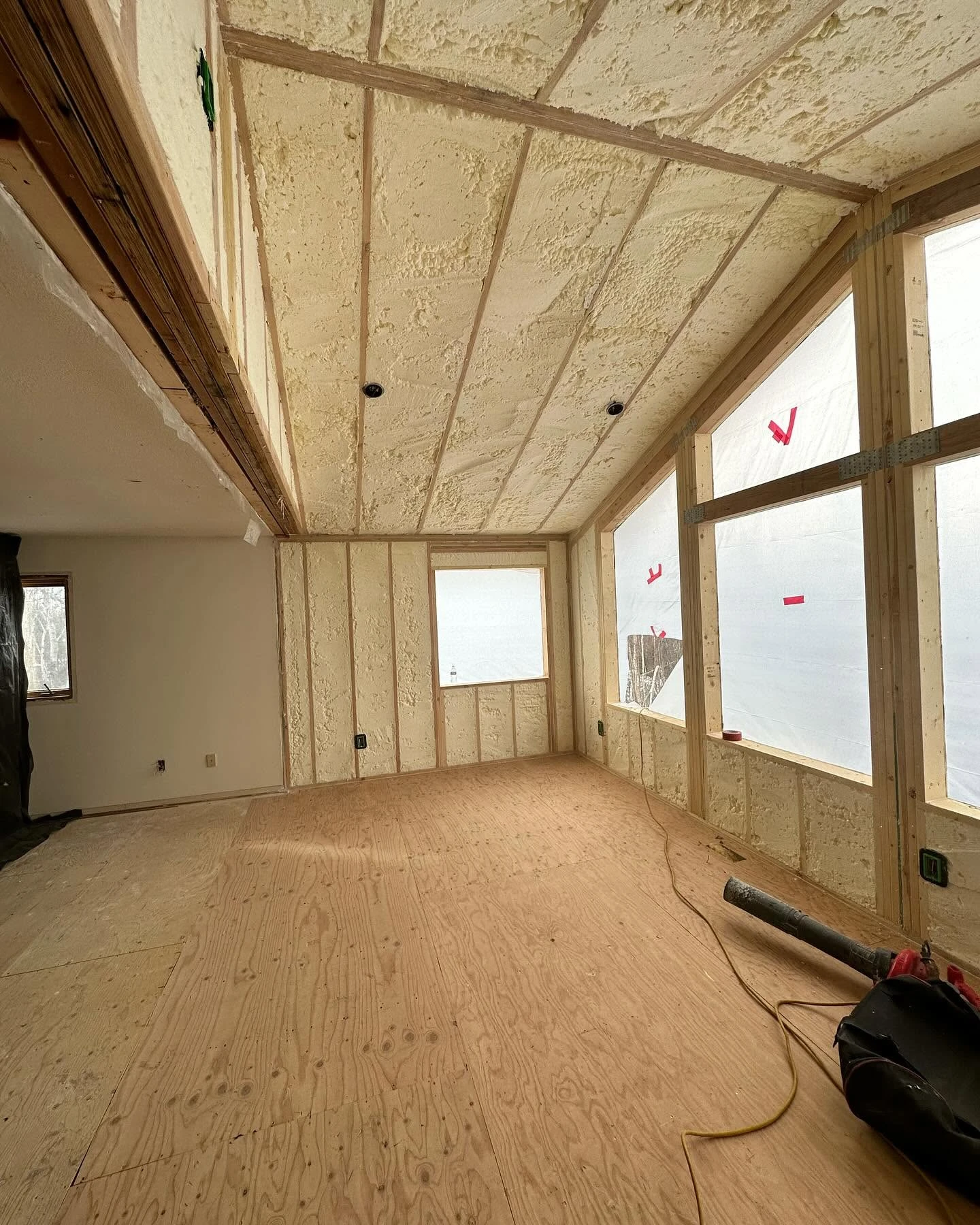
The cost of closed-cell spray foam insulation for Palmer, AK property owners typically ranges from a low of $1,500 to a high of $100,000, with an average project around $5,000. Where your job lands depends mainly on thickness, area, and access, so a free site-specific quote gives you the real number.
Most people want a ballpark before they pick up the phone. Here’s the typical price range for a closed-cell project.
| Project Level | Typical Price |
|---|---|
| Low | $1,500 |
| Average | $5,000 |
| High | $100,000 |
Small jobs, like a rim joist or a small crawl space, tend to sit near the low end. The top of the range covers very large or complex jobs.
Installers price spray foam by the board foot, which is one square foot of surface at one inch thick. Angi lists closed-cell foam at an R-value of roughly 6 to 7 per inch, so every extra inch adds both insulation value and cost.
Two jobs with the same square footage can price very differently. These are the details that usually decide where you land in the range.
Palmer sits in Southcentral Alaska, where winter heating is the biggest energy bill most households face. Your target R-value decides how much foam you buy.
The University of Alaska Fairbanks Cooperative Extension lists Southcentral targets of R-49 for ceilings, R-20 for frame walls, R-30 for floors, and R-15 or R-19 for crawl space walls. At about R-6 to R-7 per inch, an R-20 wall works out to roughly three inches of closed-cell foam. That’s my math, so confirm the number for your own walls.
Heating is where the savings show up. The Alaska Housing Finance Corporation reports that space heating makes up 73% of household energy costs in South Central Alaska. It also says insulation, air sealing, and similar upgrades can cut heating costs by 30% or more, though your results depend on where your home starts.
Closed-cell costs more up front than open-cell, and that’s a fair thing to question. The answer depends on where the foam goes.
Angi’s guide notes that closed-cell foam costs more than open-cell per board foot. You’re paying for more R-value per inch, so you need less thickness in a shallow cavity. You also get a dense foam that blocks air and moisture, which is why that guide lists attics, crawl spaces, and basements as the best fits.
The trade-off is cost. On a dry interior wall with room to spare, open-cell may do the job for less. If you’re unsure about a wall, ask for both prices side by side.
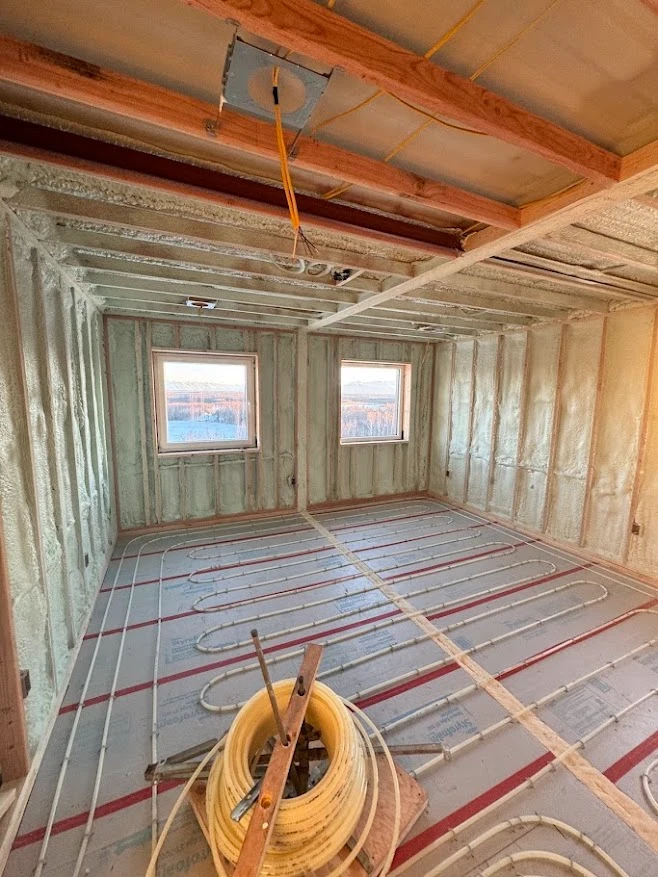
A closed-cell spray foam installation usually follows four steps. Knowing them helps you compare quotes line by line.
Cheap quotes can hide missing work, so compare scope before you compare price. Any closed-cell insulation contractor Palmer homeowners call should answer these before you sign.
Prices swing with thickness, access, and what’s already in your walls, so a number on a screen only gets you so far. Polyseal Insulation offers free quotes for your Palmer project, and a short call is the fastest way to get a real figure.
Send us your area size and the spots you want insulated.
Phone: (907) 341-4848
Email: [email protected]
Foam sets in minutes, but it needs time to cure and off-gas, often around a day or more. Follow your installer’s exact re-entry instructions, especially with kids, pets, or anyone sensitive to fumes.
Kits exist, but spray foam is hard to get right. A mistake in a tight attic or crawl space is costly to fix.
Dry, intact insulation can sometimes stay. Wet, moldy, or damaged material usually needs to come out first so the foam sticks to a clean, dry surface, and removal adds labor to your quote.
It can be done, but cold, damp surfaces can hurt adhesion and curing. Ask how your installer plans around temperature and the condition of your framing.
It can, because hardened closed-cell foam is dense and rigid. Finish any planned electrical or plumbing changes before spraying.