

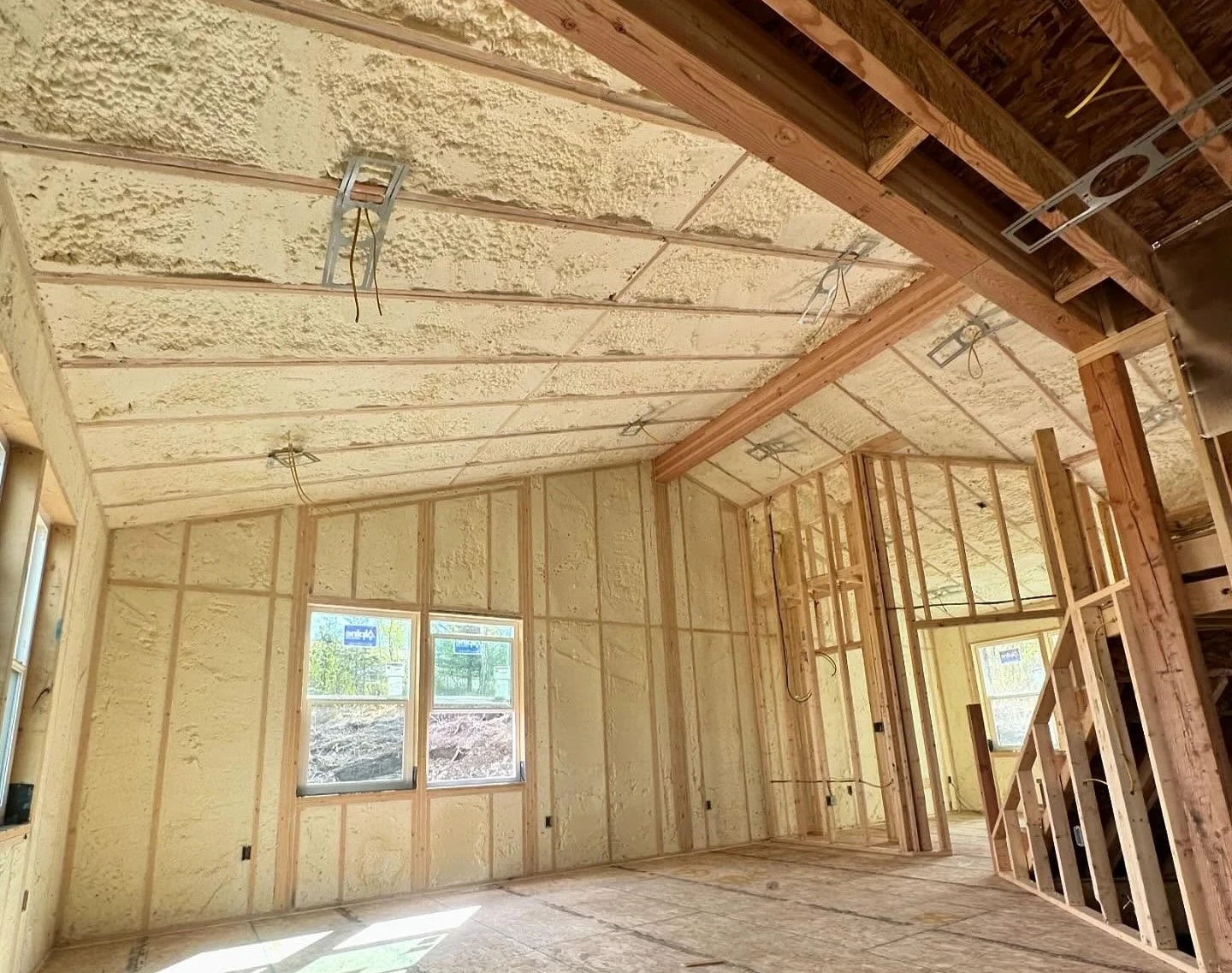
Spray foam insulation in Gateway, AK, strengthens wall assemblies around windows and doors by sealing the rough opening, the gap between the window or door jamb and the wall framing, which is where batts, rigid boards, and quick caulk jobs consistently fall short. Expanding foam fills irregular voids that fiberglass cannot reach, delivers a higher R-value per inch than glass wool, and forms an air barrier that stops convective heat loss through the wall. The right strategy depends on the project: closed cell foam suits new construction and rim areas where rigidity and moisture resistance matter, open cell foam suits deep stud bays and sound-sensitive interior walls, and low-expansion foam handles the trim cavities around existing openings. Below, we explain where openings leak, how each foam type performs in Mat-Su Valley conditions, what Alaska’s building standards expect, and how to sequence the work for lasting results.
Gateway, AK, sits in the Matanuska-Susitna Borough along the George Parks Highway corridor between Wasilla and Palmer, where long heating seasons and wind-driven cold put constant pressure on the building envelope. Openings suffer first because jambs and framing are separate assemblies that expand and contract at different rates, and every seam around them becomes a channel for moving air.
The symptoms are easy to recognize. ENERGY STAR’s window and door trim sealing guide lists drafts around closed windows and doors, visible gaps at trim, dust and pests slipping through holes, outside odors indoors, and peeling paint around frames as the classic warning signs. Its recommended checks are simple: slide a piece of paper through a closed sash, or hold incense smoke at the seam and watch which way it bends.
Behind the trim, the problem is often worse. ENERGY STAR notes that when trim is pulled back, a lack of insulation, or only a thin bead of sealant between the wall framing and the jamb, it usually indicates that every similar opening in the home is poorly sealed.
Foam solves the physics other materials miss: convective transfer. Any insulation slows conduction, but moving air carries heat through gaps regardless of how much R-value sits a foot away. Spray foam’s defining attribute is its ability to air seal, expanding up to 30 to 60 times its liquid volume to adhere to irregular surfaces and form a custom, airtight envelope inside the cavity (Wikipedia).
The highest-value work happens between the jamb and the rough framing. When learning everything about spray foam insulation, it is important to understand that ENERGY STAR’s process is the industry baseline: remove interior trim, pull degraded material from the gap, then seal with the right product for the gap size. Non-expanding foam made for windows and doors fills larger voids, caulk handles gaps of a quarter inch or less, and backer rod or fiberglass suits oversized cavities, provided nothing is forced in hard enough to deflect the frame. Homes built before 1978 need lead-safe practices before disturbing painted trim.
Openings concentrate thermal bridges where full-height studs, jack studs, and headers interrupt cavity insulation. Foam continues from the jamb cavity into the header space above the unit and into adjacent bays, closing the convective loop in one pass. At the band joist and rim transition, medium-density closed cell foam serves double duty, sealing the crack while adding stiffness to the assembly.
| Factor | Closed Cell (2 lb) | Open Cell (0.5 lb) |
|---|---|---|
| R-value per inch | R-5.1 to R-6 | About R-3.8 |
| Air barrier | Yes, at minimum installed thickness | Yes, at 5.5 inches or more |
| Moisture behavior | Doubles as a vapor barrier | Air permeable, needs separate vapor planning |
| Texture | Rigid, adds structural stiffness | Semi-rigid, sponge-like, absorbs sound |
| Best fit near openings | Jambs, headers, rims, new construction walls | Deep stud bays, interior sound control |
The Alaska Housing Building Energy Efficiency Standard governs new construction tied to state financing and rests on the 2018 IECC, ASHRAE 62.2-2016, and Alaska-specific amendments, covering thermal resistance, air leakage, moisture protection, and ventilation with a minimum 5-Star rating. Foam at the openings is one of the most direct ways builders hit those air leakage targets.
Verification matters as much as the material. As the Alaska Housing Finance Corporation explains, raters use blower door tests to measure how tight a home is, and they diagnose drafty rooms, stagnant air, and ice damming. A Post rating after upgrades documents the improvement, and buyers who complete the Energy Efficiency Interest Rate Reduction process can lower the rate on the first $250,000 of their loan.
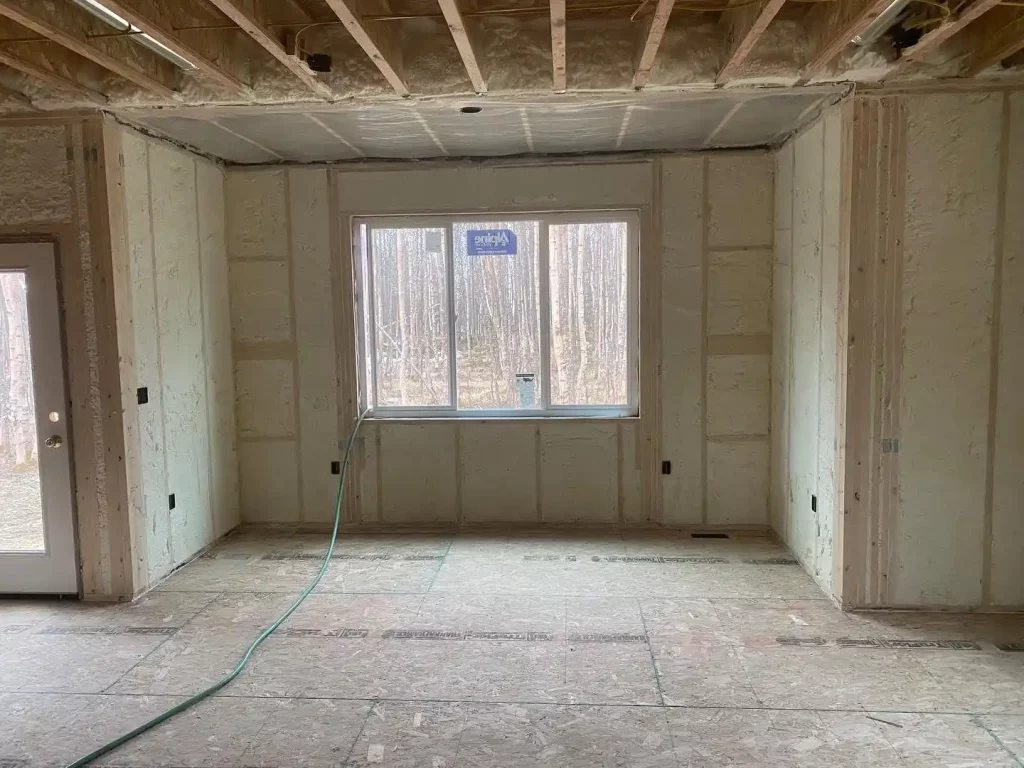
Most homes we insulate run between 1,500 and 4,000 square feet, and our project mix leans toward walls, new construction, crawlspaces, and commercial buildings. Typical project ranges from our own pricing data:
| Service | Typical Low | Typical Average | Typical High |
|---|---|---|---|
| Closed cell spray foam | $1,500 | $5,000 | $100,000 |
| Open cell spray foam | $1,500 | $10,000 | $100,000 |
What moves the number: greater thickness and higher R-value targets, difficult access, removal of old insulation, ventilation modifications, and travel distance across the Valley. Simple, open wall layouts keep pricing down, which is why new construction openings are the most affordable point to seal, before drywall closes the cavity.
| Scenario | Recommended Strategy | Why It Works |
|---|---|---|
| New construction | Closed cell at jambs, headers, and rims before drywall | Sealing is easiest while cavities are open, and BEES air leakage limits are verified by blower door |
| Window or door replacement | Low-expansion foam behind new trim, plus cavity foam if walls are open | ENERGY STAR calls replacement jobs the ideal time for behind-trim sealing |
| Existing drafty home | As-Is rating, targeted air sealing and wall foam, then Post rating | Documented upgrades can qualify for financing incentives through AHFC |
| Commercial build-outs | Closed cell for larger square footage demands | Dense structure handles high-performance wall requirements at scale |
Polyseal Insulation seals and insulates wall assemblies across Gateway, the Mat-Su Valley, and Anchorage, and we treat every window and door opening as the performance test it is. Our team handles closed cell and open cell applications, behind-trim sealing, and blower door verification for homes and commercial builds. Call us at (907) 745-7325 or email [email protected] to get started.
Schedule a Wall Assembly Assessment
Seal the openings first, and the rest of your wall works harder all winter.
High-expansion foams can bow a frame if over-applied, so we use low or non-expanding formulas made for windows and doors. ENERGY STAR gives the same warning even for backer rod, which should never be forced in far enough to deflect the frame.
Closed cell suits jambs, headers, rims, and any wall where vapor resistance and stiffness matter, while open cell fills deep stud bays and quiets interior walls. The choice depends on cavity depth, moisture exposure, and your R-value target.
A tighter wall assembly needs planned mechanical ventilation to stay healthy, which is why Alaska’s BEES incorporates ASHRAE 62.2 ventilation requirements. We account for ventilation in every sealing scope so comfort and air quality are preserved.
Watch for drafts at closed sashes, peeling paint on trim, dust and pest trails, and outside odors indoors. A paper test or incense smoke test at the seam offers a quick answer, and a blower door test confirms the whole envelope.
Behind-trim sealing around a set of openings typically takes a day or two for a contractor, per ENERGY STAR’s project estimates. Whole-wall foam timelines depend on square footage, access, and whether old insulation must be removed.