

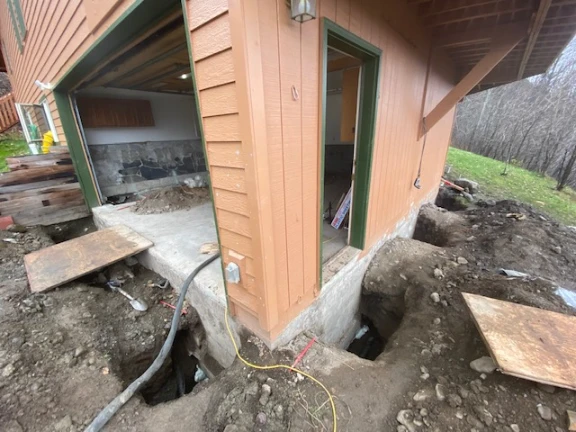
An interior french drain installation is a perimeter drainage trench cut beneath a concrete slab that catches ground seepage and relieves cove-joint water pressure, channeling water by gravity to a sump pump for discharge before it reaches your floor. For Palmer homes, it provides year-round basement interior drainage solutions that avoid high excavation costs and work even when outdoor soils are frozen solid.
Core Purpose: Relieves water pressure beneath the slab and stops leaks where the wall meets the floor.
Cold-Climate Advantage: Keeps drain pipes protected inside the heated footprint of your home.
Mechanical Discharge: Uses a cast-iron sump station with battery backup to pump water safely outside.
Envelope Protection: Combines perimeter trenching with sealed vapor barriers to prevent indoor dampness and mold.
Palmer properties deal with sharp seasonal shifts that complicate below-grade drainage. Winter temperatures regularly drop to daily lows between 10°F and 14°F in January, followed by summer highs around 67°F in July, based on long-term climate data tracked by the National Centers for Environmental Information. During spring breakup, around 50 inches of accumulated snow melts rapidly.
Winter introduces a second challenge: frozen ground. Under local building standards enforced by the City of Palmer, residential footings must sit at least 42 inches below finished grade to stay below the frost line. Outdoor perimeter pipes buried in the top three to four feet freeze into solid ice for months at a time. When standard sump discharge lines dump water onto frozen ground, ice dams block the pipe outlet, which burns out the pump motor and floods the basement.
Most basement flooding starts at the cove joint, the structural seam where the poured concrete or block wall rests on the wider footing. As groundwater rises, it follows the path of least resistance right through this gap. Masonry sealants and waterproof paints fail because they try to block this incoming water from the front. Hydrostatic pressure eventually blisters the paint off the wall, spalls the concrete, or traps moisture inside block cores.
An interior French drain releases that pressure before water reaches the living space floor. By cutting a channel below the slab beside the footing, we create an open path that takes the weight off the foundation. Water drops naturally into the gravel bed, enters the perforated pipe, and flows down to the sump basin.
Installing a French drain interior basement system requires systematic structural work to protect the building footing while establishing a clean slope toward the sump basin.
We use dust-suppressed demolition tools to cut a 10- to 14-inch strip of concrete along the interior perimeter. This cut only removes the floating slab, leaving the structural footing completely undisturbed beneath the floor.
We excavate down beside the footing, pitching the base of the trench toward the sump basin at a steady slope. We line the open trench with a commercial non-woven geotextile filter fabric, which keeps Matanuska silt from washing into the stone bed and clogging the system over time.
We place a heavy-duty perforated drain pipe in the trench with the drainage holes facing downward over a base of clean, 3/4-inch washed stone. Encasing the pipe in clean river rock lets water enter quickly from below while keeping sediment out
We tuck a high-density dimple sheet beneath the slab and run it up the lower wall. If moisture seeps through wall cracks or block cores, it trickles behind the dimple board directly into the stone bed without touching your basement floor.
We pour fresh concrete over the gravel bed, smoothing it flush with the original floor. The finished surface looks clean, restores floor strength, and keeps the drain hidden beneath the slab.
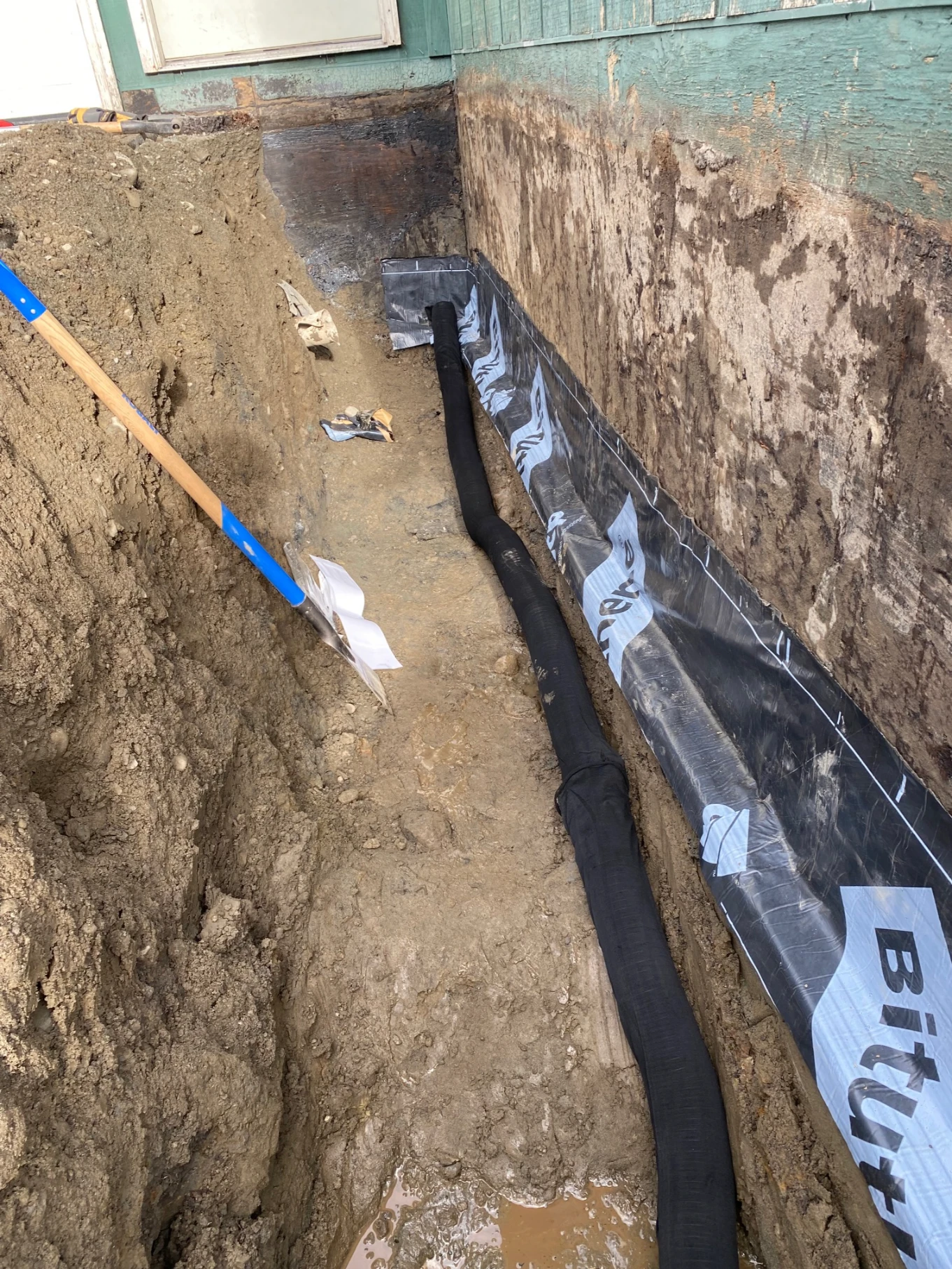
An interior french drain relies on gravity to bring water to a single collection point, but it needs a reliable mechanical station to pump that water out of your home. A basic plastic sump pump will not survive Palmer’s heavy spring breakup. We install cast-iron submersible pumps rated at 1/3 HP to 1/2 HP, matched to your basement square footage to handle high flow rates during peak snowmelt weeks.
High winds through the Matanuska Valley frequently take down local power lines. If the grid cuts out during a rainstorm or spring thaw, a standard pump stops immediately. We install a dual-pump setup with a dedicated marine battery backup. The secondary pump sits slightly higher in the pit, turning on automatically if the primary pump fails or the power drops. The basin is sealed with an airtight, gasketed cover that stops soil moisture, keeps musty smells out, and blocks radon gas.
Most waterproofing companies treat perimeter drainage as an isolated fix. Polyseal Insulation looks at your entire building envelope. Ground moisture and cold concrete work together: cold masonry chills humid air, producing dampness and condensation that encourages mold behind framed basement walls.
If your basement shows signs of cove-joint leaks, dampness, or pooling water, call Polyseal Insulation at (907) 341-4848 or email us at [email protected] to book an on-site evaluation in Palmer.
No. The drainage trench cuts solely into the floating concrete floor slab adjacent to the wall. The heavy structural concrete footing below your home remains completely undisturbed and structurally sound.
The below-slab piping and washed aggregate bed last over thirty years without degradation. Cast-iron sump pumps typically provide seven to ten years of reliable service before requiring standard mechanical replacement.
Yes. We cut the bottom few inches of drywall and framing to access the concrete floor beneath, excavate the trench, install the system, recement the floor, and leave it ready for wall repairs.
We install an open-slotted freeze-relief valve on the exterior line just outside the wall. If the buried outdoor pipe freezes, water escapes through the relief slots to prevent basement backups.
Exterior systems require excavating around your entire home down to the footing, which damages landscaping and driveways. Interior drains manage identical hydrostatic pressures entirely from inside the basement at lower overall cost..