
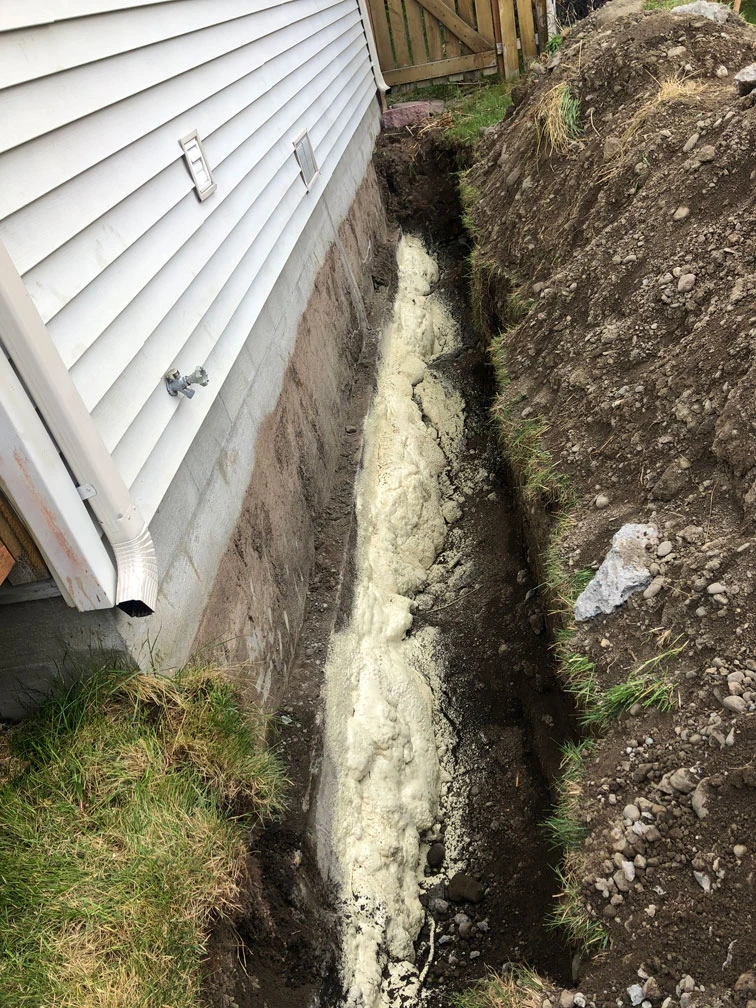
Foundation problems in Anchorage come with a set of challenges most homeowners in the Lower 48 never face. Between extreme seasonal freeze-thaw cycles, seismically active ground, and soil conditions that vary dramatically across the Anchorage Bowl and Mat-Su Valley, a one-size-fits-all approach to foundation repair will not hold up. The right solution depends on your soil type, the age and construction method of your home, the severity of movement, and whether seismic vulnerability is part of the picture. Understanding the available repair methods, what causes foundation failure in Alaska, and how to evaluate a qualified team is the first step toward protecting your property and your investment for decades to come.
Foundation damage rarely has a single cause. In the Anchorage area, several forces act on a home’s foundation simultaneously, and understanding each one helps determine which repair approach will deliver lasting results.
Most of Southcentral Alaska, including Anchorage and the Mat-Su Valley, is free of permafrost (Alaska DGGS). However, seasonal frost penetration still plays a major role in foundation behavior. When water in the soil freezes, it expands by roughly 9 percent, creating upward pressure on foundation walls and footings. When it thaws, the ground settles. This repeated cycle causes differential movement, meaning one section of your foundation shifts while another stays put. Over years and decades, this movement produces cracks, tilting, and structural stress.
Alaska has more large earthquakes than the rest of the United States combined. The 1964 Great Alaska Earthquake (magnitude 9.2) and the 2018 M7.1 Anchorage earthquake both caused significant ground failure, including liquefaction along coastal plains, lateral spreading near Knik Arm, and landslides in areas underlain by soft clay. Even moderate shaking can cause foundations to crack, shift, or separate from the structure above, especially in homes not bolted to their foundation.
Fine-grained soils like silt and clay are common in Anchorage’s Cook Inlet coastal plain. These soils retain water, expand when frozen, and are prone to liquefaction during strong shaking. Poor drainage around your foundation concentrates moisture against basement walls and footings, accelerating both frost damage and hydrostatic pressure. Proper site drainage is often the difference between a stable foundation and one that requires constant repair.
Some older Anchorage homes were built before modern seismic codes were adopted. Soft-story construction, unbraced cripple walls, and foundations lacking anchor bolts are common vulnerabilities. These design weaknesses amplify the effects of both ground movement and freeze-thaw cycling.
Different foundation problems require different solutions. The table below outlines the primary repair methods used in cold-climate regions like Anchorage and what each one addresses.
| Repair Method | What It Fixes | How It Works | Best Suited For | Limitations |
|---|---|---|---|---|
| Steel Push Piers | Settlement, sinking foundations | Steel sections are driven into stable soil or bedrock; hydraulic jacks lift the foundation back toward level | Homes with significant vertical settling on stable bearing soil | Requires competent soil or bedrock at depth; not ideal for extremely deep soft soils |
| Helical Piers | Settlement, new construction support | Screw-like steel shafts are twisted into the ground; brackets transfer foundation load to stable strata | Lighter structures, garages, additions, or areas with moderate settlement | Load capacity depends on soil; installation torque must reach required thresholds |
| Slab Jacking (Mudjacking) | Sunken concrete slabs, driveways, sidewalks | Cement slurry is pumped under the slab through drilled holes to fill voids and raise the surface | Exterior flatwork and non-structural slabs | Does not address underlying soil instability; not a substitute for structural underpinning |
| Wall Anchors | Bowing or leaning basement walls | Steel plates on the interior wall are connected to earth anchors in the yard; tension stabilizes and can straighten the wall over time | Foundation walls with lateral soil pressure pushing inward | Requires access to exterior soil zone; may not correct severely bowed walls alone |
| Carbon Fiber Reinforcement | Wall cracks, minor bowing | High-strength carbon fiber strips are epoxied to foundation walls to resist lateral movement | Walls with moderate cracking that have not moved significantly | A stabilization method, not a correction method for severe deformation |
| Epoxy/Polyurethane Injection | Cracks in poured concrete walls | Resin is injected into cracks to seal against water infiltration and bond the concrete | Non-structural cracks where water penetration is the primary concern | Does not correct wall movement; should be paired with stabilization if active shifting is occurring |
| Seismic Retrofit Anchoring | Homes not bolted to foundation | Anchor bolts connect the sill plate to the foundation; cripple wall bracing adds shear resistance | Pre-code homes in seismically active zones like Anchorage | Requires access to crawl space or basement; should be designed by an engineer |
Catching foundation problems early limits repair scope and expense. The following warning signs are worth investigating promptly:
If you notice multiple signs from this list, the problem has likely progressed past the point where cosmetic repairs alone will suffice. At that stage, a professional assessment from a structural or geotechnical engineer is the recommended next step.
Not every foundation contractor understands the conditions that make Anchorage unique. The combination of seasonal frost depths reaching 4 to 6 feet in some areas, highly variable soil types across short distances, and constant seismic risk means that a repair approach that works in a milder climate can fail here.
The University of Alaska Fairbanks Cooperative Extension Service notes that soil type is one of the most important considerations for foundation design and repair in Alaska. Fine-grained soils like silt and clay carry high ice content, become susceptible to heaving during freeze-thaw cycles, and can turn into soft slurry when saturated, dramatically reducing their bearing strength. Any foundation repair plan must account for the specific soil conditions at your site, which typically requires a geotechnical evaluation before work begins.
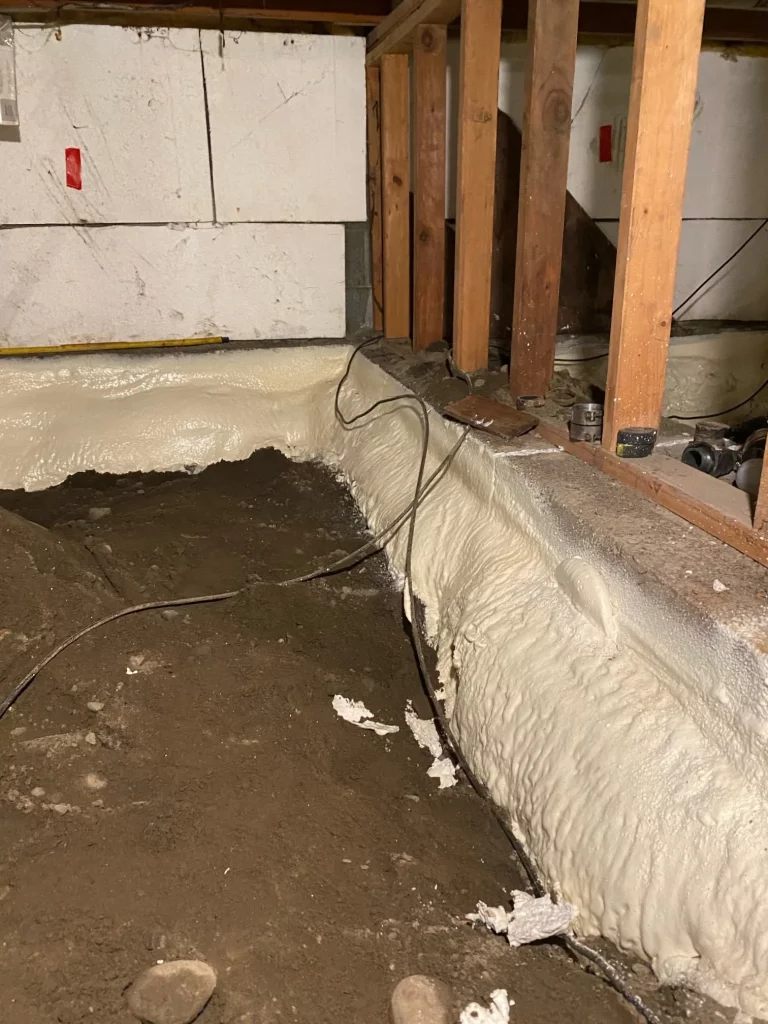
The right repair strategy depends on what you are dealing with. Here is guidance for common scenarios Anchorage homeowners face.
If your home was built before modern codes and you notice cracks but the floors remain relatively level, start with a structural assessment. Epoxy injection for non-structural cracks, combined with seismic retrofit anchoring (bolt-ing the sill plate to the foundation and bracing cripple walls), can address both current cracking and future earthquake risk. This is often the most cost-effective approach for homes with moderate, stable damage.
When one side of your home is noticeably lower than the other, doors are sticking across multiple rooms, and cracks are widening, structural underpinning is usually required. Steel push piers or helical piers can transfer the load from unstable near-surface soil to competent bearing layers at depth. This type of repair should always be accompanied by drainage correction to address the moisture source contributing to the settlement.
Lateral soil pressure from expansive frozen ground or poor drainage can push foundation walls inward. Wall anchors provide long-term stabilization and can gradually straighten walls over time. For moderate bowing, carbon fiber reinforcement may be sufficient. Both approaches should include evaluation of exterior drainage to reduce ongoing pressure.
After any significant seismic event, including the kind of M7.1 event Anchorage experienced in 2018, have your foundation inspected even if no visible damage is apparent. Ground failure can occur in subtle ways, including liquefaction that reduces soil bearing capacity without obvious surface cracking. The USGS documented widespread ground failure across the Anchorage region following the 2018 earthquake, including lateral spreading and liquefaction in areas previously considered stable.
Choosing who handles your foundation repair matters as much as choosing the repair method itself. Look for these indicators when evaluating a provider:
A team that checks these boxes is more likely to deliver a repair that lasts through Anchorage’s harsh winters and seismic activity.
Protecting your foundation in a seismically active, cold-climate environment requires experience with both the science and the local conditions. At Polyseal Insulation, we serve homeowners across the Anchorage/Mat-Su Valley area with services that include crawlspace insulation, attic insulation, and closed cell spray foam, all of which contribute to moisture control and thermal performance around your foundation and below your living spaces. Our team understands how insulation, air sealing, and moisture management work together to support long-term structural stability in Alaska’s demanding climate. Whether you are addressing foundation-related insulation concerns, preparing your home for winter, or complementing a foundation repair project, we are here to help.
Contact us at [email protected] or call (907) 745-7325 to discuss your project.
Request a Quote | Schedule an Assessment
Most of Southcentral Alaska, including Anchorage and the Mat-Su Valley, does not have permafrost. Seasonal frost penetration is the primary ground-related concern for foundations in this region, with frost depths that can reach several feet depending on soil type and winter severity.
Cracks wider than about one-quarter inch, cracks that are growing over time, and cracks accompanied by sticking doors, sloping floors, or wall separation are generally signs of structural movement and warrant a professional evaluation rather than a simple patch.
Yes. Ground failure from strong shaking can include liquefaction and lateral spreading that reduces soil bearing capacity without obvious above-ground damage, particularly in areas with soft, saturated soils near Cook Inlet.
Proper insulation in crawlspaces and basements reduces frost penetration depth near foundation walls and controls moisture, both of which reduce the freeze-thaw stress that leads to cracking and settlement over time.
Simple crack injections may take a day or two, while structural underpinning with steel or helical piers typically ranges from several days to a week depending on the scope and site conditions. Your contractor should provide a timeline after assessing the project.